
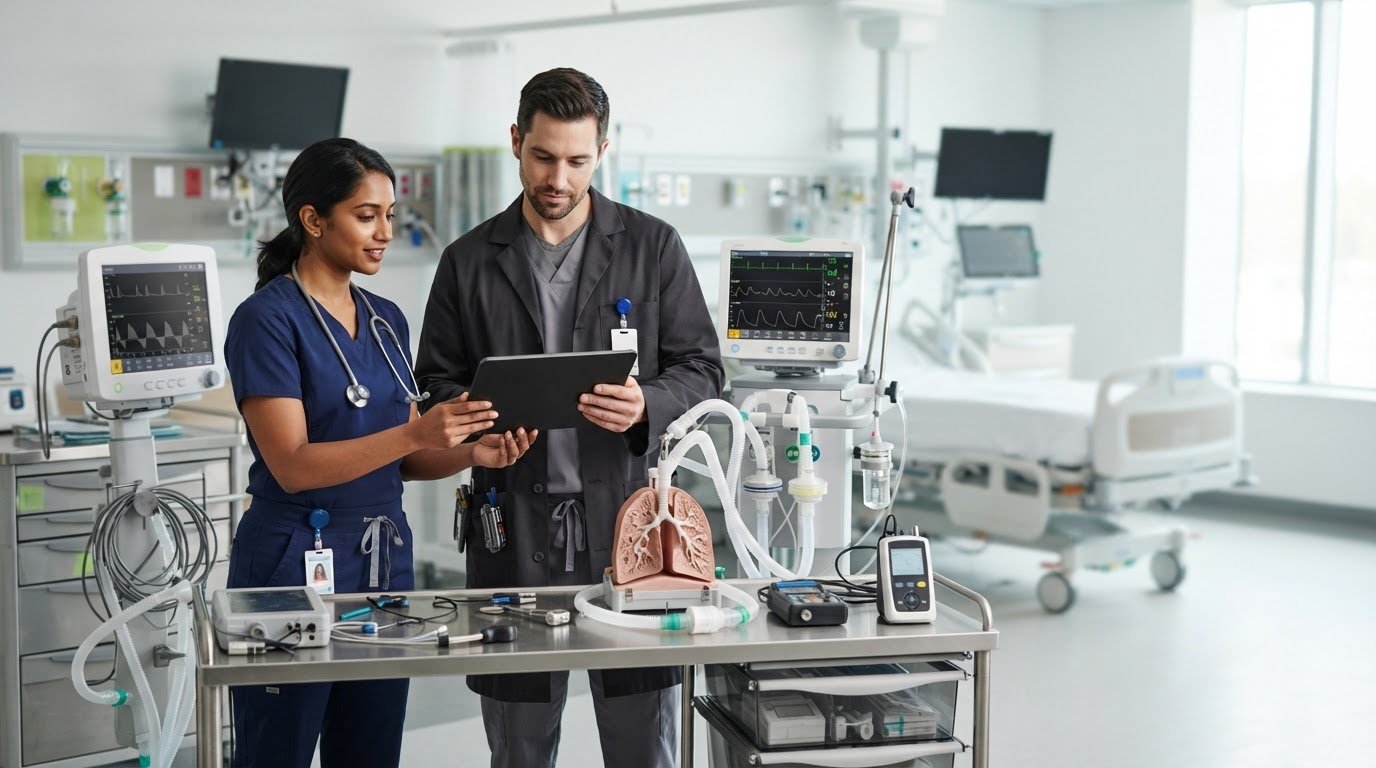
What if the greatest operational risk in your critical care unit isn’t the equipment itself, but the vendor delivering it? When choosing a medical device partner, Canadian healthcare facilities frequently discover that capital acquisition is only the initial hurdle. Disjointed post-sale support often leaves busy biomedical engineering teams stranded without timely technical service, while constant clinical staff turnover creates critical operational knowledge gaps around complex diagnostic and respiratory therapy platforms.
You already recognize that reliable patient care requires far more than dropped-off crates and brief product manuals; it demands active clinical collaboration, continuous training, and dependable equipment readiness. Discover how Canadian healthcare facilities evaluate medical device partners across regulatory compliance, clinical education, and lifecycle maintenance. The following guide provides a structured evaluation framework to help your centre secure factory-calibrated maintenance agreements, satisfy evolving Health Canada mandates, and build measurable clinical proficiency across every shift.
Key Takeaways
- Move beyond transactional procurement by choosing a medical device partner that aligns clinical workflows with end-to-end equipment lifecycle management.
- Assess prospective distributors against evolving Health Canada medical device licensing standards and verified ISO quality management frameworks to ensure institutional compliance.
- Protect critical care uptime through formal service agreements that guarantee Canadian-based technical support by phone, internet, and remote connection.
- Mitigate clinical staff turnover and device errors by establishing a structured four-step implementation pathway backed by certified hands-on specialist training.
Defining the Medical Device Partner: Beyond Equipment Procurement
In acute healthcare, capital acquisition can’t end at the receiving dock. A true medical device partner functions as an operational collaborator across the complete technology lifecycle. While contract manufacturers often treat partnership as an industrial production metric, acute care teams require active clinical integration and long-term device dependability. When choosing a medical device partner, healthcare decision-makers must evaluate continuous clinical education, regulatory compliance, and biomedical servicing alongside core equipment specifications.
To better understand how technical collaboration differs from basic equipment procurement, watch this helpful video:
Transactional Vendors versus Integrated Clinical Partners
Drop-ship suppliers deliver boxed machinery without on-site support, leaving biomedical engineering teams to manage unassisted commissioning and software configuration. These isolated deliveries cause operational bottlenecks and delay department adoption. In contrast, choosing a medical device partner with dedicated Canadian representation establishes an organized approach to medical equipment management. Integrated partners assist with initial clinical verification, configure devices directly within departmental workflows, and maintain verified service documentation throughout the equipment lifecycle.
Impact on Clinical Workflows and Patient Outcomes
Critical care units can’t tolerate excessive interface friction. When diagnostic platforms and respiratory care systems integrate cleanly into daily practice, clinical staff experience less fatigue and can respond faster during acute interventions. Standardized, reliable technology ensures rotating shifts maintain operational confidence without recurring procedural confusion. For an expanded analysis of facility-wide procurement standards across Canadian systems, review our practical guide on medical equipment for Canadian hospitals.
Core Evaluation Criteria for Canadian Healthcare Facilities
Assessing prospective medical distributors requires analyzing regulatory accountability, verified portfolio standing, and national supply stability. For institutional buyers, regulatory diligence means confirming that a distributor holds active compliance credentials and maintains uninterrupted product traceability from the original manufacturer to the patient bedside. Whether procuring complex capital platforms or turning to specialized distributors like Point of Care Medical for essential diagnostic and screening supplies, healthcare committees should evaluate partners using established compliance and technical benchmarks rather than relying on purchase price alone.
Regulatory Adherence and Health Canada Medical Device Licensing
Every prospective partner must maintain an active Medical Device Establishment Licence (MDEL) and demonstrate transparent recall procedures. Documented quality frameworks, including ISO 13485 and ISO 14001:2015 certifications, confirm operational discipline in inventory management, incident reporting, and safety compliance. Partners lacking these documented standards expose acute care centres to severe regulatory vulnerabilities during Health Canada audits.
Portfolio Specialization and Technological Innovation
High-performance distributors hold exclusive partnerships with leading global manufacturers, providing direct access to specialized clinical technologies. For example, bedside systems like the LungFit PH system eliminate pressurized cylinder logistics by generating inhaled nitric oxide directly from ambient room air. Choosing a medical device partner with direct distribution rights ensures reliable supply lines and continuous technical factory backing. When evaluating diagnostic and treatment technologies, clinical teams can review structured selection factors in our guide to procuring respiratory therapy equipment. To evaluate technologies backed by over four decades of national service, connect with Novus Medical to discuss specialized acute care solutions.

The Service and Support Framework: Safeguarding Device Uptime
Unplanned downtime in intensive care or emergency transport directly compromises patient safety. When mechanical ventilation or diagnostic systems fail, clinical teams cannot wait weeks for international depots to triage repairs. Choosing a medical device partner requires verifying that technical support infrastructure is rooted domestically. A responsive partner safeguards departmental continuity through proactive maintenance schedules, direct biomedical consultation, and immediate remote diagnostics.
Biomedical Engineering Collaboration and Technical Response
Critical care technology demands strict service-level agreements. For acute platforms like the Monnal T60 Advanced ventilator or EO-150 ventilator, biomedical departments need rapid access to Canadian-based technical support by phone, internet, and remote connection. Qualified partners provide factory-trained specialists who understand acute equipment calibration. For instance, dedicated programs like syringe calibration exchange maintain diagnostic precision by delivering factory-calibrated measuring units directly to your biomedical shop, eliminating clinical workflow interruptions.
Warranty Administration and Spare Part Accessibility
Cross-border supply delays regularly compromise hospital equipment readiness. Sourcing replacement sensors, valves, or electronic boards through international channels introduces customs hurdles that leave critical care assets out of service for extended periods. When choosing a medical device partner, hospital teams should verify domestic warehousing of original equipment manufacturer components and formal multi-year warranty administration. Review our detailed Canadian medical equipment service contract guide to establish dependable service expectations for your department. To safeguard critical care uptime with guaranteed parts availability and direct technical assistance, request a service consultation with Novus Medical.
Clinical Education and Implementation: Driving Long-Term Value
A medical device is only as effective as the clinician operating it. Even sophisticated diagnostic and therapeutic systems fail to deliver expected patient outcomes if rotating care teams lack operational fluency. Choosing a medical device partner requires securing a structured onboarding strategy that counters clinical turnover. High-performing partners institute a proven four-step implementation pathway:
- Pre-installation planning: Departmental workflow assessment and IT integration review.
- Hands-on simulation: Supervised procedural training with operational hardware.
- Competency validation: Objective skill verification before live clinical deployment.
- Refresher education: Scheduled re-evaluations to train new rotations and prevent knowledge drift.
Structured Clinician Onboarding and Hands-On Workshops
Practical bedside simulations and certified workshops build institutional mastery in advanced disciplines. Specialized curricula, such as the MagVenture Accelerator Training Program for transcranial magnetic stimulation, translate technical operating manuals into intuitive clinical practice. This direct instruction builds procedural confidence and reduces interface errors during acute interventions. Review our detailed national guide on clinical training for medical devices to benchmark hospital rollout standards.
Continuous Professional Development and Peer Support
Clinical education must persist long after initial equipment deployment. Committed Canadian distributors actively invest in continuous professional development through active sponsorship of events like the CSRT educational conference, as well as specialized clinical sessions like the Nerve Conduction Fundamentals Workshop. When choosing a medical device partner, prioritize organizations that offer direct access to clinical application specialists, preserving procedural proficiency as hospital staffing evolves.
Securing Long-Term Clinical Excellence in Canadian Healthcare
Selecting acute care technology is an investment in clinical confidence, patient safety, and departmental stability. As procurement committees know, choosing a medical device partner doesn’t end with comparing equipment brochures. True operational success hinges on active Health Canada compliance, rapid domestic technical servicing, and structured clinician onboarding that withstands departmental turnover. By evaluating prospective distributors against these complete lifecycle benchmarks, healthcare facilities safeguard critical device uptime and maintain high standards of patient care across every rotation.
With more than 40 years of medical device distribution and clinical support in Canada, Novus Medical aligns advanced diagnostic and respiratory therapies with verified ISO 14001:2015-certified quality management standards. Facilities gain immediate access to Canadian-based technical assistance, direct biomedical troubleshooting, and factory-calibrated maintenance programs. Partner with Novus Medical to equip your acute care teams with the specialized technologies and continuous clinical education needed to support patient outcomes long into the future.
Frequently Asked Questions
What credentials should Canadian hospitals confirm when evaluating a medical device partner?
Canadian hospitals should verify an active Medical Device Establishment Licence (MDEL) and proof of documented post-market surveillance procedures. When choosing a medical device partner, procurement teams must also check for ISO certifications, such as ISO 13485 for medical device quality management and ISO 14001:2015 for environmental standards. These credentials confirm that the supplier complies with Health Canada regulations, maintains lot traceability, and executes proper recall management protocols.
How does choosing a domestic Canadian distributor improve equipment uptime over foreign vendors?
Domestic Canadian distributors dramatically shorten repair turnaround times by maintaining in-country spare parts depots, eliminating cross-border customs delays that often sideline critical care technology. Working with a domestic partner ensures direct access to Canadian-based technical support by phone, internet, and remote connection. Facilities also benefit from streamlined field service coordination, rapid replacement component delivery, and domestic calibration programs that keep essential clinical equipment in continuous service.
Why is ongoing clinical education considered an essential component of a device partnership?
High staff turnover in acute care frequently creates departmental skill gaps, increasing the risk of equipment misconfiguration and operational error. Ongoing clinical education ensures rotating clinical teams maintain steady procedural competency on complex therapy and diagnostic systems. Through structured workshops, bedside simulation, and direct consultation with clinical application specialists, continuous education protects patient safety, reduces clinical fatigue, and maximizes the operational value of high-acuity medical assets.
What should be included in a hospital medical equipment service agreement?
A complete service agreement must outline defined response times for technical support, scheduled preventative maintenance protocols, and access to original manufacturer replacement components. Critical provisions should specify remote diagnostic capabilities, loaner equipment availability during depot repairs, and routine calibration services against certified reference standards. Including these explicit performance criteria ensures biomedical teams maintain device uptime without facing unbudgeted emergency repair expenses or extended clinical interruptions.
How do exclusive distribution partnerships benefit healthcare facilities adopting new medical technologies?
Choosing a medical device partner with exclusive distribution agreements guarantees direct factory access to specialized therapeutic technologies, manufacturer updates, and specialized user training. Facilities work with technicians certified directly by the manufacturer, ensuring access to authentic replacement parts and targeted programs like the MagVenture Accelerator Training Program. This direct relationship removes intermediary communication delays, streamlines warranty execution, and provides clinical teams with direct manufacturer-backed technical expertise.
Disclaimer
Disclaimer: Articles on this website are produced with the assistance of automated content tools (AutoSEO) and are intended solely for general informational purposes. This content does not constitute professional advice. While we strive to maintain accurate and up-to-date information, readers should verify key details independently before taking action based on any content found on this site.

Leave a Reply
Your email is safe with us.