
The traditional “one and done” orientation for hospital equipment is no longer sufficient to maintain the rigorous safety standards required in modern Canadian healthcare. Most clinical educators realize that fragmented training from multiple vendors often leads to rapid skill decay and confusion, especially as staff turnover remains a persistent challenge for provincial health systems. Relying on inconsistent onboarding methods makes it difficult to align device usage with evolving Health Canada regulations and quality management requirements.
This guide explores how specialized clinical training medical devices Canada enhances patient safety, optimizes hospital workflows, and ensures strict regulatory compliance across the country. By moving toward a continuous proficiency model, your facility can achieve standardized training protocols and improved patient outcomes through true device mastery. We will examine how this authoritative approach facilitates the seamless integration of advanced technologies, such as the LungFit® PH bedside inhaled nitric oxide system, into your daily clinical practice while supporting the long-term professional development of your medical team.
Key Takeaways
- Learn how to transition from basic hardware orientation to complex clinical workflow integration to reduce medical errors and elevate the standard of care.
- Discover the benefits of multimodal learning that combines e-learning with bedside workshops to combat skill decay and ensure long-term staff proficiency.
- Understand the specific Health Canada expectations for clinical training medical devices Canada to maintain regulatory compliance and Medical Device Establishment Licence accountability.
- Optimize equipment return on investment by mastering advanced troubleshooting techniques for devices like the EO-150 Ventilator, which helps reduce unnecessary service calls.
The Strategic Importance of Clinical Training for Medical Devices
Modern Canadian hospitals have moved past simple equipment orientations. It’s now about complex workflow integration. Effective clinical training medical devices Canada requires more than just knowing which buttons to press; it involves understanding how technology interacts with patient physiology. This shift is essential because the Canadian medical devices market is projected to reach nearly US$13.5 billion by 2028, reflecting a massive influx of sophisticated technology. Proper instruction directly reduces medical errors and builds a foundation of professional confidence. To understand the foundational framework, clinicians should be familiar with Medical Device Regulations in Canada, which govern the safety and efficacy of these tools.
To better understand how clinical preparation translates to practical environments, watch this overview of specialized healthcare training:
Beyond Regulatory Compliance: Clinical Mastery
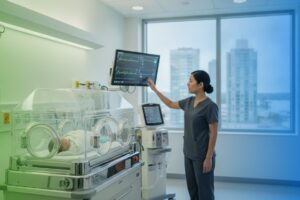
Meeting Health Canada’s standards is a baseline requirement, but true patient safety stems from clinical mastery. Operational knowledge allows staff to use a device; proficiency ensures they can troubleshoot under pressure. High-stakes environments, such as neonatal intensive care, don’t allow for hesitation. Mastery bridges the skill gap created by technological advancements, ensuring that equipment serves the clinician rather than complicating their workflow.
Impact on Staff Retention and Professional Growth
Investing in professional education programs, such as the MagVenture Accelerator, significantly boosts job satisfaction. When clinicians feel supported through manufacturer-backed training, burnout rates often decline. Staff members who feel competent using advanced equipment, like the EO-150 Ventilator, are more likely to remain with their institution. This commitment to ongoing education transforms a simple vendor relationship into a long-term clinical partnership, fostering a culture of standardized excellence.
Core Pillars of an Effective Clinical Training Program
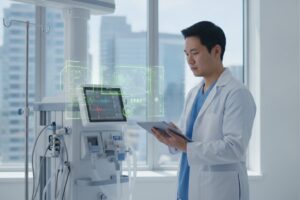
A robust framework for clinical training medical devices Canada must prioritize clinical proficiency over simple attendance records. Effective programs integrate multimodal learning strategies that combine the convenience of e-learning with the rigour of bedside workshops. This approach ensures that theoretical knowledge translates into practical application. Protocol-driven instruction is equally vital; it aligns device operation with established Canadian clinical guidelines to ensure consistency across the care team. By focusing on verified skill acquisition, hospitals can move beyond the minimum requirements of the Canadian Medical Devices Regulations and foster a true environment of excellence.
Hands-On Workshops and Simulation
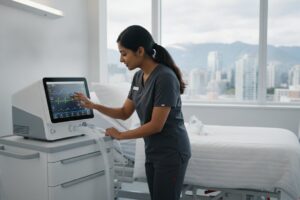
Tactile learning remains the gold standard for high-stakes medical technology. Simulated environments allow clinicians to rehearse high-pressure scenarios, such as managing emergency respiratory failure with the Monnal™ T60 Advanced, without compromising patient safety. This physical engagement is particularly critical for neurodiagnostic equipment Canada facilities rely on, like the Cadwell Sierra Summit EMG, where precision in electrode placement and signal interpretation is paramount. These workshops build the necessary muscle memory and troubleshooting skills that static modules simply cannot provide. Regular refresher sessions are essential to prevent skill decay and maintain staff readiness for acute events.
Manufacturer-Backed Curriculum
Training designed by the specialists who developed the technology provides a depth of insight that generic orientations lack. It’s not just about the “how” of operation, but the clinical “why” behind every function. For instance, understanding the mechanisms of the LungFit® PH system for bedside iNO generation requires technical depth that only manufacturer-specific curriculum can offer. This expertise ensures that clinicians don’t just use the device but master it within their specific workflow. You can access specialized clinical support to help your team realize the full potential of these advanced diagnostic and therapeutic tools.
Navigating the Canadian Regulatory and Proficiency Landscape
Health Canada’s Medical Devices Regulations mandate that devices are used safely, which places a significant burden of proof on healthcare institutions to demonstrate “adequate training.” Meeting this requirement involves more than simply distributing a manual. It requires a structured framework that aligns with the accountability standards of a Medical Device Establishment Licence (MDEL). For administrators, the primary challenge is translating these high-level regulations into a functional clinical training medical devices Canada program that survives national accreditation audits and rigorous internal reviews.
Accreditation and Certification Standards
To satisfy national healthcare evaluators, training must be documented as a verified competency rather than a simple attendance record. Standardized certification is particularly vital for specialized procedures like Repetitive Transcranial Magnetic Stimulation (rTMS). Utilizing programs like the MagVenture Accelerator Training Program ensures that your facility meets the specific technical and safety requirements expected by regulatory bodies. This rigorous approach provides a clear paper trail for internal audits, proving that every clinician operating high-risk equipment has been evaluated against current Canadian standards for neuromodulation or respiratory therapy.
Risk Management and Device Vigilance
Proper training serves as a primary tool for risk mitigation. When staff are proficient, they are better equipped to participate in post-market surveillance and accurate incident reporting. This proactive stance on device vigilance doesn’t just improve patient safety; it significantly reduces institutional liability. By maintaining meticulous, up-to-date training records for all critical care staff, hospitals ensure they can quickly respond to safety alerts or equipment recalls. If you need to verify your team’s compliance with current standards, request a clinical training audit to identify potential gaps in your device management protocols.

Maximizing ROI through Professional Education and Support
While safety remains the primary objective, the financial and operational benefits of clinical training medical devices Canada are often overlooked. Clinical mastery extends the functional lifespan of sophisticated equipment like the EO-150 Ventilator by ensuring that every operator adheres to precise handling and maintenance protocols. When staff members possess deep technical proficiency, they significantly reduce the frequency of “no fault found” service calls. This prevents the unnecessary costs associated with technician dispatch and equipment downtime, allowing specialized resources to remain focused on patient care.
Efficient device utilization also streamlines hospital workflows, which can contribute to reduced hospital stay durations for patients. By optimizing the setup and titration of therapeutic devices, clinicians achieve better outcomes in less time. This efficiency transforms professional education from a recurring expense into a long-term investment in Canada’s healthcare infrastructure, ensuring that high-value assets are utilized to their full potential.
Technical Support and Training Synergy
Integrating service contracts with ongoing clinical education creates a seamless support ecosystem. Novus Medical acts as a vital link between technical repair and practical application, ensuring that maintenance updates are immediately reflected in staff training. This synergy ensures that your team isn’t just reacting to equipment failures but proactively managing the technology to prevent them. It ensures continuity of care by bridging the gap between the engineers who maintain the hardware and the clinicians who apply it at the bedside.
Future-Proofing Your Clinical Team
As the industry moves toward the next generation of bedside technology, such as ambient air iNO generation, staff must be prepared for fundamental shifts in delivery methods. The MagVenture Accelerator Training Program prepares clinicians for future neuromodulation trends by providing the advanced technical depth required to master evolving treatment modalities. Maintaining this level of readiness ensures that your facility can adopt new innovations without disrupting the continuity of care. To stay ahead of emerging developments, explore the latest trends in neurodiagnostic equipment in Canada shaping the future of neurology departments nationwide.
Explore our clinical training programs and workshops to strengthen your team’s technical proficiency and operational efficiency.
Elevating Clinical Excellence Across Canada
Mastery in modern medical technology requires a move beyond simple hardware orientation toward a model of continuous proficiency. By prioritizing multimodal learning and manufacturer-backed curriculum, Canadian healthcare facilities ensure that their teams are prepared for high-pressure clinical scenarios while maintaining strict regulatory compliance. This comprehensive approach to clinical training medical devices Canada doesn’t just protect patients; it optimizes hospital workflows and secures the long-term value of your medical assets.
As a trusted leader with decades of experience in Canadian medical distribution, Novus Medical is committed to your team’s success. We offer specialized workshops for Nerve Conduction and Respiratory Therapy, and we are the exclusive partner for the MagVenture Accelerator Training Program. Partner with Novus Medical for Professional Clinical Training to provide your staff with the technical depth they need to excel. Together, we can foster a culture of safety and precision that defines the future of Canadian healthcare.
Frequently Asked Questions
What are the Health Canada requirements for medical device training?
Health Canada mandates that manufacturers and distributors provide comprehensive instructions for use and that healthcare institutions ensure staff are adequately trained for safe operation. Under the Medical Devices Regulations, maintaining a Medical Device Establishment Licence requires documented proof of these competencies. This ensures that high-risk equipment is operated only by verified clinicians, which is a core component of clinical training medical devices Canada compliance and institutional risk management.
How does clinical training impact patient safety in the ICU?
Specialized training directly reduces medical errors by bridging the gap between basic hardware operation and complex clinical application. In high-pressure ICU environments, clinicians must troubleshoot advanced equipment, like the Monnal™ T60 Advanced, without hesitation. Mastery of these systems ensures that technology supports rather than complicates critical care workflows. This proficiency leads to more consistent patient monitoring and improved therapeutic outcomes during acute respiratory or neuro-diagnostic events. Facilities evaluating their respiratory fleet should also consult a dedicated critical care ventilator Canada buyer’s guide to ensure their equipment selection aligns with 2026 regulatory standards and care continuity requirements.
Can Novus Medical provide on-site training for respiratory therapists across Canada?
Yes, Novus Medical provides professional clinical training and technical support to healthcare providers on a national scale. Our team acts as a clinical partner, offering hands-on workshops and specialized instruction for respiratory therapists and other frontline staff. Whether your facility is integrating the EO-150 Ventilator or implementing new bedside iNO generation protocols, we ensure your team receives manufacturer-backed education that aligns with specific Canadian clinical guidelines and safety standards. Clinicians managing complex airway clearance challenges should also explore how a dedicated secretion management device hospital teams rely on can reduce ventilator-associated pneumonia risks and improve patient comfort alongside ventilator training.
What is included in the MagVenture Accelerator training program?
The MagVenture Accelerator Training Program provides clinicians with an intensive, hands-on curriculum focused on advanced neuromodulation and rTMS protocols. This professional certification program covers technical operation, patient safety considerations, and the clinical “why” behind therapeutic mechanisms. It’s designed to ensure that practitioners achieve verified proficiency in specialized neuromodulation fields. This authoritative training prepares your team for current diagnostic requirements and future technological trends in neuro-diagnostic medicine across Canada.
How often should clinicians undergo refresher training for advanced ventilators?
Most industry experts recommend annual refresher training to combat skill decay and ensure staff remain current with software updates or protocol changes. For high-complexity systems like the EO-70 or Monnal™ T60 Advanced, regular workshops are essential to maintain bedside proficiency. Moving toward a continuous proficiency model for clinical training medical devices Canada ensures that clinicians don’t just remember the basics but master the sophisticated troubleshooting required for critical care. Understanding how to strategically select and standardize these systems is equally important, and resources like the 2026 ICU buyer’s guide for critical care ventilators in Canada can help administrators make informed procurement decisions that support long-term staff proficiency.
Disclaimer
Disclaimer: Articles on this website are produced with the assistance of automated content tools (AutoSEO) and are intended solely for general informational purposes. This content does not constitute professional advice. While we strive to maintain accurate and up-to-date information, readers should verify key details independently before taking action based on any content found on this site.