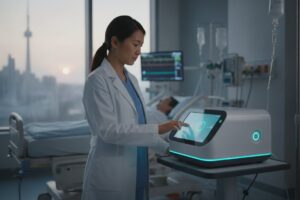
With 18.5% of the Canadian population over the age of 65, the pressure on neurology departments to manage complex conditions like epilepsy and Parkinson’s has reached a critical threshold. You’re likely facing the daily reality of staffing shortages and the frustration of data silos that slow down vital clinical decisions. Long wait times for sleep studies and EEG monitoring remain a persistent challenge for facilities across the country. This article explores how the next generation of neurodiagnostic equipment in Canada is designed to alleviate these burdens by integrating intuitive workflows with high-level diagnostic precision.
You’ll discover how advancements in EEG, EMG, and neuromodulation are transforming clinical workflows while improving patient outcomes through better accuracy. We’ll also examine the 2026 trends focusing on how seamless data management across hospital networks and access to local clinical training can help your team realize its full potential. By bridging the gap between global innovation and local care, these technologies allow clinicians to focus on what matters most: the patient.
Key Takeaways
- Learn how the transition toward ambulatory and remote monitoring is helping facilities reduce hospital bed occupancy while maintaining high diagnostic standards.
- Explore the clinical advantages of integrating neuromuscular ultrasound and advanced platforms like the Sierra Summit to realize more efficient nerve conduction studies.
- Discover how unified data management systems solve the “data silo” problem and how specialized clinical workshops can help your team overcome technician shortages.
- Understand the importance of Health Canada MDALL compliance and localized technical support when procuring neurodiagnostic equipment Canada to ensure long-term reliability.
Current Trends in Neurodiagnostic Equipment Canada
Neurodiagnostic equipment Canada encompasses the specialized tools required to monitor the electrical activity of the brain, nerves, and muscles. As we look toward 2026, the industry is witnessing a significant shift toward higher precision and decentralized care models. High-density Electroencephalography (EEG) systems, capable of utilizing up to 432 channels, are now setting the standard for surgical planning in epilepsy. These advancements, combined with artificial intelligence for preliminary waveform analysis, enable clinicians to identify pathologies with unprecedented speed. It’s a transformative era for neurology.
To see how these technologies are applied in a clinical setting, watch this helpful overview:
The Rise of Ambulatory EEG and Home Sleep Testing
The pressure on Canadian hospital infrastructure has accelerated the adoption of ambulatory and home-based diagnostic solutions. By utilizing Level 3 HSAT devices like the Cadwell ApneaTrak, clinicians can effectively monitor patients in their natural environment while reducing hospital bed occupancy. This transition helps alleviate the long wait times typically associated with in-lab sleep studies. It also ensures that the data collected reflects real-world conditions. This helps clinicians realize more reliable diagnostic outcomes for patients across the country.
Intraoperative Neuromonitoring (IONM) Advancements
Protecting neural integrity during complex procedures remains a top priority in the operating room. Modern Intraoperative Neuromonitoring (IONM) has evolved to meet this need through the use of compact, pod-based systems. These devices allow for real-time recording and analysis without the bulk of traditional equipment, managing limited OR space more effectively. When sourcing neurodiagnostic equipment Canada, clinicians often prioritize these space-saving designs. By providing immediate feedback on neural pathway status, these tools help surgeons make informed decisions. This minimizes the risk of post-operative deficits. Precision matters in the OR.
Innovations in EMG and EEG: Precision and Portability
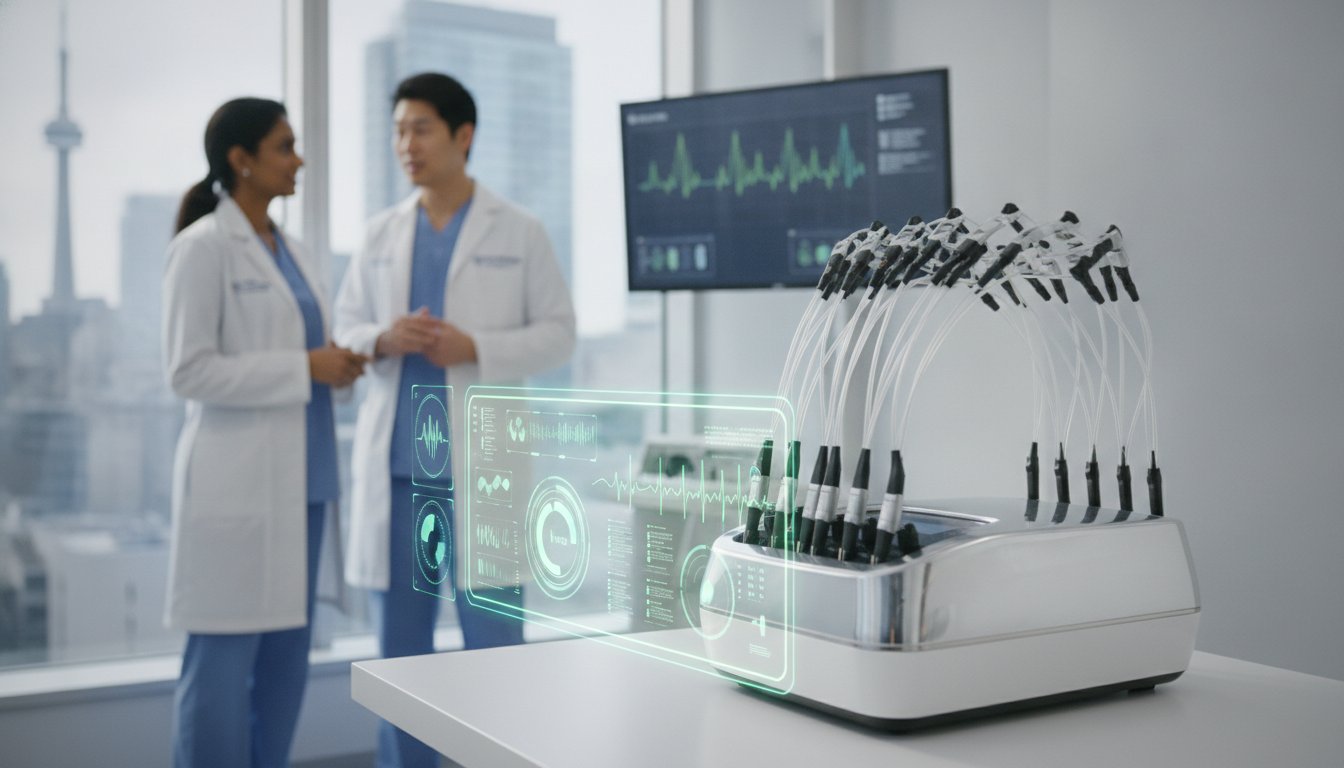
The evolution of neurodiagnostic equipment Canada is marked by a move toward multi-modal integration. Neuromuscular ultrasound has transitioned from a niche tool to a standard diagnostic companion. By integrating ultrasound directly into the Sierra Summit EMG platform, clinicians can visualize structural abnormalities alongside physiological data. These developments streamline nerve conduction studies, reducing the need for multiple appointments and speeding up the path to treatment. Accuracy is paramount.
Clinical environments like the Intensive Care Unit are notoriously “noisy” electrically. Advanced hardware design in modern neurodiagnostic equipment Canada now filters this interference more effectively. This ensures that even in the most challenging bedside settings, signal quality remains pristine for accurate interpretation. High-fidelity recordings are now possible without the bulky shielding once required in dedicated labs.
Next-Generation Electrodiagnostic Software
Software like Sierra 4.1 represents a leap forward in clinical efficiency. It synchronizes EMG and ultrasound data into a single interface, allowing for a more holistic view of patient health. These customizable workflows organize data logically to help reduce physician fatigue during long diagnostic sessions. When implementing these updates, facilities must ensure alignment with Health Canada’s medical device regulations to maintain high standards of care.
Neonatal Neuro-Care: The ANT Neuro NEO
In the Neonatal Intensive Care Unit (NICU), cerebral function monitoring (CFM) is vital for detecting subclinical seizures that might otherwise go unnoticed. The ANT Neuro NEO provides portable, high-fidelity monitoring specifically designed for the smallest patients. These systems integrate seamlessly with specialized infant care products to maintain a developmental care environment. This ensures that diagnostic precision doesn’t come at the cost of patient comfort. If you’re looking to upgrade your facility’s capabilities, you can explore our full range of neurodiagnostic solutions.

Overcoming Clinical Challenges: Data Integration and Training
The “Data Silo” problem remains a significant hurdle in Canadian hospitals. When EEG, EMG, and sleep data exist in isolated systems, clinical decision-making slows down. Unified data management systems like CadLink are essential for modernizing these workflows. They allow neurologists and surgeons to collaborate in real-time, accessing the same high-fidelity waveforms from different parts of the hospital network. This integration is a key driver in Canada’s medical device market overview, where digitalization is transforming diagnostic speed.
The chronic shortage of skilled neurodiagnostic technicians requires a proactive approach to workforce development. Sustainable growth isn’t just about hiring; it’s about apprenticeships and ongoing education. By investing in the proficiency of current staff, facilities can maximize the utility of their neurodiagnostic equipment Canada. High-quality data depends as much on the operator as it does on the hardware. Skill drives results.
Professional Training as a Strategic Asset
Hands-on education is the most effective way to realize a full return on investment for complex diagnostic tools. Workshops like Nerve Conduction Fundamentals provide technicians with the practical skills needed to improve diagnostic accuracy. For those specializing in advanced therapeutics, the MagVenture Accelerator offers clear certification paths for rTMS. These programs ensure that clinical teams aren’t just using equipment but mastering it.
Reducing Hospital Supply Chain Risks
Relying on disparate vendors for electrodes and consumables can lead to logistical bottlenecks. Securing local Canadian inventory for these essentials is a critical strategy for risk mitigation. Integrated systems reduce the administrative burden by consolidating procurement through a single trusted partner. This ensures continuity of care and prevents diagnostic delays caused by supply chain disruptions. To strengthen your department’s technical proficiency, register for an upcoming clinical workshop today.
Navigating the Canadian Procurement Landscape
Procuring neurodiagnostic equipment Canada requires a deep understanding of the regulatory framework managed by Health Canada. All Class II, III, and IV devices must hold a valid Medical Device License (MDL) before they’re sold or used clinically. For administrators, this means verifying the Medical Devices Active Licence Listing (MDALL) for both hardware and specific software versions, such as the Sierra 4.1 platform. Future-proofing your lab depends on selecting vendors who prioritize these compliance standards while offering scalable hardware.
Evaluating service contracts is equally vital. A robust maintenance agreement should go beyond simple repairs. It must include proactive software updates and guaranteed response times from certified technicians. If a system isn’t reliable, it’s a liability to patient care. Every hour of downtime increases patient wait times and impacts departmental revenue. Reliability is the cornerstone of a functional lab.
Why Local Technical Support Matters
Access to Canadian-based service technicians is a critical factor in minimizing clinical downtime. Local support teams understand the logistical realities of the Canadian healthcare system, ensuring faster part replacement and on-site assistance. Additionally, software updates must be managed carefully to remain compliant with provincial healthcare privacy standards. A local partner ensures that data security protocols align with regional requirements, protecting sensitive patient information while maintaining system performance. Precision requires constant vigilance.
Partnering for Long-Term Excellence
Novus Medical acts as a strategic bridge between global medical innovation and the specific needs of Canadian clinicians. As an exclusive distributor for leaders like Cadwell, we provide more than just a sales transaction. We offer national technical support and warranty fulfillment that multi-site hospital networks rely on for operational continuity. By choosing a partner with a national reach, healthcare providers can ensure consistent standards of care and technical proficiency across all facilities. This long-term commitment helps your team realize the full potential of your investments in neurodiagnostic equipment Canada.
Advancing Clinical Excellence in Canadian Neurodiagnostics
The integration of multi-modal data and the strategic shift toward ambulatory care are defining the next era of neurology. High-density EEG and unified software platforms don’t just improve diagnostic accuracy; they empower clinicians to overcome the staffing pressures and data silos that often hinder patient care. By adopting these innovations, your facility can reduce wait times and ensure that every patient receives the highest standard of monitoring in the most appropriate setting.
As the exclusive Canadian distributor for Cadwell and MagVenture, Novus Medical remains a steadfast partner in your department’s success. We ensure your neurodiagnostic equipment Canada maintains full Health Canada MDALL compliance while providing the national technical support and clinical training programs your team needs to realize the full potential of their tools. Explore Novus Medical’s Neurodiagnostic Solutions to learn how we can support your facility’s long-term operational goals. Together, we can build a more efficient and precise diagnostic future for patients across the country.
Frequently Asked Questions
What is the current standard for intraoperative neuromonitoring (IONM) in Canada?
The current standard for intraoperative neuromonitoring focuses on high-fidelity, real-time recording using compact, pod-based systems like the Cadwell IOMAX. These systems allow surgical teams to monitor neural pathways continuously during complex procedures, minimizing the risk of post-operative deficits. By transitioning away from bulky traditional consoles, hospitals better manage limited operating room space while maintaining the highest levels of patient safety and diagnostic precision during delicate neurosurgical interventions.
How does Health Canada MDALL status affect neurodiagnostic equipment procurement?
Health Canada’s Medical Devices Active Licence Listing (MDALL) status is a mandatory regulatory requirement for procuring neurodiagnostic equipment Canada. All Class II, III, and IV devices must hold a valid license to be sold or used clinically. Procurement departments must verify this status to ensure all hardware and software, including updates like Sierra 4.1, meet national safety and effectiveness standards before integration into a hospital’s clinical workflow.
What are the benefits of ambulatory EEG for Canadian patients and hospitals?
Ambulatory EEG provides significant benefits by allowing for continuous data acquisition in a patient’s natural environment rather than a hospital bed. This transition helps Canadian facilities reduce bed occupancy and shorten wait times for diagnostic monitoring. Patients experience less travel and stress, while clinicians receive data that more accurately reflects real-world conditions. These portable systems are essential for managing the increasing volume of neurological cases across the country.
Why is integrated ultrasound becoming standard for EMG and nerve conduction studies?
Integrated ultrasound is becoming a standard companion for EMG because it allows clinicians to visualize structural abnormalities simultaneously with physiological nerve conduction data. This multi-modal approach improves diagnostic accuracy for conditions like peripheral neuropathies. By using platforms like the Sierra Summit, physicians realize more efficient workflows, reducing the need for multiple disparate appointments and speeding up the overall clinical decision-making process for better patient outcomes.
Can neurodiagnostic equipment be serviced locally in Canada?
Yes, neurodiagnostic equipment Canada can be serviced locally through national distributors like Novus Medical. We provide comprehensive technical support, warranty fulfillment, and clinical training programs across the country. Having access to Canadian-based technicians ensures that repairs and software updates are handled quickly, minimizing clinical downtime. This local presence also ensures that all service protocols align with provincial healthcare privacy standards and federal regulatory requirements for long-term reliability.
Disclaimer
Disclaimer: Articles on this website are produced with the assistance of automated content tools (AutoSEO) and are intended solely for general informational purposes. This content does not constitute professional advice. While we strive to maintain accurate and up-to-date information, readers should verify key details independently before taking action based on any content found on this site.