

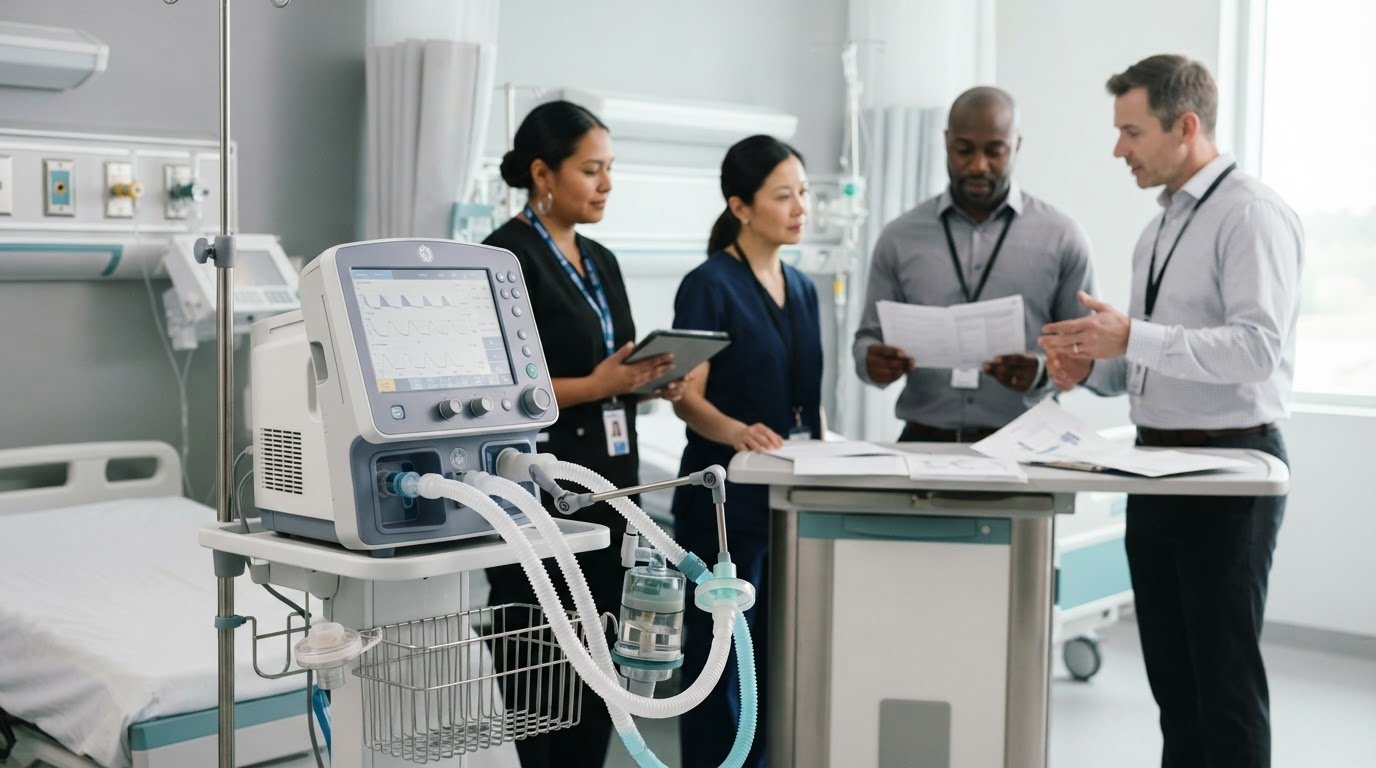
What if the strongest case for a new ventilator is not a device feature, but evidence that current equipment no longer fits clinical and operational needs? A business case for new hospital ventilator procurement should connect patient-care requirements with documented limitations, workflow demands, and lifecycle support.
Clinical teams know ventilator selection affects more than bedside care. Turning concerns into a reviewable proposal can be difficult when equipment records, technical input, procurement criteria, and support planning are spread across separate conversations.
This guide offers a practical framework for bringing those elements together. It explains how to document current equipment gaps, define clinical and operational requirements, and compare suitable devices using consistent criteria.
You’ll also learn how to plan stakeholder involvement, evaluation, implementation, and ongoing service considerations within your hospital’s approval pathway. The EO-150 Ventilator and Monnal™ T60 Advanced can be evaluated against documented facility requirements. The result is a clearer, evidence-based case for decision-makers to assess and refine.
Key Takeaways
- Start the business case for new hospital ventilator procurement with a documented facility need, before naming a preferred device.
- Build a credible evidence base from approved equipment records, intended patient groups, care settings, and stakeholder input. Flag information gaps rather than estimating.
- Use a sequenced readiness review to confirm clinical fit, technical considerations, workflow planning, staff education, and service arrangements.
- Present the submission in a clear decision format. Distinguish verified evidence from assumptions and identify what still requires confirmation.
Why build a business case for a new hospital ventilator?
A business case for new hospital ventilator procurement is a facility-specific rationale that connects documented clinical and operational needs to an equipment decision. It gives reviewers a clear account of the current-state problem, the requirements a solution must meet, and the considerations that affect implementation and ongoing support. It should not promise a particular patient outcome.
Start with the need, not a preferred device. This keeps the assessment focused on whether an option fits the intended patient groups, care settings, workflows, technical environment, and lifecycle requirements. For background on the clinical role and forms of mechanical ventilation, consult this overview.
Use that context to frame the facility’s review. Define the patient groups and care settings under consideration, then document how current equipment and workflows relate to those needs. This gives clinical, technical, and operational reviewers a shared starting point.
Which hospital needs can support a ventilator proposal?
Use local records to describe recurring workflow limitations, equipment availability concerns, and unmet clinical requirements. For each finding, identify the source, such as an equipment inventory, service record, or stakeholder feedback. Separate documented observations from assumptions and expectations about a future state. Flag evidence gaps so reviewers can see what is known and what needs validation.
Who should contribute to the decision?
Involve respiratory care, critical-care clinicians, biomedical engineering, procurement, and relevant operational leaders. Assign a decision owner and identify who will validate clinical requirements, assess technical readiness, and confirm operational and lifecycle support needs. Agree on these responsibilities before comparing devices so each part of the review has a clear owner.
What evidence makes a hospital ventilator business case credible?
A credible business case for new hospital ventilator compares documented requirements with current equipment and candidate devices, using evidence reviewers can trace to approved records or source documents. Organize the evidence around equipment status, intended patient groups, care settings, and the workflows the ventilator must support. Record each item’s source and date where available. Identify gaps rather than filling them with estimates.
For broader purchasing considerations, consult this Canadian respiratory therapy procurement guide. Use your facility’s procurement process and approved records to determine which evidence belongs in the submission.
How should teams assess clinical and technical fit?
Translate clinical needs and local protocols into requirements that can be checked consistently across candidate devices. Review current manufacturer documentation for each requirement and mark it as confirmed, not confirmed, or requiring follow-up. Respiratory care and critical-care teams can validate clinical fit. Biomedical engineering can review technical compatibility, maintenance processes, and the facility’s technical environment. Include intended care settings and staff training needs in the assessment.
A comparison table can make the review more consistent. Use the same requirements and documentation standard for every candidate, including the EO-150 Ventilator or Monnal™ T60 Advanced if the facility chooses to evaluate them. Record the supporting document for each finding and confirm current product information before drawing conclusions.
How can the team document the current-state gap?
Draw on facility-approved equipment inventories, availability records, service history, workflow documentation, and stakeholder feedback. For each item, label the source and distinguish recorded findings from staff observations or unresolved questions. Do not present feedback or assumptions as measured facts.
Evidence summary example: “Facility records document [verified equipment or workflow finding]; staff report [feedback]; the frequency and operational impact remain unconfirmed.” Adapt the wording to the evidence your team can verify. For product information and support considerations during evaluation, teams can discuss ventilator requirements with Novus Medical.

How should a hospital assess implementation and lifecycle readiness?
A ventilator decision is actionable only if the facility can plan for implementation and ongoing support. Include a documented review sequence in the business case for new hospital ventilator so clinical, technical, and operational reviewers can see how readiness will be assessed. Adapt the steps to local processes rather than assuming a universal timeline or requirement.
- 1. Clinical validation: Confirm that the proposed requirements reflect intended patient groups, care settings, and approved clinical practice.
- 2. Technical review: Ask biomedical engineering to assess site readiness, compatibility questions, maintenance processes, and technical dependencies.
- 3. Workflow planning: Identify affected teams, equipment locations, workflow changes, and responsibilities for implementation.
- 4. Training: Confirm who will coordinate staff education, which roles need training, and how readiness will be assessed.
- 5. Support confirmation: Review service pathways, warranty documentation, maintenance requirements, and escalation contacts.
What should implementation planning cover?
Work with facility stakeholders to document site-readiness tasks, device integration questions, and ownership of each implementation activity. Set acceptance criteria and name escalation contacts before introducing equipment into clinical workflows. Record unresolved dependencies, such as a compatibility question awaiting technical review, rather than treating them as confirmed.
How should lifecycle support be evaluated?
Review manufacturer and distributor support arrangements alongside warranty terms, service access, and maintenance documentation. Compare written commitments with the facility’s operational needs, and confirm coverage details instead of assuming them. For a structured review of service considerations, see the Canadian medical equipment service contract guide.
Novus Medical provides technical support and warranty services to hospitals and healthcare providers across Canada. Discuss ventilator product information and support requirements with Novus Medical as your team defines its evaluation criteria.
How can Canadian hospitals present and advance the ventilator case?
Make the submission easy to review and act on. A clear sequence helps clinical, technical, operational, and procurement reviewers trace the rationale from the identified need to the decision requested. Adapt the format to your organization’s approval pathway.
- Need: State the validated clinical or operational gap.
- Evidence: Summarize the records and stakeholder input supporting the request.
- Requirements: List the criteria the equipment must meet.
- Options reviewed: Compare suitable devices against the same criteria and current documentation.
- Implementation plan: Identify responsibilities, training, and support considerations.
- Decision requested: Specify the approval or next review step being sought.
What belongs in the final recommendation?
Summarize the validated need, selection criteria, and any questions that remain for approval or verification. If the facility evaluates the EO-150 Ventilator or Monnal™ T60 Advanced, assess each against confirmed requirements and current product documentation. State where evidence supports a match, where it does not, and what needs follow-up. Explain the rationale without claiming that one option is superior or will ensure a particular outcome.
Label assumptions and projections clearly. This helps reviewers distinguish documented findings from items that require confirmation and keeps the business case for new hospital ventilator procurement accountable to the evidence.
What are the next steps after approval?
Confirm who owns procurement and who will coordinate implementation, staff education, and support contacts. Record hand-offs between teams so responsibilities remain clear as the decision moves into planning. For additional selection prompts, review this critical-care ventilator buyer’s guide.
For product documentation and Canadian support information, discuss ventilator options with Novus Medical in relation to your facility’s documented requirements.
Move your ventilator decision forward with confidence
A defensible business case for new hospital ventilator procurement starts with a documented facility need, then connects clinical requirements to operational readiness and lifecycle support. Clear evidence, consistent comparison criteria, and transparent assumptions help reviewers understand the basis for a recommendation without overstating expected outcomes.
Before advancing the request, confirm that the preferred option has been assessed against facility requirements and that implementation responsibilities, staff education, warranty terms, and service pathways have been reviewed. Record outstanding questions so the next decision is based on verified information.
Novus Medical is the exclusive Canadian distributor of a range of medical devices and healthcare products, including the EO-150 Ventilator and Monnal™ T60 Advanced. Its technical support and warranty services can be considered as part of the facility’s support evaluation.
Discuss your hospital’s ventilator requirements with Novus Medical as your team reviews product documentation and support considerations. A structured, evidence-led process can help your facility move toward a clear and accountable decision.
Frequently Asked Questions
What should a hospital ventilator business case include?
Include a documented clinical or operational need, current-state evidence, stakeholder input, facility-defined device requirements, options reviewed, implementation considerations, and lifecycle support. A business case for new hospital ventilator procurement should also identify assumptions and details that remain to be verified. Keep the recommendation traceable to facility priorities, and label projected benefits clearly. Present them as expectations, not proven outcomes, unless the hospital has supporting evidence.
When should a hospital consider replacing a ventilator?
Consider reassessing a ventilator when documented equipment limitations, service concerns, workflow needs, or changing clinical requirements raise questions about its current fit. No single replacement trigger applies to every facility. Review local records and policy with respiratory care, clinical, and biomedical engineering stakeholders, then confirm relevant details against manufacturer documentation. This helps distinguish a substantiated need from an assumption or an isolated concern.
How can a hospital compare new ventilators objectively?
Assess each candidate against the same facility-defined clinical and operational criteria. Confirm requirements using current manufacturer documentation, including intended use, compatibility questions, training needs, maintenance processes, and support arrangements. Involve clinical and technical reviewers, record the source for each finding, and flag unresolved items. Avoid relying on unverified specifications or broad claims of improved outcomes. A consistent evidence trail makes options easier to evaluate.
What non-clinical factors belong in a ventilator procurement case?
Consider workflow fit, equipment management, staff education, technical review, maintenance planning, warranty documentation, and access to support. These considerations should reflect the hospital’s own processes and operational needs. Identify who will manage each implementation task, which teams need to participate, and what details require confirmation. Documenting responsibilities and open questions helps reviewers assess readiness without assuming that every facility has identical requirements.
Disclaimer
Disclaimer: Articles on this website are produced with the assistance of automated content tools (AutoSEO) and are intended solely for general informational purposes. This content does not constitute professional advice. While we strive to maintain accurate and up-to-date information, readers should verify key details independently before taking action based on any content found on this site.


Leave a Reply
Your email is safe with us.