
Canadian hospitals switching from legacy INOmax gas cylinders can move to cylinderless point-of-care generators or retain carefully specified cylinder workflows only where they still fit. Weighing mini-cylinder handling, valve safety risks, and weaning protocols keeps patient care continuous during the change. Novus Medical supplies equipment options with technical support so facilities can plan this clinical migration with clear decision criteria.
Key Takeaways: Switching from INOmax cylinders to point-of-care generation eliminates high-pressure tank logistics and valve failure risks by using room air to produce nitric oxide.
- The LungFit PH system uses patented Plasma Pulse Technology to generate gas on-demand without cylinders.
- Skip the transition if your facility lacks the budget for new hardware and prefers rental tanks.
- Transition to cylinderless platforms for neonatal transport to reduce equipment mass and simplify vehicle transfers.
- The article outlines a 5-step weaning protocol to ensure patient stability during the hardware migration.
3 Hospital Scenarios: Choosing Your Transition Path
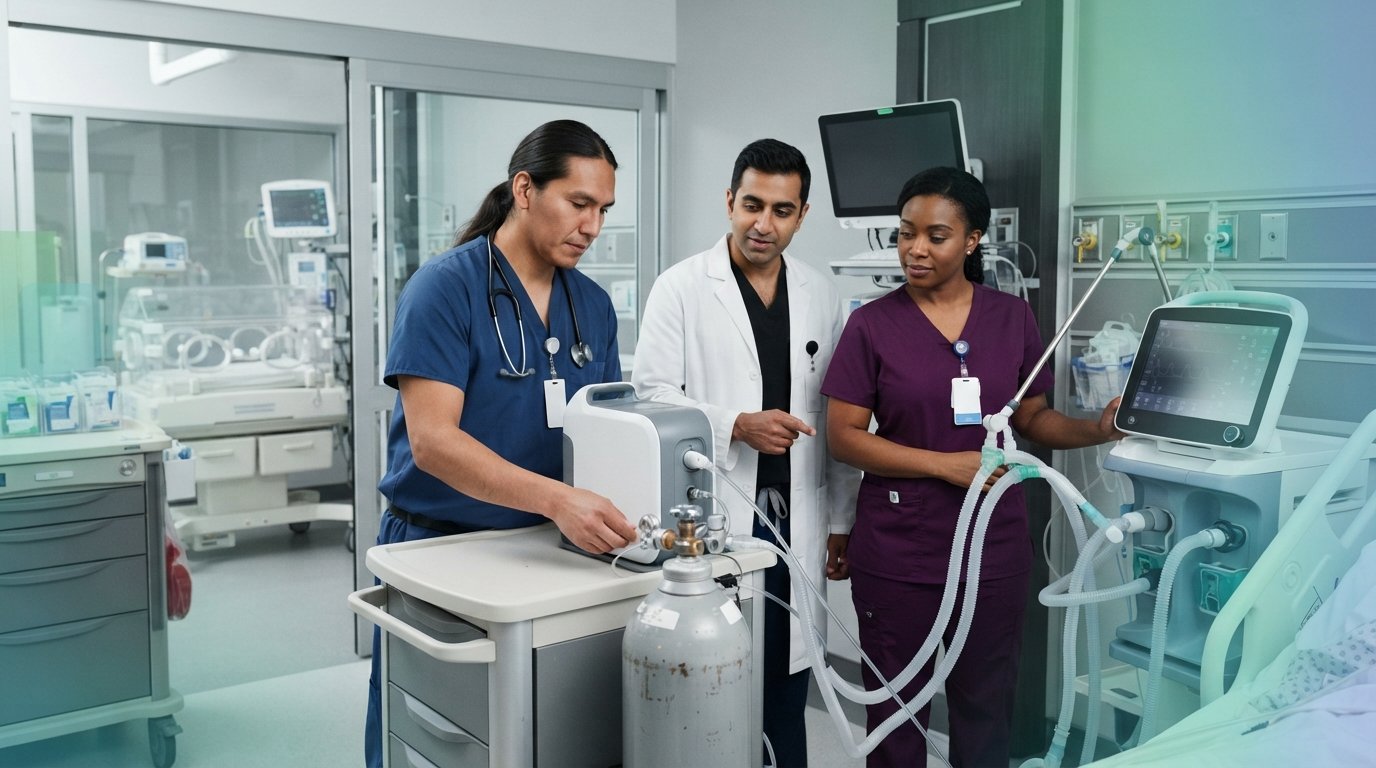
Selecting a nitric oxide delivery system depends on your facility’s operational demands and clinical environment. Three patterns show up often: fixed intensive care units that need dedicated bedside integration with existing ventilators; emergency departments and neonatal transport teams that need compact devices for rapid deployment on inter-facility transfers; and specialized pediatric surgical suites that need portable systems able to hold safe gas concentrations through long procedures. Match the format to the workflow so gas delivery stays continuous without disrupting critical care.
Your clinical workflow dictates the ideal choice. Connecting with Novus Medical helps clinicians compare equipment requirements department by department. Reach out to a specialist to map your facility’s specific needs.
Why Legacy INOmax Cylinders Strain Transport and Dosing
Traditional gas delivery relies on heavy high-pressure tanks that create transport challenges for clinical care teams. Managing high-pressure vessels requires strict adherence to safety protocols during patient transport. According to the Wikipedia Nitric Oxide Entry (2025), medicinal nitric oxide demands precise dosing controls to prevent toxic byproduct formation.
Standard gas assemblies add physical strain during mobile treatments. Moving a heavy mini-cylinder calls for specialized mounting hardware to secure the pressure vessel. Complex breathing tube setup (heated breathing circuit) hardware also lengthens setup times during emergency interventions.
| System Feature | Legacy Cylinder System |
|---|---|
| Storage Method | High-pressure gas tank |
| Primary Limitation | Heavy weight and manual purge requirements |
| Clinical Risk | Risk of delivery interruptions during tank changes |
Choosing modern point-of-care generation over legacy cylinders removes compressed-gas logistical burdens. Transport clinicians need lightweight systems to keep bedside mobility high. Learn About Novus and the respiratory platforms built for that shift.
How Valve Defects Interrupt Nitric Oxide Delivery
Defective valve assemblies cause unpredictable gas delivery and rapid pressure loss during acute respiratory therapy. When you suspect hardware degradation during transport, immediate device replacement prevents sudden therapy interruption. Faulty equipment can deliver incorrect doses or fail completely.
Situation: a neglected valve produces minor pressure drops that look like patient distress, so teams waste time on the wrong problem. Action: retire unserviced hardware and move to factory-tested devices with verified integrity. Result: delivery stays predictable because dosing no longer depends on degraded valves or informal secondary-market stock.
Equipment sold through unverified channels may be unserviced, unsafe for patient care, or a liability for your clinic. Patient safety requires fully certified equipment. Inspecting mini-cylinder fill and mount condition confirms you are not running near-empty or poorly secured vessels. You can establish a current baseline with advanced cardiopulmonary diagnostic tools. Review certified hardware options with a specialist when you are ready to replace defective cylinders. More on this: Cardiopulmonary Diagnostics.
A commenter in the ebme.co.uk thread "Medical Equipment on eBay, Forums":
"The only safe use for medical equipment sold over eBay is as a stage/TV prop, unless the buyer is really going to make sure it is serviced and ready for re-use on a patient, human or otherwise." (source)
Uncertified medical devices from informal secondary markets bypass essential safety testing, exposing clinical facilities to legal liabilities and putting patient lives at risk. Relying on unserviced gas cylinders can cause unexpected delivery failures during critical care scenarios.
5 Steps to Wean Patients Off Legacy INOmax Cylinders
Transitioning your care facility away from heavy nitric oxide cylinders requires a structured, safe clinical protocol. Smooth gas transitions depend on rigorous monitoring and precise dosage reductions. Replacing bulky hardware reduces operating expenses by cutting recurring tank rental fees and gas waste.
- Assess baseline stability: Verify that the infant maintains stable oxygen saturation levels prior to altering any therapy parameters.
- Protect skin integrity: Use facility-approved skin protection during prolonged monitoring and line care so fragile skin stays intact while therapy parameters change.
- Decrease gas dosage: Lower the nitric oxide concentration incrementally while observing pulmonary artery pressure trends.
- Inspect hardware connections: Confirm mini-cylinder condition and verify the breathing tube setup before any step-down.
- Transition delivery system: Connect the new delivery unit and request a personalized quote for long-term supply needs.
Modern gas systems suit facilities that want cleaner clinical workflows without tank swaps at the bedside.
Tip: Always maintain a backup target dose calculation during manual weaning steps to prevent rebound pulmonary hypertension.

Cylinderless Nitric Oxide Generation with LungFit PH
Eliminating heavy gas supply tanks streamlines clinical workflows and resolves complex supply logistics. Local medical supply shops often mean higher prices and narrower selection than structured procurement channels. Switching to an on-demand generation system gives direct access to reliable therapy while lowering procurement overhead.
We recommend tankless technology when you want stronger clinical reliability and tighter department budgets. The LungFit PH system uses patented Plasma Pulse Technology to generate inhaled nitric oxide from room air, avoiding cylinder reliance. That change removes recurring cylinder rentals and simplifies storage inside Canadian healthcare facilities.
Managing traditional cylinders can feel like maintaining a fleet of heavy scuba tanks: scheduled swaps, purge steps, and storage rules follow the team into every bay. On-demand generation at the point of care cuts that chain. Request a personalized quote when you want LungFit PH sized to your unit.
When Keeping Cylinder Systems Raises Avoidable Risk
Retaining bulky high-pressure gas tanks creates workflow bottlenecks and raises facility safety risks during critical patient transport. Traditional gas infrastructure strains clinical personnel during emergency maneuvers. Operating standard tanks forces teams to handle heavy mini-cylinders and complex setups under time pressure.
Insurance and supply-route changes can also reroute routine consumables through unfamiliar vendors, which disrupts ordering habits even when the clinical protocol is unchanged. Holding on to physical cylinders keeps those failure points in the path: weight, valves, rentals, and changeover gaps.
On-demand generation restores operational freedom at the bedside. The LungFit PH System ends tank dependency by producing nitric oxide from ambient air and simplifies respiratory therapy protocols. Ask a specialist to review which clinical areas still justify cylinders and which should move first.
Neonatal Transport: Lower Mass, Safer Vehicle Transfers
Situation: standard heavy incubators made patient transfers awkward during vehicle movements, adding mass and setup time when neonatal teams needed speed. Action: the care team shifted to a lighter structural approach built around the Baby Pod concept for vehicle transport of neonatal infants. Outcome: fragile infants gained better protection in motion while staff workflows became simpler because the platform was easier to handle and secure.
A proper breathing tube setup still needs a pre-departure check of any remaining cylinder mounts and circuit connections. Prioritizing equipment weight improves transport safety when every kilogram matters in the vehicle. Request a demo to walk through these physical specifications with the team.
Canadian Clinical Support and Procurement Services
Nationwide technical support is available by phone, internet, and remote connection for Canadian healthcare facilities. Working with a focused support team reduces operational overhead for respiratory programs.
Specialists help critical-care respiratory clinicians with device setup, including mini-cylinder checks where cylinders remain and breathing tube setup assembly. End-to-end customer service covers ordering, configuration, training, and follow-up so the transition stays coherent across departments and long-term performance stays reliable.
Contact the team when you want a structured review of your facility’s support requirements.
Among Google reviews for the organization, a healthcare professional (5★) wrote:
"Excellent organization with highly qualified staff. I used to order equipment and supplies from them while working with my previous employer. Highly recommend."
This review highlights dependable ordering assistance and technical support during product procurement.
A commenter in the reviews.birdeye.com thread "Eco Medical Equipment, Healthcare in Edmonton, AB, Birdeye":
"The staff at Eco Medical in Edmonton did a terrific job helping me order my Q’Straint retractors and seatbelt extension. They were professional, helpful and made the whole process easy from start to finish." (source)
Expert staff assistance simplifies complex equipment procurement for Canadian healthcare teams.
Frequently asked questions
How much does each mini‑cylinder weigh and what is its pressure?
Mini-cylinder weight and pressure depend on the specific gas delivery setup you deploy. Generating therapy directly from room air removes traditional physical pressure vessels, so those tank figures no longer define the workstation.
What safety features does the system provide?
The LungFit PH system employs patented Plasma Pulse Technology to generate inhaled nitric oxide from room air at the point of care, which removes cylinder changeover as a failure mode during therapy.
What should we plan for when switching from INOmax cylinders?
Plan baseline stability checks, stepwise dose reduction with pulmonary artery pressure monitoring, hardware inspection (circuits and any remaining mounts), and a clear cutover to the new delivery unit so care stays continuous through the migration.
How does the defect affect gas delivery?
Gas delivery continuity relies on stable system power and verified hardware integrity. Canadian-based technical support by phone, internet, and remote connection is available to resolve operational queries quickly when valves or regulators misbehave.
Which cylinder sizes are affected?
Switching from INOmax cylinders removes physical gas tanks from the pathway by generating inhaled nitric oxide from ambient room air. End-to-end customer service supports your facility through ordering, configuration, training, and ongoing technical follow-up.
Transition Your Department with Confidence
Switching from INOmax cylinders to the LungFit PH System streamlines nitric oxide delivery across Canadian hospitals in 2026. Patented Plasma Pulse Technology generates gas on demand and strips supply logistics out of daily respiratory care: the same decision thread that opened this guide, fixed ICU versus transport versus surgical use, still governs where you place each platform.
The team brings over 40 years of experience supporting critical-care specialists with advanced respiratory solutions. Murray Beaton, President, and Robert Simms, VP, oversee end-to-end customer service so implementation stays clinically safe.
Contact the specialists to design a protocol for your department: Get in touch with Novus Medical.
Disclaimer
Disclaimer: Articles on this website are produced with the assistance of automated content tools (AutoSEO) and are intended solely for general informational purposes. This content does not constitute professional advice. While we strive to maintain accurate and up-to-date information, readers should verify key details independently before taking action based on any content found on this site.


Leave a Reply
Your email is safe with us.