Relying on traditional procurement models is no longer enough to safeguard the stability of a Canadian ICU. You’ve likely felt the strain of navigating exclusive distribution rights while managing the high costs of equipment downtime and supply chain instability for medical gases. It’s a complex landscape where specialized clinical training is just as vital as the hardware itself. This guide offers a comprehensive roadmap for Canadian healthcare providers to evaluate, select, and maintain the advanced respiratory therapy equipment Canada needs to ensure ICU and NICU excellence.
We’ll explore how to identify reliable suppliers for advanced ventilators and iNO systems, such as the LungFit® PH or Monnal™ T60, while adhering to evolving CSA standards. We’ll also examine the role of national technical support and maintenance contracts in protecting your long-term ROI. By the end of this article, you’ll have the technical depth and strategic insight required to modernize your department’s respiratory fleet with quiet confidence and professional precision.
Key Takeaways
- Discover how integrating advanced technology in ICU and NICU environments streamlines clinical workflows and enhances the quality of patient care.
- Identify the essential criteria for selecting high-acuity respiratory therapy equipment Canada trusts, focusing on portability, battery life, and clinical versatility.
- Learn why securing authorized national technical support is a non-negotiable step for protecting device ROI and ensuring long-term warranty fulfillment.
- Understand how to build strategic clinical partnerships that leverage a distributor’s specialized expertise across respiratory, neuro, and infant care portfolios.
The Landscape of Respiratory Therapy Equipment in Canada
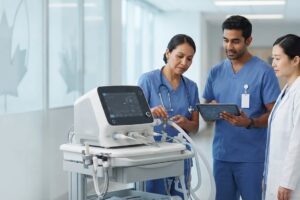
The scope of acute care in Canada is evolving. Hospitals no longer look for standalone devices; they seek integrated ecosystems. The Landscape of Respiratory Therapy has shifted toward high-acuity environments where data synchronization is paramount. Procuring respiratory therapy equipment Canada hospitals rely on means evaluating how ventilators like the Monnal™ T60 integrate with monitoring systems to improve ICU workflows and patient safety.
To better understand the clinical environment where this technology operates, watch this overview from SickKids:
Compliance isn’t optional. Every device must navigate Health Canada’s rigorous licensing. Fees for Class IV medical devices are substantial, and the examination of a Medical Device Establishment Licence application currently costs $5,519. Specialized distributors manage these regulatory hurdles, ensuring global innovations reach the bedside safely. They provide the clinical expertise needed to bridge the gap between manufacturer specifications and local hospital protocols.
Acute Care vs. Home Respiratory Equipment
Hospital-grade systems are built for high-stakes environments. Unlike consumer-grade devices, acute care respiratory therapy equipment Canada clinicians depend on must provide high redundancy and sophisticated monitoring. These ventilators must handle the physiological demands of neonates and trauma patients with precision. Clinical teams need devices that offer advanced secretion management, like the EO-70, which provides a level of support that home-care devices cannot match.
The Importance of Exclusive Distribution in Canada
Exclusive partnerships are vital for maintaining a stable supply chain. When a distributor is the sole national provider for a technology like LungFit® PH, they offer a streamlined procurement process. This model ensures consistent technical support across the country. It eliminates the confusion of multiple vendors and guarantees that warranty fulfillment is handled by factory-trained experts who understand the specific needs of Canadian healthcare facilities.
Evaluating Critical Care Ventilators and Inhaled Nitric Oxide Systems
High-acuity ICU teams require hardware that bridges the gap between stationary bedside care and mobile patient transport. The Monnal™ T60 Advanced represents this shift, offering a lightweight, turbine-driven solution that maintains high-performance ventilation during intra-hospital movement. When selecting respiratory therapy equipment Canada professionals should prioritize weight, battery longevity, and intra-hospital versatility to ensure continuous care. Patient comfort is further enhanced through targeted secretion management using devices like the EO-70, which optimizes airway clearance in complex cases. The BeyondAir LungFit® PH is the only system to generate nitric oxide from ambient air.
Ventilation Versatility: From ICU to Intra-Hospital Transport
Comparing the EO-150 and Monnal™ T60 reveals distinct clinical applications for different workflows. The EO-150 excels in long-term weaning and chronic care scenarios; however, the Monnal™ T60 is optimized for emergency and transport situations requiring advanced trigger sensitivity and non-invasive ventilation (NIV) modes. These devices must align with the rigorous respirator standards in Canada to ensure clinical safety. If your facility is looking to modernize its respiratory fleet, exploring the specialized portfolio at Novus Medical can provide a clear clinical path forward.
Innovations in Inhaled Nitric Oxide (iNO) Delivery
Traditional gas cylinders present significant logistical burdens, including heavy storage requirements and recurring supply chain risks. The LungFit® PH system eliminates these issues by generating iNO at the bedside, removing the need for pressurized tanks entirely. This innovation provides immediate clinical benefits for neonatal and adult pulmonary hypertension patients by ensuring a constant, reliable supply. By removing the reliance on external gas manufacturers, hospitals can reduce their operational footprint while improving outcomes in the NICU and ICU. This shift toward self-contained generation represents a major advancement in respiratory therapy equipment Canada hospitals can now access to stabilize patient care.

Maximizing ROI: Technical Support and Clinical Training
Equipment downtime in a high-acuity environment isn’t just a logistical headache; it’s a financial drain and a patient safety risk. To protect your investment in respiratory therapy equipment Canada, you must look beyond the initial purchase price. ROI is realized through the longevity and reliability of the device, which depends heavily on authorized service and clinical proficiency. When a ventilator or iNO system is offline, the cost of backup solutions and delayed treatments quickly erodes any initial savings from lower-tier vendors.
Technical Support Standards for Canadian Healthcare
Effective maintenance requires a partner capable of providing national coverage and rapid on-site service. In Canada, warranty fulfillment often hinges on using authorized parts and factory-certified technicians. Generic repairs might save costs in the short term, but they risk compromising the sophisticated mechanisms and precise algorithms of modern ventilators. Robust service contracts should prioritize preventative maintenance to catch issues before they cause failure, alongside guaranteed response times for emergency repairs to ensure clinical continuity.
Professional Clinical Training and Education
Technology is only as effective as the clinician operating it. Comprehensive clinical training medical devices Canada programs, such as the MagVenture Accelerator, empower staff to utilize the full range of advanced features available in modern fleets. This hands-on education reduces user error, which in turn extends device longevity and improves patient outcomes in the ICU and NICU. By fostering a culture of clinical excellence, hospitals can maximize the utility of their high-acuity assets. Continuous learning ensures that your team remains proficient as software updates and new protocols emerge.
To ensure your facility benefits from a seamless support network and expert education, partner with the technical specialists at Novus Medical today.
Procurement Strategy: Partnering for Respiratory Excellence
Modern procurement requires moving beyond transactional purchasing toward long-term clinical partnerships. Selecting a partner with a synergistic portfolio across respiratory, neuro, and infant care ensures that specialized departments don’t operate in silos. A centralized supply chain for NIV masks and consumables reduces administrative friction and mitigates the risk of stockouts in critical care units. When clinicians and procurement officers align on a single, reliable source, they create a more stable environment for both staff and patients.
Consumables and Accessory Management
Maintaining a steady supply of high-quality interface solutions is essential for patient comfort and therapy adherence. This includes specialized NIV masks and developmental infant care products like Neotech, which are designed for the unique needs of the NICU. Additionally, incorporating the HiOx high oxygen mask into your inventory allows for more targeted clinical applications in high-acuity settings. A streamlined approach to managing these accessories ensures that the right tools are always available at the bedside, reducing the clinical burden on respiratory therapists.
The Novus Medical Advantage in Canada
Choosing the right partner means securing exclusive access to transformative technologies like the LungFit® PH and the EO-series ventilators. We provide comprehensive support throughout the entire lifecycle of respiratory therapy equipment Canada hospitals depend on, from initial clinical integration to long-term technical maintenance. This stability is crucial for reducing supply chain risks and ensuring high-quality patient care across the country. Our role as a national distributor allows us to bridge the gap between global innovation and local bedside care, ensuring that every piece of respiratory therapy equipment Canada clinicians use is backed by expert knowledge and reliable service.
Before finalizing your next procurement cycle, consider this checklist for selecting a respiratory equipment partner:
- Does the distributor offer factory-authorized technical support and national coverage?
- Is there a proven track record of clinical training and professional education?
- Does the portfolio offer synergy between respiratory, neuro, and neonatal needs?
- Is there a reliable national supply chain for consumables and specialized masks?
Consult with our clinical experts to optimize your respiratory equipment fleet and ensure your department is equipped for future challenges.
Advancing Clinical Standards Through Strategic Procurement
Modernizing a respiratory fleet requires a shift from viewing equipment as a commodity to seeing it as a long-term clinical asset. Success depends on selecting technology that balances bedside performance with transport versatility while ensuring staff are fully supported through ongoing education. By prioritizing authorized technical support and factory-certified maintenance, hospitals can safeguard their ROI and prevent costly downtime in high-acuity environments. This strategic approach ensures your facility is equipped with the advanced respiratory therapy equipment Canada trusts for its most vulnerable patients.
As the exclusive Canadian distributor for the BeyondAir LungFit® PH, we provide the unique advantage of cylinder-free iNO delivery. Our commitment extends beyond the sale through comprehensive clinical training via the MagVenture Accelerator and a national technical support network. Explore our full range of respiratory therapy solutions and technical support services to begin your transition toward a more resilient ICU environment. We’re ready to partner with you in achieving clinical excellence.
Frequently Asked Questions
What is the benefit of an iNO generator over traditional nitric oxide cylinders?
An iNO generator like the LungFit® PH eliminates the logistical burden and supply chain risks associated with traditional gas cylinders. By generating nitric oxide from ambient air at the bedside, it removes the need for pressurized tank storage and complex delivery logistics. This innovation ensures a constant, reliable supply for neonatal and adult pulmonary hypertension patients, allowing clinicians to focus on patient outcomes rather than gas inventory management.
How does Health Canada regulate respiratory therapy equipment imported into the country?
Health Canada regulates respiratory therapy equipment Canada hospitals use through a rigorous licensing process based on risk classification. Devices must obtain a Medical Device Licence, and manufacturers must meet specific safety and efficacy standards. As of April 1, 2026, the fee for examining a Medical Device Establishment Licence application is $5,519. These regulations ensure that all imported high-acuity hardware meets Canadian safety requirements before clinical deployment.
Can transport ventilators like the Monnal T60 be used for long-term ICU ventilation?
The Monnal™ T60 Advanced is designed as a high-performance, turbine-driven system capable of supporting patients from the emergency room to the ICU. While it excels in intra-hospital transport due to its lightweight build, its advanced ventilation modes and trigger sensitivity make it suitable for critical care environments. It provides the high redundancy and sophisticated monitoring required for long-term respiratory support, ensuring clinical continuity as the patient moves through different care areas.
What technical support is available for respiratory equipment in remote Canadian regions?
National technical support networks ensure that healthcare providers in all regions have access to factory-certified maintenance and warranty fulfillment. Reliable distributors provide on-site service and authorized parts to minimize equipment downtime in high-acuity settings. By choosing a partner with a national reach, facilities can secure consistent technical support and preventative maintenance schedules, ensuring that specialized respiratory therapy equipment Canada clinicians depend on remains operational regardless of geographic location.
Are clinical training programs included with the purchase of new respiratory hardware?
Professional clinical training and education are essential components of a successful equipment integration strategy. Programs like the MagVenture Accelerator provide hands-on workshops that empower clinicians to utilize advanced technology effectively. While specific agreements vary, high-quality distributors prioritize ongoing professional skill-building to ensure patient safety and device longevity. These education programs help clinical teams stay proficient with complex hardware, maximizing the return on investment for the facility’s respiratory fleet.
Disclaimer
Disclaimer: Articles on this website are produced with the assistance of automated content tools (AutoSEO) and are intended solely for general informational purposes. This content does not constitute professional advice. While we strive to maintain accurate and up-to-date information, readers should verify key details independently before taking action based on any content found on this site.