
A dependable neurodiagnostic result starts before the first signal is recorded. The best practices in neurodiagnostic testing depend on consistent workflows, but preparation and technical requirements vary by modality. Patient factors, electrode placement and recording artefacts can all affect the quality of the data collected.
For neurodiagnostic teams, clear procedures help support patient comfort, safe test delivery and reliable documentation. This guide outlines practical steps for preparing patients, acquiring EEG, EMG and intraoperative monitoring data, and reviewing records for quality. It also covers how defined team responsibilities, suitable equipment and ongoing skills development can support dependable workflows. Apply these practices alongside current manufacturer instructions and your facility’s protocols.
Key Takeaways
- Apply best practices in neurodiagnostic testing by matching the modality and workflow to the clinical question, patient factors and institutional protocols.
- Prepare patients and equipment with a consistent pre-test process, and explain what to expect so patients can raise concerns.
- Use a clear sequence for setup, data acquisition, signal-quality checks and documentation to identify issues that may affect recordings.
- Use facility review processes and role-appropriate training to address recurring workflow challenges and strengthen team consistency.
Best practices in neurodiagnostic testing start with the clinical question
Neurodiagnostic testing records or evaluates nervous-system function using a method selected to address a clinical question. Start by confirming what information the examination needs to provide, then align the test and recording approach with that purpose, the patient’s needs and facility protocols. The overview of Electrodiagnostic medicine describes common tests used to assess nervous-system function.
Match the test modality to the clinical question
EEG, EMG/NCS and IONM capture different signals and answer different questions. They are not interchangeable:
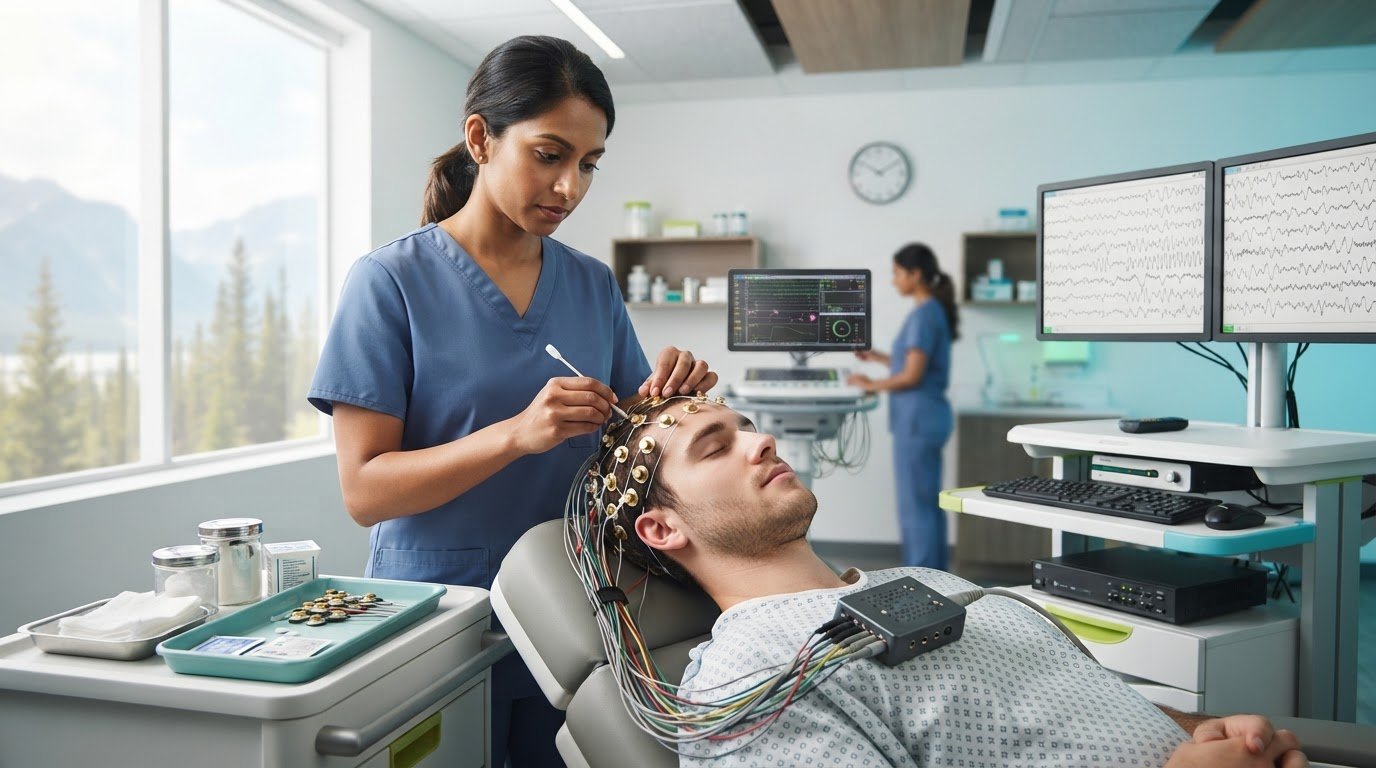
- EEG records electrical activity of the brain through scalp electrodes.
- EMG/NCS assesses electrical activity in muscles and responses in peripheral nerves.
- IONM monitors selected nervous-system signals during surgery, according to the planned procedure and monitoring protocol.
Clinicians determine test selection within their scope of practice and local pathways. For the team, documenting the reason for the study provides context for setup and data review. Before the examination, confirm that the requested test and planned workflow correspond to that documented purpose.
Why one testing checklist cannot fit every modality
Some preparation steps are shared, including confirming the test request, identifying the patient and explaining the procedure. Technical steps differ. EEG preparation and electrode placement are not the same as positioning and stimulation for EMG/NCS. IONM also requires coordination with the surgical and anaesthesia teams and attention to the operative monitoring plan.
Use a shared workflow framework, then follow the procedure for the specific modality. Patient factors may affect preparation or recording conditions, and institutional protocols define the local process. Consistency comes from applying the right procedure for each test, not from forcing every modality into one checklist.
Prepare patients and equipment before neurodiagnostic testing
A consistent pre-test process helps the team align the planned examination, patient needs and recording setup. Follow facility procedures to confirm the patient’s identity and test request. Review relevant history and the planned modality, then identify any preparation instructions that apply to this examination. Avoid giving generic directions that may not fit the test or the patient’s circumstances.
Patient communication and pre-test review
Explain the purpose and steps of the test in clear, appropriate language. Describe expected sensations, such as electrode application or nerve stimulation, when relevant to the examination. Invite questions and concerns before setup begins. Keep preparation instructions specific to the test and current institutional protocol, and confirm that the patient understands what will happen before proceeding.
Equipment readiness and setup
Before connecting the patient, complete and document a readiness check suited to the device and examination. Confirm that the recording system is ready, required accessories are available, and connections and configuration follow applicable instructions. For EEG, EMG/NCS and IONM, the components and checks differ. Use the procedure-specific workflow, and record any issue that affects readiness rather than relying on a generic checklist.
The ACNS Practice Guidelines provide procedure-specific guidance for teams to consider alongside current manufacturer instructions and facility procedures. Use the references relevant to the examination when developing or reviewing local checklists. A practical part of best practices in neurodiagnostic testing is preparing the patient and equipment for the actual modality, then documenting that required checks were completed.
Neurodiagnostic teams can explore neurodiagnostic equipment and support from Novus Medical, including Cadwell EEG, EMG and IOM systems.

Acquire and document neurodiagnostic data consistently
A consistent acquisition sequence gives the team a practical way to confirm the recording is ready for review. Follow the modality-specific protocol and document each stage:
- Confirm setup: Check the patient connection, recording configuration and required components against the procedure.
- Acquire data: Perform the examination according to the approved protocol.
- Assess signal quality: Watch for interruptions, unexpected changes or visible artefacts during recording.
- Document and review: Record relevant conditions and technical issues, then route the data through the established review process.
Manage recording quality and artefacts
Movement, connection problems and environmental interference can affect recorded signals or make them harder to assess. Record what is observed and when it occurs, without assigning a cause unless it has been established through the appropriate process. Adjusting the setup or repeating part of a procedure should only occur when the test protocol permits it. The ASET Best Practices offer guidance for neurodiagnostic professionals to consider alongside current modality-specific procedures.
Document findings and testing conditions
A useful record captures the modality, relevant test conditions, patient tolerance, technical limitations and any deviations from the planned procedure. Include enough context for the next reviewer to understand how the data were acquired. Keep entries factual and consistent with facility documentation standards.
Use the facility’s reporting format and retention practices. Technical staff should document acquisition details and observations within their role. Clinical interpretation belongs with qualified professionals through established reporting pathways. Consistent acquisition, transparent records and review within scope of practice make best practices in neurodiagnostic testing actionable.
Explore Cadwell neurodiagnostic systems and technical support for EEG, EMG and intraoperative monitoring workflows.
Strengthen neurodiagnostic quality through review, training, and support
Routine quality review can reveal workflow issues that may be missed during an individual examination. Through established facility processes, review documentation gaps, recurring technical challenges and patterns in procedure deviations. Use findings to decide whether a checklist needs clarification, staff need more equipment familiarity or targeted training would help. Quality review supports ongoing refinement, but it does not guarantee a particular clinical outcome.
Use training and quality review to address workflow gaps
Translate review findings into practical actions. If records repeatedly omit a relevant testing condition, reinforce the documentation process. If staff report uncertainty with a nerve conduction setup, consider role-appropriate education. Novus Medical’s Nerve Conduction Fundamentals Workshop provides a professional development pathway for teams building nerve conduction knowledge. Pair training with local procedures so that learning reflects the workflows staff are expected to follow.
Integrate equipment and technical support into team readiness
Device familiarity is part of operational readiness. Ensure staff know the system’s intended setup, follow current manufacturer instructions and understand the facility’s process for resolving technical questions. Novus Medical represents Cadwell Industries in Canada and offers Cadwell neurodiagnostic systems, including Cadwell Arc EEG, Cadwell Sierra Summit EMG and Cadwell IOMAX IOm. Canadian-based technical support is available by phone, internet and remote connection.
Equipment, training and review each support a different part of dependable testing. Together, they help teams apply best practices in neurodiagnostic testing consistently while keeping procedures aligned with staff roles and facility protocols. Canadian healthcare professionals can explore Novus Medical’s neurodiagnostic equipment and education resources, including the Nerve Conduction Fundamentals Workshop, to support team readiness.
Build dependable neurodiagnostic workflows across your team
Dependable testing starts with the clinical question and follows procedures suited to the modality and patient. Clear preparation, systematic signal-quality checks and accurate documentation give teams a consistent basis for review while keeping interpretation within qualified clinical roles.
Ongoing quality review can identify recurring workflow challenges and training needs. Pair those insights with role-appropriate education and familiarity with current equipment instructions. Novus Medical has been the exclusive Canadian representative for Cadwell Industries Inc. since January 1, 2023, and provides Canadian-based technical support by phone, internet and remote connection. The Nerve Conduction Fundamentals Workshop offers a professional education pathway for teams seeking to develop nerve conduction knowledge.
Explore Novus Medical’s neurodiagnostic solutions and professional resources to support your team’s equipment and education needs. Contact Novus Medical to discuss neurodiagnostic equipment, technical support and training for your team.
Frequently Asked Questions
What are best practices in neurodiagnostic testing?
Best practices in neurodiagnostic testing are consistent, modality-specific procedures that connect the clinical question to appropriate patient preparation, data acquisition, quality checks, documentation and review. Teams should confirm the test request and follow current institutional protocols and manufacturer instructions. Consistency means applying the correct process for each examination, not using one checklist or interpreting every recording in the same way.
How should patients be prepared for neurodiagnostic testing?
Prepare patients by confirming identity, the test request, relevant history and planned modality according to facility procedures. Explain the examination in clear terms, including its steps and any expected sensations relevant to that test. Invite questions and address concerns before starting. Give only preparation instructions relevant to the specific examination and protocol, since requirements differ across modalities.
What can affect the quality of a neurodiagnostic recording?
Movement, connection issues and environmental interference can affect recorded signals or make them harder to assess. Patient factors and setup conditions may also be relevant. Document observable signal changes and technical issues without assuming their cause. Follow the examination protocol when considering adjustments or repeating a procedure, and record limitations that could help the qualified reviewer understand the data.
Are EEG, EMG, and nerve conduction studies performed the same way?
No. EEG records electrical activity of the brain, while EMG assesses electrical activity in muscles and nerve conduction studies assess responses in peripheral nerves. Although EMG and nerve conduction studies may be grouped within electrodiagnostic testing, they involve distinct procedures. Patient preparation, recording setup and technical steps depend on the examination, the patient and local protocols.
How can neurodiagnostic teams improve consistency across tests?
Use shared workflow principles, then apply a separate procedure for each modality. Review documentation gaps, recurring technical challenges and deviations through facility quality processes, and use the findings to identify role-appropriate training needs. Device familiarity and current manufacturer instructions also support consistent setup. Novus Medical’s Nerve Conduction Fundamentals Workshop provides a professional education pathway for teams developing nerve conduction knowledge.
Disclaimer
Disclaimer: Articles on this website are produced with the assistance of automated content tools (AutoSEO) and are intended solely for general informational purposes. This content does not constitute professional advice. While we strive to maintain accurate and up-to-date information, readers should verify key details independently before taking action based on any content found on this site.
Leave a Reply
Your email is safe with us.