
Could a fundamental shift in airway clearance technology be the missing link to reducing ICU length of stay while protecting patients from the trauma of invasive suctioning? Most clinicians realize that managing respiratory secretions is one of the most labour-intensive aspects of critical care, frequently complicated by the persistent threat of ventilator-associated pneumonia and the physical discomfort caused by manual interventions. Relying on traditional methods often places an immense burden on staff time and patient comfort.
You’ll discover how modern mechanical insufflation-exsufflation technology, specifically the EO-70 secretion management device hospital teams across Canada are now prioritizing, improves clinical efficiency and patient safety. We’ll examine the transition from reactive, invasive suctioning to proactive, standardized airway clearance protocols that optimize resource allocation. By the end of this briefing, you’ll understand how sophisticated technological remedies can streamline workflows and support the long-term health of the Canadian healthcare community through evidence-based respiratory care.
Key Takeaways
- Understand why transitioning from reactive suctioning to proactive airway clearance is essential for reducing ventilator-associated pneumonia and patient work of breathing.
- Learn how the mechanical insufflation-exsufflation technology in a secretion management device hospital teams utilize simulates a natural cough to safely mobilize deep-seated secretions.
- Identify the critical design features, such as portability and intuitive high-definition touchscreens, that allow for rapid setup and improved efficiency in high-pressure critical care settings.
- Discover how the dual-modality capabilities of the EO-70 provide a versatile, non-invasive solution for complex airway management needs across Canadian healthcare facilities.
Understanding the Impact of Secretion Management in Hospital Care
Effective hospital secretion management involves the proactive, systematic clearance of mucus to prevent respiratory failure and secondary infections. In the intensive care unit, the burden of retained secretions is a primary driver of increased work of breathing and a significant risk factor for ventilator-associated pneumonia (VAP). While traditional manual chest physiotherapy and suctioning have long been standard practice, they often lack the consistency and efficiency required in high-acuity environments. A secretion management device is a system that uses pressure changes to simulate natural cough mechanisms.
The Limitations of Manual Suctioning and Physiotherapy
Manual interventions often present significant clinical challenges. Suctioning is inherently invasive and can cause mucosal trauma, bleeding, or hypoxia, leading to increased patient distress. Additionally, manual chest physiotherapy is exceptionally labour-intensive. In a busy hospital setting, staff time is a finite resource; providing frequent, high-quality chest percussion is often difficult to sustain. Mechanical insufflation-exsufflation offers a standardized alternative, providing a level of therapeutic consistency that manual methods simply cannot match. Integrating a secretion management device hospital units can rely on helps mitigate these inconsistencies while reducing the physical strain on clinicians.
Clinical Indicators for Advanced Airway Clearance
Clinicians must recognize early indicators that a patient requires mechanical assistance. Populations with neuromuscular disorders, such as ALS or spinal cord injuries, are at the highest risk because they lack the muscular strength to generate an effective cough. Post-operative patients facing generalized weakness also benefit significantly from proactive intervention. A primary clinical indicator is a compromised cough peak flow (CPF). When a patient’s CPF falls below established thresholds, the risk of secretion retention rises sharply. Utilizing a secretion management device hospital staff can trust ensures that these vulnerable patients receive the precise pressure support needed to maintain airway patency.
The Science of Mechanical Insufflation-Exsufflation (MIE)
Mechanical Insufflation-Exsufflation (MIE) operates through a precise sequence of delivering positive pressure (insufflation) followed by an immediate, rapid shift to negative pressure (exsufflation). This high-velocity transition generates expiratory flow rates that replicate a physiological cough, effectively mobilizing secretions toward the upper airways for easier removal. Beyond simple clearance, the integration of Intermittent Positive Pressure Breathing (IPPB) allows clinicians to recruit lung volume, which is essential for preventing atelectasis in patients with shallow breathing patterns. These pressure relief maneuvers maintain alveolar health by ensuring better gas exchange and lung recruitment.
MIE vs. Traditional Suctioning: A Comparative Overview
Traditional manual suctioning is limited by its physical reach; it primarily accesses the trachea and mainstem bronchi. In contrast, the deep-reaching flow of a secretion management device hospital specialists utilize can mobilize distal secretions that often remain trapped during manual procedures. This non-invasive approach offers several distinct advantages:
- Patient Comfort: Eliminates the trauma and hypoxia often associated with invasive catheters.
- Clearance Depth: Reaches the smaller, distal airways to prevent mucus plugging.
- Infection Control: Reduces the risk of introducing pathogens into the lower respiratory tract.
Dual Modality: Combining INEX and PRM for Optimal Care
Modern clinical systems offer sophisticated dual-modality options, allowing for a seamless transition between In-Exsufflation (INEX) and Pressure Relief Maneuver (PRM) modes. PRM provides a physiological advantage by stabilizing the alveoli through strategic pressure management. Customizable presets enable hospital teams to adapt these parameters to the unique respiratory mechanics of each patient, ensuring the secretion management device hospital units deploy is always optimized for the individual. For clinicians looking to modernize their airway clearance protocols, exploring the clinical resources at Novus Medical provides a pathway toward more reliable, standardized care. By combining INEX and PRM, hospitals can realize better patient outcomes through precise, automated secretion clearance.

Key Features to Prioritize in Hospital Secretion Management Equipment
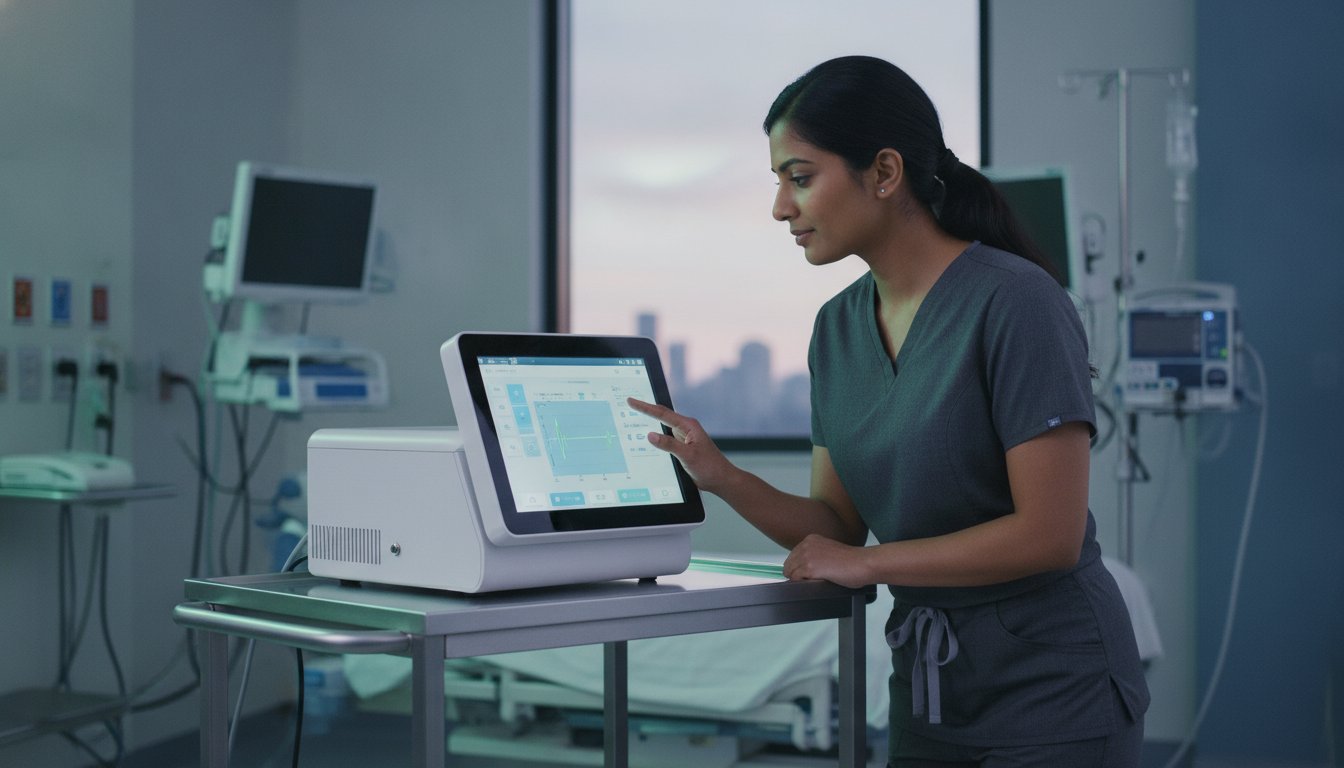
Selecting a secretion management device hospital teams can trust requires prioritizing hardware that matches the high-stakes environment of the ICU. Because space is often limited, a small footprint and streamlined profile are essential for maintaining clear access to the patient. An intuitive, high-definition touch screen ensures that busy clinicians can perform rapid setup and adjust parameters quickly during critical moments. Therapy continuity is further protected by internal battery backup, providing enough power for multiple sessions during intra-hospital transport or unexpected power interruptions.
Portability and Modular Design in the ICU
Clinical efficiency depends on equipment that adapts to the bedside rather than the other way around. A modular design, featuring a removable 2kg treatment module, allows for seamless integration into crowded patient rooms. This lightweight construction enhances staff safety by reducing the physical strain of moving heavy equipment. Such portability ensures that high-quality airway clearance remains consistent whether the patient is in their room or being moved to diagnostic imaging.
Interactive Pedagogic Tools and Patient Coaching
Visual therapy guidance represents a significant leap forward in patient adherence and clinician efficiency. The device interface includes interactive coaching functions that provide real-time visual cues, helping patients synchronize their breathing with the machine’s insufflation and exsufflation cycles. These visual aids simplify the training process, significantly reducing the time staff must spend on basic education. By improving patient cooperation through clear pedagogical tools, hospitals can achieve more effective outcomes with the secretion management device hospital units rely on for non-invasive care. To integrate these advanced features into your facility, you can consult with Novus Medical regarding technical specifications and clinical training.
Optimizing Airway Clearance with the EO-70 and Novus Medical
The EO-70 Secretion Management Device represents a sophisticated technological remedy for Canadian facilities aiming to modernize their respiratory care standards. Its dual-modality design allows for seamless transitions between care environments, ensuring that patient stability remains a priority from the ICU to step-down units. By selecting a high-performance secretion management device hospital administrators can realize significant improvements in clinical efficiency while maintaining the highest levels of patient safety. This adaptability is crucial for hospitals managing diverse patient populations with varying degrees of respiratory compromise.
Implementing the EO-70 into Hospital Protocols
Integrating advanced MIE technology into standard respiratory therapy workflows requires a methodical approach that prioritizes both patient safety and operational efficiency. Facilities should establish clear, evidence-based criteria for patient selection using metrics like cough peak flow and specific clinical diagnoses. Professional clinical training is essential to ensure that staff feel confident in managing the device’s customizable presets and coaching functions. By integrating a modern secretion management device hospital teams can trust, Novus Medical provides specialized training programs that bridge the gap between global innovation and local clinical practice. These programs ensure that every member of the care team is proficient in delivering automated airway clearance, ultimately reducing the risk of complications.
The Novus Medical Advantage: Support and Reliability
Reliability in critical care equipment is non-negotiable for long-term clinical success. As the exclusive Canadian distributor, Novus Medical offers a robust national support network that includes authorized technical service, warranty management, and comprehensive maintenance contracts. This commitment ensures the longevity of your equipment and the continuity of patient care across the country. We act as a steady guide for healthcare providers, offering hands-on education and technical expertise that moves beyond simple sales. Our mission is to support the technical proficiency of our clients and the quality of care they provide, ensuring that every transition to new technology is seamless and supported by professional skill-building. Contact Novus Medical to discuss EO-70 integration for your hospital.
Advancing Respiratory Standards in Canadian Critical Care
Modernizing airway clearance protocols is a vital step toward reducing clinical complications and improving the patient experience in high-acuity settings. By transitioning from reactive manual interventions to the proactive use of mechanical insufflation-exsufflation, hospitals can effectively mobilize distal secretions while avoiding the trauma of invasive suctioning. Implementing a sophisticated secretion management device hospital teams can rely on ensures that standardized, evidence-based care becomes the baseline for every patient. These advancements not only optimize staff time but also support faster recovery through improved alveolar health and lung recruitment.
As the exclusive Canadian distributor of the EO-70, Novus Medical provides the national technical support and specialized clinical training necessary for seamless technology integration. Our commitment to the Canadian healthcare community includes a comprehensive maintenance network designed to ensure long-term operational reliability. We invite you to explore the EO-70 Secretion Management System to see how our expertise can enhance your respiratory therapy outcomes. Together, we can build a more efficient, patient-centred future for critical care.
Frequently Asked Questions
What is the primary difference between a cough assist machine and a secretion management device?
A secretion management device hospital teams use often incorporates broader therapeutic modalities than a standard cough assist machine. While both use pressure shifts to simulate coughing, sophisticated systems like the EO-70 include Intermittent Positive Pressure Breathing (IPPB) and adjustable oscillations. These additional modes allow for lung volume recruitment and deeper mucus mobilization, providing a more comprehensive solution for patients with complex respiratory needs compared to basic insufflation-exsufflation.
How does mechanical insufflation-exsufflation (MIE) improve outcomes for ICU patients?
Mechanical insufflation-exsufflation improves ICU outcomes by providing a non-invasive method to clear deep-seated secretions, which significantly reduces the incidence of ventilator-associated pneumonia (VAP). By clearing the airways more effectively than manual suctioning, it decreases the work of breathing and helps prevent atelectasis. This proactive approach often leads to shorter weaning times from mechanical ventilation and can ultimately reduce a patient’s total length of stay in the critical care unit.
Can the EO-70 secretion management device be used during intra-hospital transport?
Yes, the EO-70 is specifically designed for mobility within the hospital environment. It features a lightweight, modular design with a removable 2kg treatment module and an internal battery backup that supports multiple therapy sessions without external power. This ensures that patients continue to receive consistent airway clearance even when they’re being moved to diagnostic imaging or transferred between departments, maintaining therapeutic continuity during critical transitions.
What training is required for hospital staff to operate the EO-70 device safely?
Hospital staff should participate in specialized clinical training programs that cover device setup, parameter customization, and patient synchronization. Novus Medical provides hands-on education to ensure clinicians can confidently use the high-definition touchscreen and interpret visual coaching functions. This training focuses on adapting therapy to individual patient mechanics and recognizing clinical indicators for pressure adjustments, which is essential for maintaining both patient safety and the overall efficacy of the treatment.
Is MIE therapy covered under standard Canadian hospital equipment service contracts?
Coverage for MIE technology depends on the specific terms of a facility’s agreement, but Novus Medical offers comprehensive maintenance contracts and national technical support for the EO-70. These contracts typically include warranty services and regular technical assessments to ensure equipment longevity. Choosing a distributor with a national network provides hospitals with the operational reliability needed to sustain a secretion management device hospital program across various clinical departments and care environments.
Disclaimer
Disclaimer: Articles on this website are produced with the assistance of automated content tools (AutoSEO) and are intended solely for general informational purposes. This content does not constitute professional advice. While we strive to maintain accurate and up-to-date information, readers should verify key details independently before taking action based on any content found on this site.

Leave a Reply
Your email is safe with us.