Effective airway clearance is often the single most critical factor in preventing respiratory failure for patients with neuromuscular disorders. Yet, providing this life-saving care requires more than clinical skill; it demands a deep understanding of the regulatory and financial hurdles surrounding mechanical insufflation exsufflation Canada. For many clinicians, the transition from acute hospital settings to community care is fraught with uncertainty as they attempt to secure necessary equipment through a fragmented provincial funding landscape.
You likely realize that traditional airway clearance techniques often fall short when cough peak flows drop below functional levels. This guide addresses that challenge by clarifying the clinical necessity of MI-E therapy and detailing the specific funding sources available across various provinces. We’ll examine how technological advancements, such as the EO-70 secretion management device, are streamlining workflows and improving patient outcomes. This briefing provides a comprehensive framework for selecting the most versatile technology while addressing the complexities of Canadian procurement and long-term respiratory support.
Key Takeaways
- Understand how simulating a physiological cough via non-invasive pressure effectively prevents atelectasis and reduces emergency room visits for neuromuscular patients.
- Gain clarity on the fragmented provincial funding landscape to ensure a seamless transition of care from acute hospital environments to the home.
- Evaluate the technical specifications of the EO-70, a leading choice for mechanical insufflation exsufflation Canada that offers high-frequency oscillation and customizable presets.
- Realize the importance of selecting a partner that provides national technical support and clinical training to maximize the efficacy of secretion management protocols.
What is Mechanical Insufflation-Exsufflation (MI-E)?
Mechanical insufflation-exsufflation (MI-E) is a non-invasive therapy designed to augment or replace a patient’s natural cough. By applying alternating positive and negative pressure to the airway, it clears retained secretions that would otherwise lead to severe respiratory complications. In clinical settings across Canada, MI-E has become the gold standard for managing patients with an ineffective cough, particularly those in intensive care units or long-term community care.
While often referred to by the colloquial term “Cough Assist,” the clinical breadth of mechanical insufflation exsufflation Canada extends far beyond simple suctioning. It’s a critical intervention for individuals living with neuromuscular disorders such as Amyotrophic Lateral Sclerosis (ALS), Spinal Muscular Atrophy (SMA), and various spinal cord injuries. These conditions often compromise the muscles required for a functional cough, making MI-E a vital tool for maintaining pulmonary hygiene and preventing atelectasis.
Insufflation vs. Exsufflation: The Mechanism of Action
The process begins with the insufflation phase, where the device delivers a deep, controlled breath to the patient. This positive pressure expands the lungs and recruits alveolar volume, ensuring air reaches behind the secretions. Immediately following this, the device rapidly reverses the flow. This exsufflation phase creates a high expiratory flow rate that mimics the physics of a natural cough, effectively pulling mucus toward the upper airway for removal.
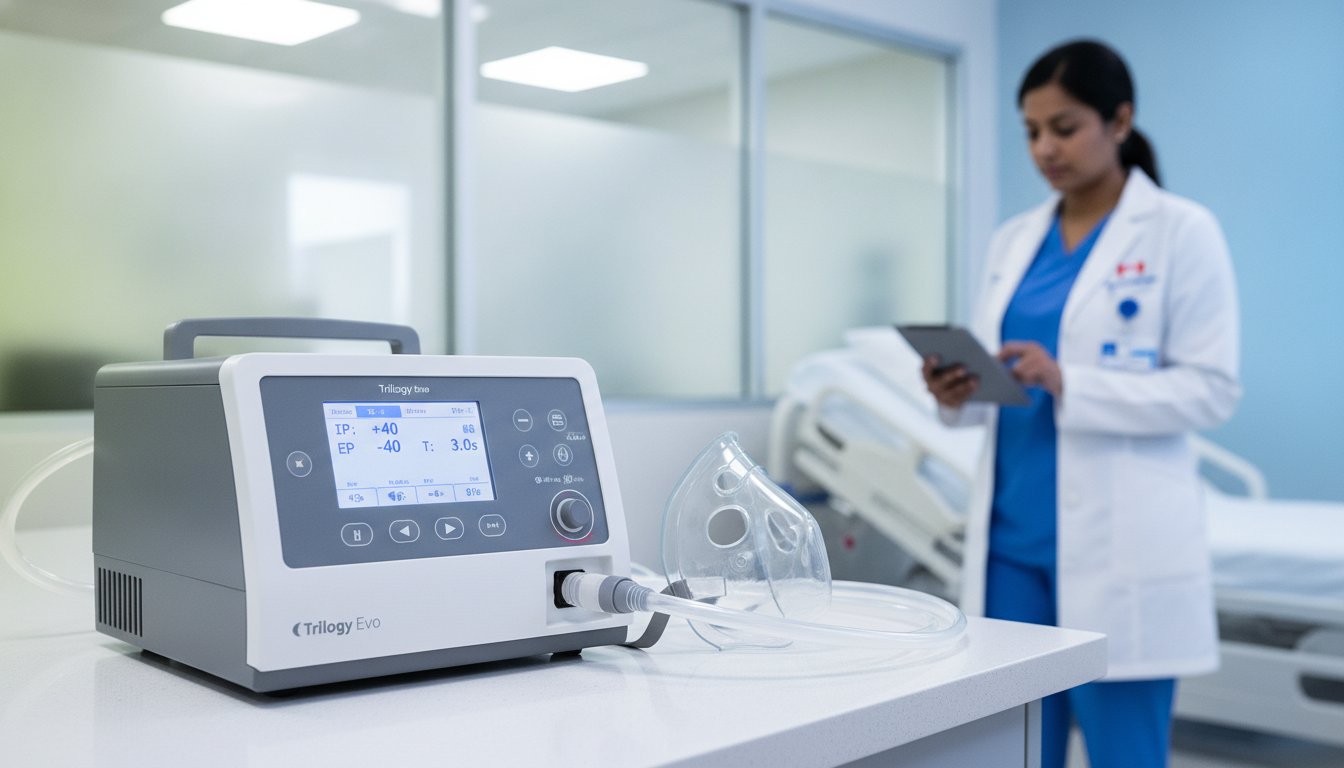
Modern systems like the EO-70 Secretion Management Device enhance this cycle by incorporating high-frequency oscillation and vibration. These mechanical pulses help loosen tenacious secretions from the bronchial walls during both phases of the cycle. This technological refinement ensures a more thorough clearance, reducing the physical strain on the patient while maximizing the therapeutic impact of each session. It’s a sophisticated technological remedy that supports clinicians in providing the highest level of respiratory care.
Clinical Benefits and Outcomes in the Canadian Healthcare Setting
Integrating mechanical insufflation exsufflation Canada into standard care protocols delivers significant improvements in patient stability and system efficiency. By effectively clearing secretions, this therapy directly reduces the frequency of respiratory-related hospitalizations and emergency room visits. Chronic neuromuscular patients benefit most from the consistent prevention of atelectasis and pneumonia, which are primary drivers of acute clinical deterioration and prolonged hospital stays.
Beyond clinical metrics, patient comfort is a paramount consideration for long-term care success. MI-E provides a non-invasive alternative to traumatic suctioning, which often causes mucosal damage and significant distress. It’s a sophisticated technological remedy that also plays a vital role in the transition from hospital to home settings. For patients in the ICU, MI-E is often the deciding factor in a successful weaning process from mechanical ventilation by ensuring clear airways during the critical extubation phase.
Evidence-Based Support from the Canadian Thoracic Society
The Canadian Thoracic Society (CTS) position statement advocates for the proactive use of mechanical insufflation exsufflation Canada for adult patients with compromised cough peak flows. Initiation is typically recommended in acute care when peak flow falls below 160 L/min, whereas home care protocols often begin at higher thresholds to maintain lung compliance. Clinical data from Canadian centres confirms that the integration of MI-E into long-term care plans results in a substantial reduction in mortality rates associated with chronic respiratory failure. Clinicians seeking to implement these evidence-based protocols can explore advanced secretion management solutions that align with current CTS recommendations.
Navigating MI-E Funding and Procurement Across Canada
Securing mechanical insufflation exsufflation Canada requires clinicians to navigate a complex and often fragmented jurisdictional patchwork. While acute care funding is typically absorbed into hospital operating budgets, the transition to community care introduces a diverse range of eligibility criteria. Coverage varies significantly between different jurisdictions, each with its own specialized programs and unique funding structures. This inconsistency creates challenges for patients with neuromuscular disorders who require uninterrupted access to therapy. The Canadian Thoracic Society remains a pivotal voice in advocating for standardized national funding to bridge these regional gaps.
Strategic procurement involves more than just selecting a device. It requires a long-term commitment to clinical excellence through bundled service contracts. These contracts should prioritize rapid technical response times and hands-on clinical training for frontline staff. By integrating these elements into the procurement process, healthcare facilities can reduce the risk of device misuse and ensure that patients receive the full therapeutic benefit of the technology. This holistic approach to acquisition ensures that the equipment remains a reliable asset within the clinical workflow.
Diverse Funding Models and Programs
Various government-funded programs, including those for assistive devices and aids to daily living, serve as essential resources for home-based respiratory support. To secure approval, clinicians must provide detailed documentation, including clinical diagnosis and objective metrics like peak cough flow measurements. Navigating these diverse requirements is significantly easier when partnering with a national distributor that understands the specific regulatory nuances across jurisdictions. Expert guidance ensures that applications are completed accurately, reducing delays in equipment delivery. To streamline your facility’s equipment acquisition and support, consult with Novus Medical about our national technical support and clinical training programs.

Advancing Care with the EO-70 Secretion Management System
The EO-70 secretion management system Canada represents a sophisticated technological remedy for patients requiring complex airway clearance. Unlike legacy systems that offer basic pressure cycles, the EO-70 integrates high-frequency oscillation to mobilize secretions from the peripheral airways effectively. This clinical versatility is further enhanced by customizable presets, allowing clinicians to tailor therapy to the specific resistance and compliance of each patient’s lungs. An internal battery ensures that therapy remains uninterrupted during hospital transport or community travel, providing a level of reliability essential for mechanical insufflation exsufflation Canada.
As the exclusive Canadian distributor, Novus Medical ensures that this advanced technology is backed by a robust national infrastructure. The device’s design prioritizes a seamless transition from acute care to home settings, reducing the clinical burden on caregivers while maintaining high standards of pulmonary hygiene. This continuity is vital for preventing the respiratory complications discussed earlier, as it allows for a standardized approach regardless of the care setting. It’s an essential tool for maintaining the stability of neuromuscular patients outside the ICU.
Technical Excellence and Support
Device longevity in Canadian hospitals depends heavily on proactive maintenance and specialized technical support. Novus Medical provides comprehensive service contracts that include national technical support and warranty services to ensure equipment remains operational in high-acuity environments. Beyond hardware reliability, professional clinical training programs are fundamental to maximizing device ROI and ensuring patient safety. When healthcare providers are proficient in navigating advanced settings, they can achieve superior secretion clearance with optimized pressures, which directly improves the patient experience and clinical outcomes. This educational support transforms a simple equipment purchase into a sustainable clinical partnership. Explore the EO-70 Secretion Management System at Novus Medical to see how this technology can transform your facility’s secretion management protocols.
Advancing Airway Clearance Standards in Canada
Securing optimal respiratory outcomes for neuromuscular patients requires a strategic alignment of clinical expertise and advanced technology. By understanding the nuances of the provincial funding landscape and the physiological benefits of high-frequency oscillation, healthcare providers can significantly reduce the risk of acute respiratory complications. The transition from acute hospital settings to community care is simplified when utilizing versatile systems like the EO-70, which bridge the gap between complex clinical needs and long-term stability.
As the exclusive Canadian distributor of the EO-70, Novus Medical provides the national technical support and warranty services necessary for device longevity. Our clinically-led training and workshops empower your team to implement mechanical insufflation exsufflation Canada with confidence and precision. We act as your knowledgeable consultant to ensure every patient receives the highest standard of secretion management throughout their care journey. Contact Novus Medical for MI-E clinical support and procurement to enhance your facility’s respiratory care protocols today. We look forward to supporting your commitment to clinical excellence.
Frequently Asked Questions
Is mechanical insufflation-exsufflation covered by provincial health insurance in Canada?
Coverage for mechanical insufflation exsufflation Canada is provided through various provincial programs, although eligibility criteria differ across the country. In Ontario, the Assistive Devices Program (ADP) provides funding for eligible residents, while Alberta utilizes the Aids to Daily Living (AADL) program. Clinicians must typically provide objective data, such as peak cough flow measurements, to justify the clinical necessity for long-term community support and equipment funding.
What is the difference between a cough assist device and MI-E?
While “Cough Assist” is a widely recognized trade name often used colloquially in Canadian hospitals, mechanical insufflation-exsufflation (MI-E) is the formal clinical term for the therapy itself. MI-E describes the specific physiological mechanism of applying alternating positive and negative pressure to the airways. Modern devices like the EO-70 represent the latest evolution in this therapy, offering advanced features such as high-frequency oscillation that surpass legacy equipment.
Can MI-E therapy be used for pediatric patients in Canada?
Pediatric patients with neuromuscular conditions, such as Spinal Muscular Atrophy (SMA), frequently utilize MI-E therapy across Canada to manage secretions and prevent respiratory infections. Clinical protocols for children require specialized settings and appropriately sized interfaces to ensure safety and efficacy. Novus Medical provides dedicated clinical training to help pediatric respiratory therapists optimize these settings, ensuring that the therapy is both comfortable and effective for smaller patients.
What are the contraindications for using MI-E in an acute care setting?
Absolute contraindications for MI-E in an acute care setting include an untreated pneumothorax or recent barotrauma. Clinicians must exercise caution for patients with bullous emphysema or recent upper airway surgery. In the Canadian ICU environment, it’s essential to review the patient’s chest X-rays and clinical history before initiating therapy. This ensures that the applied pressures don’t exacerbate existing pulmonary injuries or cause further respiratory distress.
How does a hospital procure MI-E devices through a Canadian distributor?
Hospitals and health authorities can procure MI-E technology by contacting an authorized national distributor like Novus Medical. They are the exclusive provider of the EO-70 in Canada. The procurement process typically involves evaluating clinical needs and bundling equipment with essential service agreements. This approach ensures your facility receives the hardware, technical support, and professional clinical training required to maintain high standards of patient care nationwide.
Disclaimer
Disclaimer: Articles on this website are produced with the assistance of automated content tools (AutoSEO) and are intended solely for general informational purposes. This content does not constitute professional advice. While we strive to maintain accurate and up-to-date information, readers should verify key details independently before taking action based on any content found on this site.