

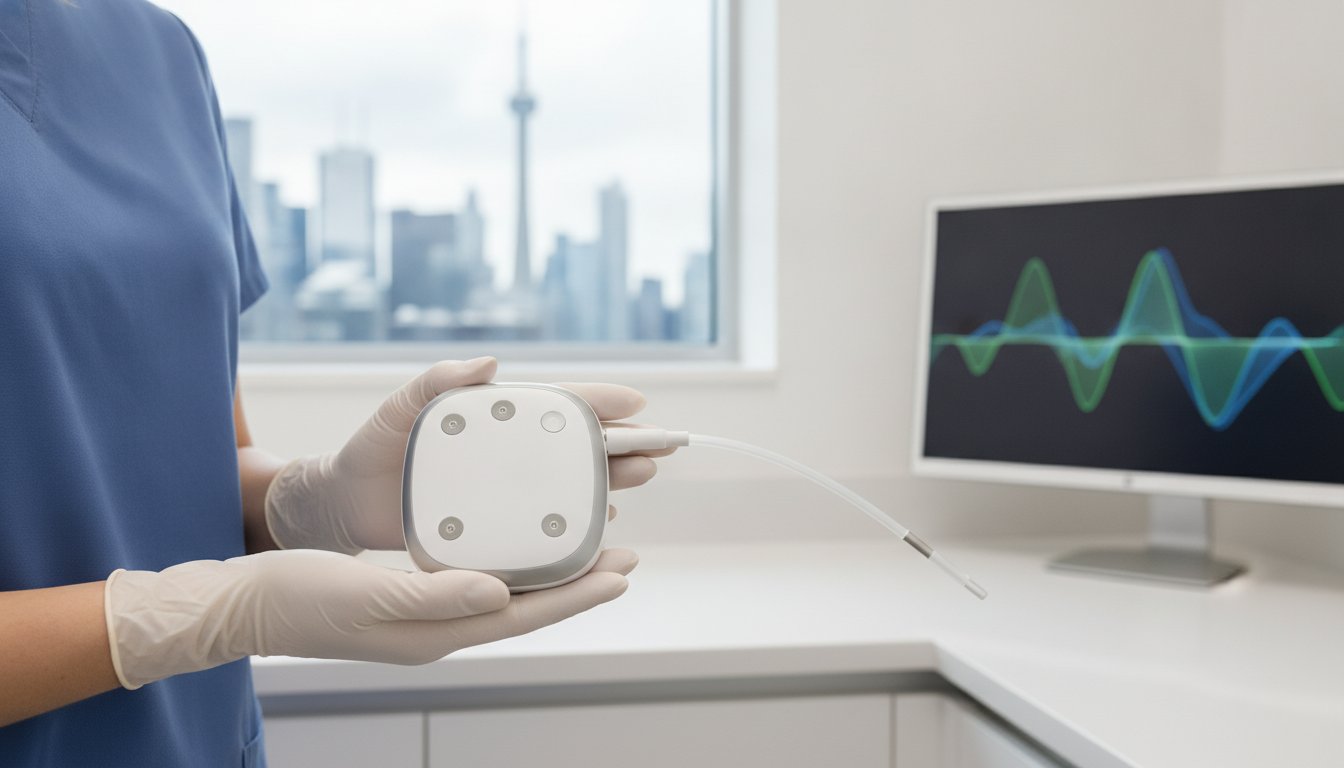
An estimated one in four Canadian adults are at high risk for obstructive sleep apnea, yet the path to a definitive diagnosis often remains obstructed by long wait times and technical confusion. You likely recognize the clinical strain caused by extended wait lists for in-lab polysomnography and the persistent challenge of patients mistaking consumer wearables for medical-grade tools. This professional guide clarifies the selection process for a sleep apnea diagnostic device Canada providers can rely on for accuracy and Health Canada compliance.
We will analyze the technical requirements of Level 3 home sleep apnea testing (HSAT) versus Level 1 lab studies; we’ll also examine how the Cadwell ApneaTrak Level 3 HSAT modernizes workflows. By the end of this reference, you’ll understand how to bridge the gap between portable convenience and the uncompromising data accuracy required for a definitive clinical diagnosis. This ensures your practice remains at the centre of modern respiratory care while maintaining the highest standards of patient safety and technical reliability.
Key Takeaways
- Distinguish between Level 1 polysomnography and Level 3 testing to identify the most efficient diagnostic pathway for patients with uncomplicated obstructive sleep apnea.
- Navigate Health Canada regulations to select a sleep apnea diagnostic device Canada clinics can utilize for compliant, clinical-grade data capture.
- Modernize clinical workflows and reduce institutional wait times by integrating portable, high-fidelity diagnostic technology into your daily standard of care.
- Evaluate the technical advantages of the Cadwell ApneaTrak Level 3 HSAT, specifically its robust sensor reliability and seamless integration with existing EMR systems.
The Evolution of Sleep Apnea Diagnostics in the Canadian Healthcare System
Obstructive Sleep Apnea (OSA) is characterized by the repeated collapse of the upper airway during sleep, resulting in fragmented rest and significant cardiovascular strain. Current data indicates that 1 in 4 Canadian adults are at high risk for this condition, yet a substantial portion of the population remains undiagnosed. Historically, the primary diagnostic pathway involved Polysomnography (PSG), an intensive study conducted in specialized sleep laboratories. However, the Canadian healthcare system currently faces significant wait times, which can stretch from 6 to 18 months in some provinces. This logistical bottleneck has accelerated the adoption of portable solutions, specifically the use of a professional sleep apnea diagnostic device Canada providers can trust for clinical accuracy.
Why Clinical-Grade Hardware Matters
Clinicians must distinguish between consumer “wellness” wearables and medical-grade diagnostic equipment. While smartwatches provide general sleep awareness, they lack the high-fidelity sensors required to identify complex respiratory patterns or differentiate between central and obstructive events. Clinical-grade hardware must meet rigorous Health Canada standards as Class II medical devices. This validation ensures that the data captured is reliable enough for formal diagnosis and subsequent treatment planning. Without these standards, the risk of misdiagnosis or missed respiratory events increases significantly.
The Role of Portability in Modern Sleep Medicine
Portable technology, including the Cadwell ApneaTrak Level 3 HSAT, allows patients to complete studies in their own environment. This increases compliance and provides a more representative sample of their typical sleep architecture. For hospitals and clinics, home-based diagnostics alleviate the burden on facility resources and help manage institutional wait lists more effectively. By modernizing clinical workflows with portable technology, practitioners can prioritize in-lab beds for complex neurological cases while providing rapid, accurate screening for uncomplicated OSA.
Understanding Diagnostic Levels: Level 1 vs. Level 3 HSAT Devices
Selecting the appropriate sleep apnea diagnostic device Canada clinics utilize depends on the patient’s clinical profile and the complexity of the suspected disorder. Level 1 Polysomnography remains the comprehensive gold standard, utilizing 24 or more channels to record brain activity, eye movements, and muscle tone within a controlled lab environment. Conversely, Level 3 Home Sleep Apnea Testing (HSAT) offers a streamlined, portable alternative specifically designed for the diagnosis of uncomplicated obstructive sleep apnea. According to the Public Health Agency of Canada on Sleep Apnea, timely diagnosis is vital for preventing long-term cardiovascular complications.
In Canada, a Level 3 diagnostic device is technically defined by its ability to record a minimum of four distinct physiological channels, including airflow, heart rate, and oxygen saturation.
Technical Requirements for Level 3 HSAT
To meet clinical standards, an HSAT device must integrate specific sensors that capture high-fidelity data. Essential parameters include airflow, respiratory effort, oxygen saturation (SpO2), and heart rate. High-quality systems also include body position sensors, which are critical for identifying positional OSA where events occur primarily while the patient is supine. These sensors allow clinicians to differentiate between positional issues and generalized airway collapse, ensuring the diagnostic profile is both accurate and actionable.
When to Choose Level 3 Over Level 1
Level 3 studies are highly efficient for screening patients with a high pre-test probability of moderate-to-severe OSA who do not have significant comorbidities. This approach allows for faster initiation of therapy and reduces the burden on provincial sleep labs. However, if a patient presents with complex symptoms or underlying conditions like heart failure, a Level 1 study is necessary to capture a more detailed neurological profile. For clinics looking to modernize their workflow, investing in a sleep apnea diagnostic device Canada professionals trust ensures a balance of accuracy and patient comfort.

Key Features to Evaluate in a Sleep Apnea Diagnostic Device
Selecting a sleep apnea diagnostic device Canada providers can rely on requires a focus on long-term operational efficiency and clinical precision. Data capture reliability is the most critical factor; a single sensor failure or displaced lead during an unsupervised home study necessitates a repeat test, which increases costs and delays patient care. High-performance hardware utilizes robust, keyed connectors and intuitive designs that guide patients toward correct sensor placement. The device must also be constructed from medical-grade materials that withstand the rigorous disinfection protocols required for multi-patient clinical use.
Data Integrity and Clinical Reporting
Diagnostic accuracy is fundamentally tied to high-resolution sampling rates. These rates ensure that subtle respiratory events and cardiac variations are captured with enough detail for a definitive interpretation. Sophisticated software integration for a sleep apnea diagnostic device Canada clinicians utilize is equally vital. The data should flow seamlessly into clinical reporting tools and EMR systems, allowing for automated scoring assistance that reduces the administrative burden on sleep specialists. This efficiency ensures that practitioners spend more time on patient consultation and less on manual data processing.
Support and Maintenance in Canada
Clinical uptime depends on more than just the initial purchase. A comprehensive medical equipment service contract is essential for maintaining diagnostic standards over the life of the hardware. Localized technical support provides Canadian healthcare providers with rapid access to expertise and replacement parts, which is a significant advantage over foreign-based manufacturers. For clinics aiming to optimize their diagnostic capacity, choosing a partner that offers full-service technical support for sleep diagnostics is a strategic necessity. It’s this commitment to ongoing maintenance that ensures your diagnostic program remains reliable and compliant with Health Canada standards. Facilities managing complex patient populations across multiple departments — including those requiring specialized neonatal care equipment Canada standards — benefit most from a distributor with broad clinical expertise and localized support infrastructure.
The Cadwell ApneaTrak: A Professional Solution for Canadian Clinics
The Cadwell ApneaTrak Level 3 HSAT represents the pinnacle of portable diagnostic technology, specifically engineered to meet the rigorous demands of the Canadian clinical environment. As a premier sleep apnea diagnostic device Canada practitioners utilize, it combines a compact, patient-centric design with high-fidelity sensors that ensure clinical-grade data capture. This hardware integrates seamlessly with the broader Cadwell sleep diagnostics software suites, allowing for a unified approach to data management and study interpretation. By utilizing this system, clinics can effectively bridge the gap between home-based convenience and laboratory-level accuracy.
Streamlining Clinical Workflows with Cadwell Technology
The ApneaTrak is designed to simplify the diagnostic process for both clinical staff and patients. Its intuitive setup reduces the likelihood of patient error during unsupervised studies, while its robust architecture facilitates rapid data download and analysis upon the device’s return to the clinic. This streamlined workflow allows for faster turnaround times, enabling clinicians to finalize diagnoses and initiate treatment pathways with greater efficiency. It’s a responsive diagnostic solution that directly addresses the logistical challenges of modern respiratory care.
Novus Medical: Your Partner in Sleep Diagnostic Excellence
As the exclusive Canadian distributor, Novus Medical provides the technical expertise and localized support necessary for maintaining a sleep apnea diagnostic device Canada clinics can trust for long-term use. We provide national technical support and comprehensive training to ensure your team’s fully proficient with the latest Cadwell technology. To protect your investment and ensure long-term device reliability, clinicians can secure a medical equipment service contract tailored to their specific operational needs. This partnership provides a steady, reliable guide for your clinical practice. Explore our full range of Cadwell Sleep Diagnostics solutions to modernize your clinical workflow today.
Advancing Your Sleep Diagnostic Capabilities
Modernizing your diagnostic workflow requires a strategic shift toward portable, clinical-grade technology. By distinguishing between Level 1 laboratory studies and the efficiency of Level 3 home testing, your clinic can significantly reduce wait times while maintaining diagnostic integrity. Selecting a reliable sleep apnea diagnostic device Canada practitioners trust ensures that every study produces actionable, Health Canada-compliant data.
As the exclusive Canadian distributor for the Cadwell ApneaTrak Level 3 HSAT, Novus Medical provides the hardware and technical support necessary for clinical excellence. Our team offers national technical support and comprehensive service contracts to ensure your equipment remains operational and accurate. With deep expertise in respiratory and neuro-diagnostic solutions, we’re committed to supporting your practice’s long-term success. Contact Novus Medical for a professional consultation on sleep diagnostic hardware to enhance your patient care standards. We look forward to partnering with your clinic to improve respiratory outcomes across Canada.
Frequently Asked Questions
What is the difference between a Level 3 and Level 4 sleep study device?
Level 3 devices capture a minimum of four physiological channels, including respiratory effort and airflow, which are essential for a professional diagnosis. Level 4 devices are typically limited to one or two parameters, such as pulse oximetry or airflow alone. While Level 4 tools are used for basic screening, they don’t meet the comprehensive clinical requirements of a sleep apnea diagnostic device Canada providers utilize for definitive home-based testing.
Are home sleep apnea diagnostic devices Health Canada approved?
All clinical-grade home sleep apnea testing equipment must be licensed by Health Canada as Class II medical devices to be used for formal diagnosis. This regulatory oversight ensures the hardware meets specific safety and performance standards for Canadian patients. Novus Medical exclusively distributes Health Canada-approved equipment, such as the Cadwell ApneaTrak Level 3 HSAT, ensuring that clinics remain compliant while delivering accurate diagnostic results for obstructive sleep apnea.
How many channels of data are required for a clinical sleep study in Canada?
A professional Level 3 home sleep study in Canada requires a minimum of four distinct data channels to ensure diagnostic accuracy. These essential channels include airflow, respiratory effort, heart rate, and oxygen saturation. Capturing these specific parameters allows clinicians to identify obstructive events effectively. In contrast, in-lab studies utilize 24 or more channels to provide a more detailed neurological and respiratory profile for complex cases requiring extensive monitoring.
Can a Level 3 HSAT device detect central sleep apnea?
Level 3 HSAT devices can identify central sleep apnea events if they’re equipped with specific sensors like respiratory effort belts. By monitoring the absence of both airflow and chest wall movement, a high-fidelity sleep apnea diagnostic device Canada clinics use can differentiate between obstructive and central events. However, if a patient presents with complex comorbidities or suspected neurological disorders, a comprehensive Level 1 lab study may still be required for deeper analysis.
What technical support is available for medical diagnostic equipment in Canada?
Canadian healthcare providers have access to national technical support and comprehensive maintenance contracts through authorized distributors like Novus Medical. This localized support includes professional training, warranty services, and rapid hardware repairs to minimize clinical downtime. Securing a medical equipment service contract ensures that your diagnostic hardware remains calibrated and reliable. This commitment to ongoing technical excellence helps clinics maintain a steady workflow and high standards of patient care across the country.
Disclaimer
Disclaimer: Articles on this website are produced with the assistance of automated content tools (AutoSEO) and are intended solely for general informational purposes. This content does not constitute professional advice. While we strive to maintain accurate and up-to-date information, readers should verify key details independently before taking action based on any content found on this site.
Leave a Reply
Your email is safe with us.