

An AHI is a useful starting point, but the testing method matters too. An AHI below 5 events per hour is considered normal; 5-15 indicates light sleep apnea, 15-30 moderate sleep apnea, and above 30 suggests severe sleep apnea. The best sleep diagnostics equipment in Canada depends on whether a home sleep apnea test (HSAT) or laboratory polysomnography (PSG) can capture the information needed for assessment.
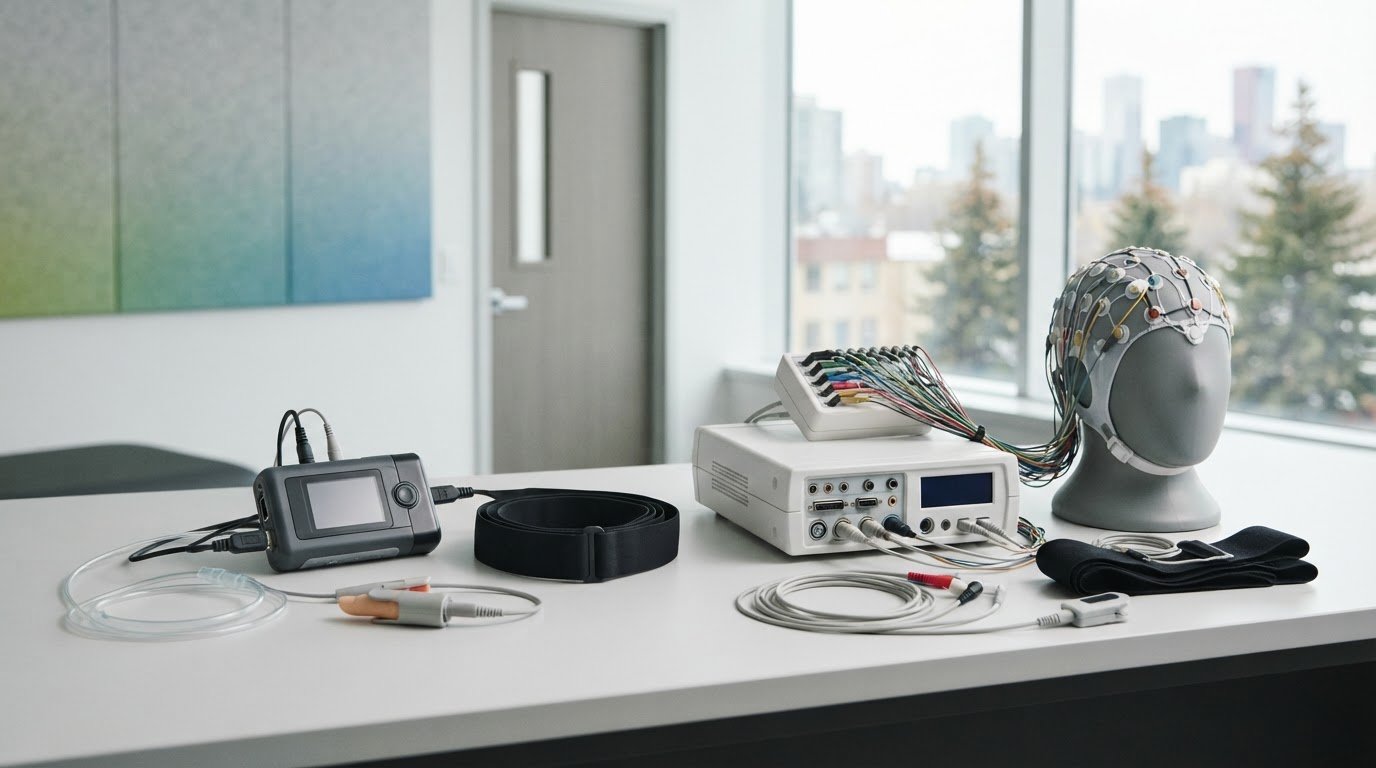
Choosing between a test at home and an overnight laboratory study can feel like a trade-off between convenience and detail. HSAT can record breathing, oxygen levels, heart rate, chest movements, snoring and sleep position, while Level 1 PSG also records brain waves, eye movements and leg movements.
This guide explains how to interpret AHI, what HSAT and laboratory PSG measure, and how PSG systems support different clinical testing needs. You’ll find a practical basis for comparing equipment by its recorded signals, care setting and fit with your workflow.
Key Takeaways
- Learn which breathing and oxygen signals a home sleep apnea test can capture overnight.
- See how laboratory PSG adds brain-wave and movement measurements to the assessment.
- Identify the clinical and workflow considerations that can guide PSG system selection.
- Compare when home testing or laboratory testing may better suit the diagnostic need, then explore where LungFit® PH fits in Novus Medical’s respiratory equipment portfolio.
Home sleep apnea testing (HSAT)
Home sleep apnea testing records breathing-related signals overnight, outside a sleep laboratory. In Canada, referrals, device selection and interpretation all shape how results inform assessment.
Home-Test Measurements
A home sleep test can record oxygen levels, breathing, heart rate, chest movements, snoring and sleep position. These signals can help assess breathing disruptions, but the test does not capture the brain-wave and movement channels recorded during laboratory PSG. To compare methods, consider which measurements the clinical question requires and whether the recording captures the relevant breathing patterns.
At-Home Level 3 Testing
Level 3 testing is an at-home sleep apnea test category used for overnight recording. A patient wears monitoring equipment while sleeping, then the recorded signals are interpreted as part of assessment. Referral and scheduling typically involve arranging the test, receiving instructions for fitting the sensors, and returning the device or its data for review. A home test is diagnostic, not sleep therapy or home oxygen treatment.
At-Home Device Selection
There isn’t one best at-home sleep apnea test device for every patient or clinic. Compare the signals captured, sensor placement, recording workflow and how results are reviewed. In Canada, the Cadwell ApneaTrak Level 3 HSAT is an example of a named Level 3 system. Canadian suppliers include medical-device distributors and sleep-diagnostics manufacturers that sell equipment and support clinical training.
Health Canada licensing depends on a device’s classification. For Class III devices, a licence application must include a certificate showing the design and manufacturing quality management system meets CAN/CSA-ISO 13485 requirements, according to Department of Justice Canada.
Provincial health-plan and private-insurance coverage varies by plan and jurisdiction. Coverage for diagnostic testing is separate from coverage for equipment, so confirm the applicable terms before budgeting for either.
Consumer sleep trackers can show patterns such as estimated sleep duration, but they do not collect the full clinical signals of an HSAT or PSG. Treat tracker data as a prompt for clinical assessment, not as a diagnosis of sleep apnea or another sleep disorder.
Laboratory polysomnography (PSG)
Laboratory PSG is an overnight sleep study conducted with a qualified sleep technician monitoring the patient. Unlike a home recording, it takes place in a sleep laboratory, where staff can help set up sensors and observe the recording as it proceeds.
A Level 1 polysomnography study records brain waves, blood oxygen levels, heart rate, breathing patterns, and eye and leg movements. These channels help clinicians assess sleep stages and relate breathing changes to other overnight signals. The combined recording can be useful when symptoms or initial findings call for a detailed view of sleep and respiration.
In-lab PSG uses sensors to monitor brain activity, oxygen, breathing effort, limb movement and ECG overnight. Sensor placement matters: each channel must record clearly enough to support interpretation. The technician monitors the recording, and the final review considers the patient’s symptoms alongside all relevant signals, rather than treating a single measurement as the whole result.
Portable polysomnography systems bring recording equipment beyond a fixed laboratory setup. Compare a system’s recorded channels and intended workflow with the study requirements: “portable” describes mobility, while PSG refers to the type of sleep study. A portable configuration should not be assumed to collect every signal available in an in-lab Level 1 study. Match the equipment and recording plan to the clinical question.
For Canadian facilities, organize the testing pathway around referral, patient preparation and overnight monitoring. When scheduling, explain where the patient should arrive, which sensors will be applied and how the recording will proceed. Before the study, confirm that staff have the protocol and equipment ready. Afterward, route the recording for interpretation and communicate the next clinical step to the care team. These operational steps connect a completed PSG study with clinical review, while keeping recording separate from diagnosis or treatment.
Choosing a PSG system for a sleep lab
For a clinic, select a PSG system by matching its documented functions to study protocols and daily workflows. Define patient groups, staff roles and reporting needs before comparing platforms. This gives teams a practical basis for assessing the best sleep diagnostics equipment Canada can support for their clinical setting.
Features and Accuracy
Compare systems by their documented recording channels, data-review workflow and fit with the clinic’s protocol. Accuracy depends on appropriate sensor setup and clear signals, not brand name alone. When evaluating the best sleep diagnostics equipment Canada offers, prioritize verifiable capabilities and how well they suit the intended studies.
Build a requirements list: identify the signals each protocol calls for, how sensors connect and how recordings move from acquisition to review. Consider whether staff can follow consistent setup and signal-check procedures across shifts. Include Cadwell Sleep Diagnostics in the evaluation, and review its documented functions against the clinic’s needs.
Patient and technician workflows matter, too. Map the process from room preparation to recording completion and study-file storage. Decide who checks sensor placement, responds to recording issues and documents study completion. Clear responsibilities help a clinic apply its protocol consistently.
Workflow and Implementation
Assess how a system fits existing clinic routines before adoption. Review staff onboarding needs, recording-review steps, data-handling procedures and how protocols will be maintained. A practical evaluation can include a sample workflow walkthrough, from patient preparation through final study review, with the staff responsible for each task.
Consider how the selected platform will serve the clinic if its study mix changes. Document required functions, training responsibilities and operational processes in one evaluation record. This gives clinical and procurement teams a shared basis for comparing systems and planning implementation, without relying on brand reputation alone.

Choosing between PSG and HSAT
Choose the testing method by matching its recorded signals to the clinical question. HSAT assesses breathing-related signals at home, while laboratory PSG records a broader set, including brain activity and limb movements. For patients being assessed for obstructive sleep apnea, both the level of detail required and the testing setting matter.
How accurate are at-home sleep tests compared with in-lab polysomnography? HSAT can identify breathing-related events, but it doesn’t capture every signal recorded during PSG. A study of more than 10,000 adults assessed three consecutive nights of home testing. Approximately one in five people classified with mild or moderate obstructive sleep apnea were misclassified when assessment relied on one night.
A key limitation is that sleep apnea severity can vary from night to night. Consider whether a single home sleep recording provides enough information for the clinical decision, particularly when symptoms and recorded results do not align. PSG adds sleep-stage and movement data to support a more detailed interpretation.
For patients, home sleep apnea testing takes place in familiar surroundings and avoids an overnight clinic stay. The trade-off is that it records fewer signals. Laboratory sleep testing involves sensors and overnight monitoring, while giving clinicians additional information about brain activity, oxygen, breathing effort and limb movement.
Use a practical sequence: identify the suspected disorder, define the required signals, then match those needs to HSAT or PSG. If the question concerns respiratory events, home testing may provide relevant data. If the assessment requires broader sleep-stage information, PSG records more channels. Neither test provides therapy; results support clinical assessment and subsequent care planning.
Referral pathways and scheduling vary across Canada, so include access and patient logistics in the decision. Consider the patient’s symptoms, the severity question being assessed and whether the proposed test captures the information needed. This provides a clearer basis for selecting a testing pathway and planning follow-up.
Novus Medical: LungFit® PH
Novus Medical offers LungFit® PH to healthcare facilities evaluating respiratory equipment beyond sleep diagnostics. It is distinct from HSAT and PSG: those tests record sleep-related signals, while LungFit® PH is considered as part of respiratory-care planning, not sleep-study selection.
When assessing LungFit® PH, consider its clinical application, department workflow and staff requirements alongside the diagnostic pathway. Its patented Plasma Pulse Technology® is a product feature to consider when evaluating its role in a facility’s respiratory-care equipment portfolio. It does not replace sleep testing or interpret AHI results.
Keep the decision aligned with the clinical need: use PSG or HSAT to assess sleep-related breathing, and consider LungFit® PH for a different respiratory-care purpose. Contact Novus Medical to discuss LungFit® PH for your facility.
Turn diagnostic requirements into a practical plan
For a Canadian sleep service, the next step is to turn clinical requirements into an implementation plan. Identify who will prepare patients, manage recordings, review studies and coordinate follow-up. Mapping responsibilities before procurement helps teams assess a system’s fit with clinic workflows, not just its technical specifications.
Choose the best sleep diagnostics equipment in Canada by considering the service’s intended patients, diagnostic pathway and staff capacity. Set priorities for onboarding, staff familiarity, data review and daily operations, then compare equipment options against them. This gives clinical and procurement teams a shared basis for moving forward.
For facilities planning beyond sleep testing, Novus Medical offers LungFit® PH and EO-150 Ventilator, as well as the MagVenture Accelerator Training Program. These are distinct respiratory equipment and clinician training offerings, not substitutes for PSG or HSAT.
To discuss your facility’s equipment priorities, connect with Novus Medical. A clearly defined plan can help your team take its next step with confidence.
Frequently Asked Questions
What do AHI numbers mean?
AHI is the average number of apneas and hypopneas recorded per hour of sleep. Below 5 events per hour is considered normal; 5-15 indicates mild sleep apnea, 15-30 moderate, and above 30 severe. For example, an AHI of 12 falls in the mild range. Interpret the result alongside symptoms and the study record, rather than treating the number alone as the full clinical picture.
Which polysomnography systems are recommended for Canadian sleep clinics?
Choose a system based on the channels your clinic’s protocol requires, recording workflow and staff needs; no single PSG system suits every clinic. Cadwell Sleep Diagnostics is an available sleep-diagnostics option. For at-home Level 3 testing, Cadwell ApneaTrak Level 3 HSAT is a separate category, not a laboratory PSG system. Compare documented functions against your planned studies before selecting equipment.
What equipment is needed to set up a sleep diagnostic clinic in Canada?
Plan equipment around the studies the clinic intends to perform. A Level 1 PSG setup needs a recording system and sensors for brain waves, oxygen, heart rate, breathing, eye movements and leg movements. An HSAT service needs home-testing devices and the related patient setup and recording workflow. Also plan how staff will prepare patients, monitor studies, manage recordings and arrange clinical interpretation.
What are the best at-home sleep apnea test devices available in Canada?
The Cadwell ApneaTrak Level 3 HSAT is one named example in Canada. Compare devices by the signals they capture, sensor placement, recording workflow and how results are reviewed; no single device suits every patient or clinic.
How do leading sleep diagnostic equipment brands compare on features, accuracy, and cost?
Compare documented recording channels and data-review workflows against the clinic’s protocols. Accuracy depends on appropriate sensor setup and clear signals, not brand name alone; evaluate staff workflow and implementation needs as well. Cost is not addressed.
Which Canadian suppliers sell sleep diagnostic equipment and provide service or training?
Canadian suppliers include medical-device distributors and sleep-diagnostics manufacturers that sell equipment and support clinical training. Named options include Cadwell ApneaTrak Level 3 HSAT and Cadwell Sleep Diagnostics.
Disclaimer
Disclaimer: Articles on this website are produced with the assistance of automated content tools (AutoSEO) and are intended solely for general informational purposes. This content does not constitute professional advice. While we strive to maintain accurate and up-to-date information, readers should verify key details independently before taking action based on any content found on this site.
Leave a Reply
Your email is safe with us.