Can a patient’s clinical outcome be compromised simply by the physical distance between an ICU bed and a transport vehicle? For clinicians managing high-acuity patients, the transition to a portable ventilator critical care transport system shouldn’t mean a downgrade in the quality of breath delivery. You likely recognize the tension of maintaining complex ventilation modes while managing battery life anxiety and oxygen consumption during long-distance Canadian transfers. It’s a high-stakes environment where technical reliability is just as vital as clinical expertise.
This reference guide helps you discover the essential features and clinical considerations for selecting portable units that maintain ICU-level care without compromise. We’ll examine how advanced turbine technology and sophisticated monitoring reduce the risk of ventilator-associated lung injury during transfer. By understanding the integration of devices like the Monnal™ T60 Advanced within the Canadian healthcare landscape, you can ensure a seamless transition from bedside to transport. We’ll also preview the importance of authorized technical support to guarantee operational readiness and patient safety across every province.
Key Takeaways
- Learn why modern clinical standards require moving beyond manual resuscitators toward automated systems that replicate ICU-level precision during every patient move.
- Identify the mandatory technical features for a portable ventilator critical care transport unit, including turbine-driven air delivery and advanced modes like PRVC.
- Understand the “Continuity of Care” model to ensure that ventilation settings remain consistent from the bedside to the transport vehicle, minimizing the risk of lung injury.
- Explore how compact, high-acuity devices such as the Monnal™ T60 provide the reliability and battery autonomy needed for complex transfers across the Canadian landscape.
The Role of Portable Ventilators in Critical Care Transport
Critical care transport ventilation involves the continuous maintenance of high-acuity respiratory support during intra- or inter-hospital moves. It’s a specialized field where the patient’s stability depends on the seamless transition of care from a stationary ICU environment to a mobile one. Relying on manual resuscitators or “bagging” is often insufficient for modern ICU standards. Manual ventilation lacks the precision to maintain consistent tidal volumes and PEEP, which can lead to alveolar collapse or over-distension. Utilizing a dedicated portable ventilator critical care transport system ensures that the same lung-protective strategies used at the bedside remain active during the move. This technical continuity is vital for patients with ARDS or multi-organ failure who can’t tolerate even brief interruptions in their respiratory regime.
The primary clinical objective is to mitigate physiological deterioration during the “vulnerable window” of transport. This period often exposes patients to vibration, acceleration, and changes in position that can compromise gas exchange. Maintaining strict lung-protective protocols, such as low tidal volume ventilation and precise pressure limits, is essential to reduce the risk of ventilator-associated lung injury. A reliable transport unit acts as a bridge, ensuring that the patient’s recruitment remains stable despite the physical stressors of the journey.
Intra-Hospital vs. Inter-Hospital Transport Needs
Intra-hospital transfers, such as moving a patient to medical imaging, require equipment that is compact and easily manoeuvrable through tight corridors. In contrast, inter-hospital transfers via ambulance or aircraft present unique challenges like limited oxygen supply and the need for extended battery autonomy. Selecting a portable ventilator critical care transport device for long-range missions requires careful consideration of altitude compensation and gas consumption. Specialized units, such as a Critical Care Air Transport Team, rely on these advanced features to manage complex patients over long distances. These transfers require a device that can adapt to changing environmental pressures while ensuring clinical continuity across the Canadian healthcare network.
Essential Features for Advanced Transport Ventilation
High-performance turbines represent the foundation of modern clinical mobility. These systems eliminate the need for heavy compressors or a constant connection to wall air; they deliver high flow rates even for patients with extreme inspiratory demand. Maintaining ICU-level precision requires a portable ventilator critical care transport unit capable of advanced modes like PRVC and SIMV. These modes are essential for reducing patient-ventilator asynchrony during a move. According to the Clinical Guidelines for EMS Portable Ventilators, selecting the correct settings is paramount for preventing lung injury. Smart oxygen management further extends the utility of these devices, as it optimizes gas consumption when cylinder supplies are finite during long Canadian transits.
Battery reliability provides the final layer of safety. Systems with hot-swappable batteries or internal redundancies ensure that power remains constant, even if a primary source fails. This redundancy is particularly important in the Canadian landscape, where weather or logistical delays can extend transport times unexpectedly. For clinicians interested in these high-acuity features, exploring the advanced respiratory solutions available can help standardize care across departments.
User Interface and Clinical Workflow Integration
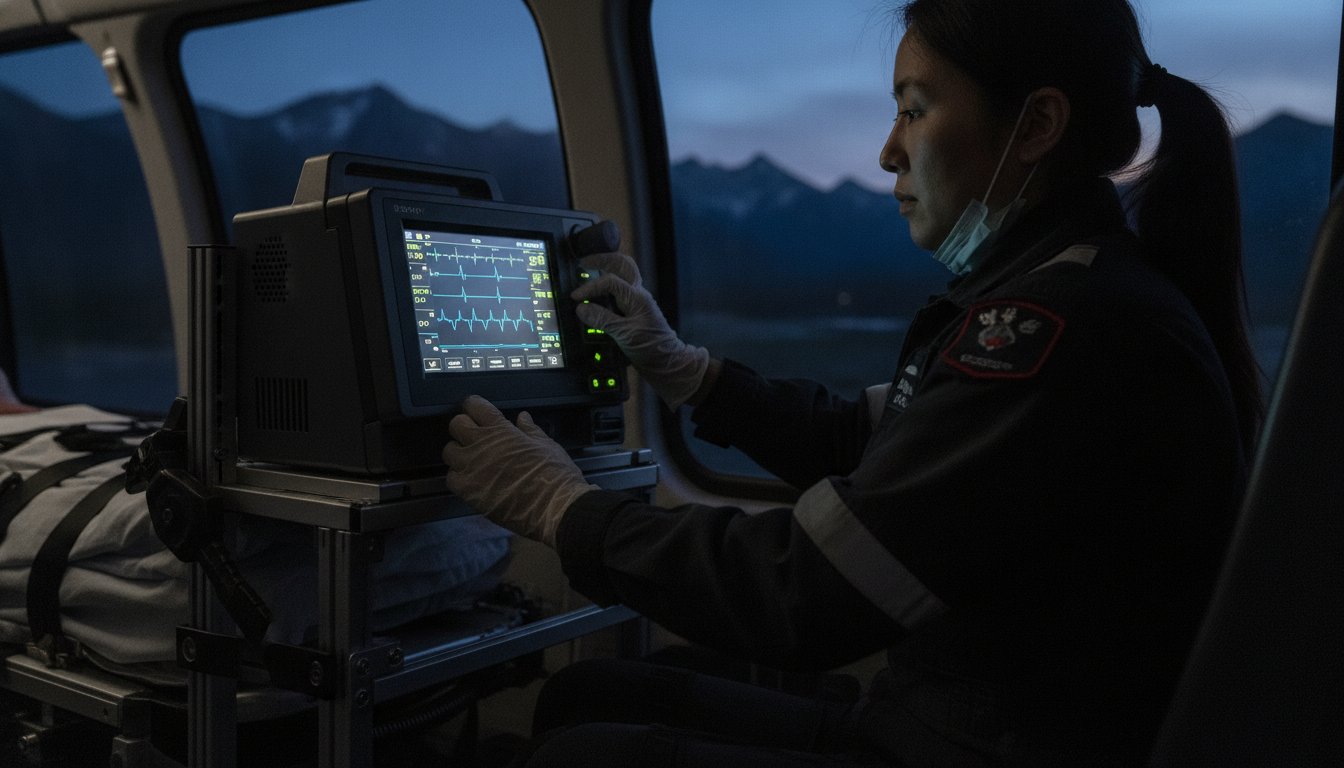
Monitoring patient waveforms in high-stress environments requires a high-resolution interface that remains legible under varying light conditions. An intuitive screen allows for rapid adjustments, which is critical when a patient’s status shifts during transport. Weight is another vital factor; units like the Monnal™ T60 Advanced weigh just 3.7kg, making them easy to secure. Versatile mounting options ensure these devices attach firmly to hospital beds or transport stretchers, maintaining the integrity of the breathing circuit throughout the journey.

Evaluating Transport Ventilators for Canadian Clinical Environments
Selecting the right hardware for a Canadian medical facility requires looking beyond basic specifications. A “Continuity of Care” model serves as the gold standard; it asks whether a portable unit can replicate the precise settings of a bedside ICU ventilator. When Comparing Transport and ICU Ventilators, clinicians must verify that the portable device supports identical pressure and volume targets to avoid lung recruitment loss. Rapid start-up times and pre-set modes are also non-negotiable. In emergency stabilization scenarios, every second counts. A portable ventilator critical care transport system that requires complex manual configuration increases the risk of human error during high-stress transitions, potentially leading to adverse events during the move.
Total cost of ownership involves more than the initial purchase price. It includes the availability of authorized Canadian-based technical support and the long-term reliability of the supply chain for your portable ventilator critical care transport fleet. Procurement teams should evaluate the training requirements necessary for clinical staff to maintain proficiency across diverse departments. If a device is too complex, it won’t be used effectively during a crisis, regardless of its technical specs. To ensure your facility is equipped with the latest standards and maintains operational excellence, you can request a clinical consultation for a comprehensive fleet assessment and educational roadmap.
The Importance of National Technical Support
Maintaining fleet readiness depends heavily on authorized service contracts. Without local support, a malfunctioning unit might be out of service for weeks, compromising patient safety and increasing operational strain. National support ensures that maintenance follows Health Canada regulations and manufacturer standards. Clinical training programs also play a pivotal role. They reduce user error and ensure that respiratory therapists can leverage the full diagnostic capabilities of the equipment to improve patient outcomes.
Advanced Solutions: The Monnal™ T60 and EO-150
The Monnal™ T60 Advanced serves as a benchmark for managing the most complex patients during high-risk transfers. It delivers ICU-grade ventilation within a compact 3.7kg package, ensuring that clinicians don’t have to sacrifice performance for portability. This device is particularly effective when a portable ventilator critical care transport requires the same sophisticated breath delivery found in a fixed ICU environment. For broader clinical applications, the EO-150 Ventilator offers exceptional versatility across diverse care settings, including acute hospital wards and step-down units.
Building a unified fleet that handles both invasive and non-invasive ventilation (NIV) seamlessly simplifies clinical workflows and reduces the training burden on staff. When teams use a consistent interface, they can transition patients between modes with greater confidence. This consistency is vital during emergency stabilizations where time is a critical factor. Partnering with a dedicated Canadian distributor like Novus Medical allows facilities to realize the full value of these technologies through specialized clinical support and national technical service that understands the local regulatory environment.
Clinical Excellence Through Technology
The Monnal™ T60 Advanced excels in high-acuity scenarios by providing high-flow oxygen therapy and advanced monitoring capabilities that are usually reserved for stationary units. This level of technical depth allows clinicians to monitor lung mechanics in real-time, even while moving between departments. Integrating these devices with advanced tools, such as the EO-70 Secretion Management Device, ensures that airway clearance and ventilation are managed as a single, cohesive clinical strategy. This holistic approach reduces the risk of complications and improves patient outcomes across the entire respiratory care continuum. By choosing a partner invested in the Canadian healthcare landscape, you ensure your equipment remains at peak performance for every critical move.
Advancing Clinical Safety in Mobile Respiratory Care
Maintaining ICU-grade stability during every patient transition isn’t just a clinical preference; it’s a fundamental requirement for safety. Moving from manual resuscitators to high-performance turbines ensures lung-protective strategies remain intact throughout the journey. By prioritizing devices that offer identical ventilation modes to bedside units, facilities can effectively bridge the gap between stationary care and mobile interventions. A portable ventilator critical care transport solution that balances compact design with sophisticated monitoring is the most reliable way to prevent physiological deterioration during the transport window.
Technical excellence must be paired with operational dependability. As the exclusive Canadian distributor for the Monnal™ T60 Advanced, Novus Medical provides the specialized expertise required to maintain fleet readiness across the country. Our authorized Canadian technical support and comprehensive clinical training programs ensure that your staff can operate these life-saving devices with absolute confidence. Explore Novus Medical’s advanced transport ventilation solutions to realize a new standard of continuity in your respiratory care plan. We’re here to support your mission of delivering excellence in every critical move.
Frequently Asked Questions
What is the difference between an emergency resuscitator and a transport ventilator?
Emergency resuscitators provide basic, often manual, ventilation for immediate life support. In contrast, a portable ventilator critical care transport system offers automated, precise control over parameters like PEEP and tidal volume. This automation ensures consistent breath delivery that manual bagging cannot replicate. It significantly reduces the risk of barotrauma and ensures the patient remains stable during the transition between hospital departments or during long-range mobile missions across the country.
Can portable ventilators provide the same modes as bedside ICU ventilators?
Yes, modern high-acuity transport units are designed to replicate the sophisticated ventilation modes found in stationary ICU equipment. Advanced devices like the Monnal™ T60 Advanced offer Volume Control, Pressure Control, and PRVC to ensure clinical continuity. This parity allows respiratory therapists to maintain identical settings from the bedside to the ambulance. It prevents lung de-recruitment and minimizes the physiological stress often associated with switching equipment during a critical patient move.
How long should a transport ventilator battery last for inter-hospital transfers?
For inter-hospital transfers, a transport ventilator should ideally provide at least four to six hours of internal battery autonomy. Since logistical delays or Canadian weather conditions can extend transit times, having hot-swappable battery options or external power pack compatibility is essential. Reliability is paramount; clinicians need the assurance that the device will continue to operate at high-acuity settings without interruption until the patient reaches the receiving facility safely.
Is non-invasive ventilation (NIV) safe during critical care transport?
Non-invasive ventilation is safe and often preferable for patients who don’t require intubation but need continuous pressure support. Using a specialized portable ventilator critical care transport unit with leak compensation ensures that the patient receives a stable FiO2 and consistent pressure despite movement. Integrated monitoring allows the clinical team to detect changes in patient effort or mask fit immediately. This maintains the same level of care provided in a hospital ward.
What are the Canadian standards for medical device maintenance in hospitals?
In Canada, medical device maintenance must comply with Health Canada regulations and standards set by organizations like the Canadian Standards Association (CSA). Hospitals are required to perform regular preventative maintenance and electrical safety testing to ensure fleet readiness. Utilizing authorized Canadian technical support ensures that all repairs use genuine parts and meet manufacturer specifications. This adherence to national standards is critical for maintaining patient safety and ensuring the long-term reliability of respiratory equipment.
Disclaimer
Disclaimer: Articles on this website are produced with the assistance of automated content tools (AutoSEO) and are intended solely for general informational purposes. This content does not constitute professional advice. While we strive to maintain accurate and up-to-date information, readers should verify key details independently before taking action based on any content found on this site.