
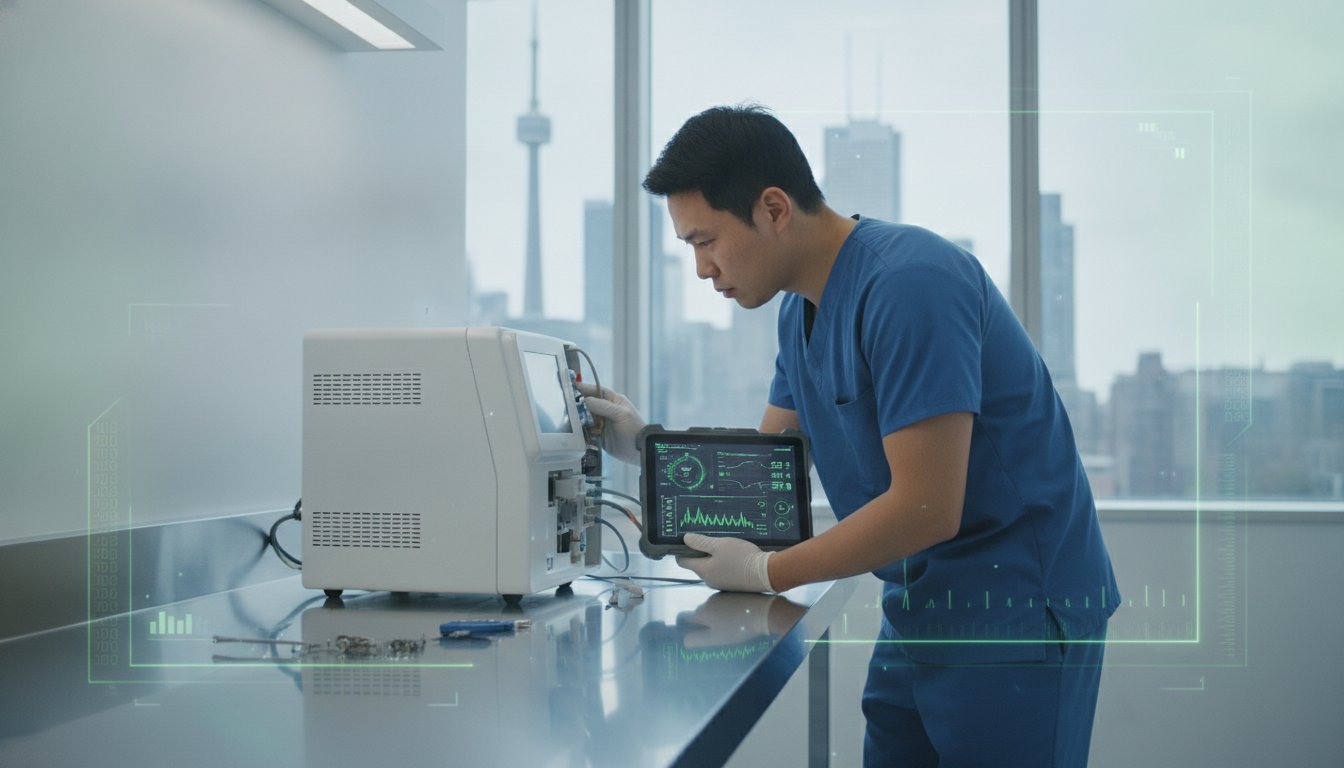
If a Health Canada auditor arrived at your facility tomorrow, could you prove that every device in your diverse ventilator fleet meets the documented procedure requirements taking effect on December 14, 2026? Implementing a robust ventilator maintenance checklist for hospitals is no longer just a technical recommendation; it’s a regulatory necessity for ensuring clinical reliability and patient safety. You likely recognize that the complexity of maintaining diverse fleets, coupled with the need to meet reaffirmed CSA standards, places an immense burden on your technical and clinical staff. Maintaining zero-downtime remains a constant challenge while managing the intricacies of modern respiratory care protocols.
This guide provides a comprehensive framework to help you streamline these workflows and achieve long-term device stability. We’ll explore how to align your internal processes with the latest Health Canada guidance documents and the lifecycle-based regulatory approach. By adopting these standards, you can realize a higher return on investment for advanced systems like the EO-150 and Monnal T60, ensuring your records are always audit-ready and your equipment is prepared for the most critical patient needs.
Key Takeaways
- Align your respiratory protocols with the 2026 Health Canada regulatory amendments to ensure every device in your fleet remains audit-ready and clinically reliable.
- Implement a standardized ventilator maintenance checklist for hospitals that integrates daily bedside integrity tests with monthly technical calibrations to minimize critical care downtime.
- Transition from fragmented manual logs to centralized digital maintenance frameworks, enabling clinicians to identify early signs of sensor drift and equipment wear before they impact patient care.
- Realize long-term budgetary savings and optimized device longevity by leveraging authorized distributor support and structured service contracts for advanced technology like the Monnal T60 and EO-150.
Compliance and Patient Safety: Why Ventilator Maintenance is Critical
In the high-stakes environment of Canadian critical care, preventive maintenance (PM) functions as a strategic safeguard. It ensures that mechanical ventilation remains a precise, life-sustaining intervention. Utilizing a comprehensive ventilator maintenance checklist for hospitals allows clinical teams to achieve superior patient-ventilator synchrony. When devices are calibrated to manufacturer specifications, they respond accurately to subtle changes in patient effort, reducing the risk of asynchrony-related complications and improving overall comfort.
Regulatory Alignment for Canadian Hospitals
Adhering to Health Canada and CSA standards is essential for maintaining institutional accreditation. Under the updated Medical Devices Regulations effective December 14, 2026, hospitals must maintain documented evidence of all servicing activities for Class III and IV devices. The biomedical engineering department serves as the backbone of this process, certifying that every unit in the fleet meets national safety benchmarks. Their work ensures that the hospital is fully prepared for rigorous 2026 national healthcare audits, where service records are scrutinized for consistency and technical accuracy.
The Clinical Impact of Equipment Uptime
Reliable equipment uptime is a prerequisite for effective bedside care. When hardware performance is guaranteed, respiratory therapists can focus on complex lung-protective ventilation strategies without the distraction of equipment failure. A standardized ventilator maintenance checklist for hospitals helps identify early signs of wear in components like expiratory valves or flow sensors, preventing unexpected downtime. Key clinical benefits include:
- Reduced Alarm Fatigue: Precise sensor calibration eliminates the signal drift that triggers non-actionable alarms, allowing staff to focus on genuine patient needs.
- Enhanced ROI: Consistent upkeep extends the functional lifespan of advanced systems, ensuring better long-term value for the hospital budget.
- Optimized Safety: Routine checks catch minor issues before they escalate into critical device failures during patient care.
By prioritizing these protocols, facilities minimize the risk of device failure during critical care, directly supporting better clinical outcomes and staff confidence.
The Essential Ventilator Preventive Maintenance (PM) Checklist
A structured ventilator maintenance checklist for hospitals is the primary defence against device failure. Daily bedside checks should focus on circuit integrity and alarm responsiveness. Weekly and monthly protocols must include oxygen sensor calibration and thorough filter inspections. These actions align with Canadian regulatory requirements, ensuring that systems are serviced as frequently as the manufacturer recommends. Key routine tasks include:
- Verifying the integrity of the patient circuit and exhalation valve.
- Testing all audible and visual alarms at the start of each shift.
- Calibrating the oxygen sensor to ensure FiO2 accuracy.
Mechanical and Electrical Inspection Points
Technical teams must prioritize deep-system diagnostics. For the Monnal T60, technicians must inspect the high-performance turbine to ensure it meets strict airflow specifications. Electrical safety is equally critical. Grounding and leakage current tests protect both the patient and the clinician. Annual service should also include internal battery stress testing to confirm the unit’s reliability during transport or power loss.
Pneumatic and Sensor Calibration
Flow sensor accuracy is a clinical priority, especially in neonatal and paediatric environments where tidal volumes are extremely low. Precision calibration prevents sensor drift, which could otherwise compromise lung-protective strategies. Technicians must also verify the oxygen blender for exact FiO2 delivery. Beyond hardware, software and firmware updates ensure the latest clinical modalities are functional and secure against modern cybersecurity threats. Standardizing these checks across your fleet helps maintain a high standard of care. To better support your clinical team in managing these technical requirements, you might consider authorized technical support to ensure every device performs at its peak.

Optimizing Clinical Workflows: Standardizing Maintenance Protocols
Standardizing protocols across departments simplifies the maintenance training programme and ensures continuity of care throughout the facility. Moving away from fragmented paper logs toward centralized digital maintenance records allows for real-time tracking of device status. This digital shift ensures that the ventilator maintenance checklist for hospitals is consistently applied, providing a clear trail for national audits. When clinicians are trained to recognize the early signs of sensor drift or physical wear, they can initiate technical reviews before a device fails during critical care. This proactive approach bridges the gap between biomedical engineering and bedside clinical practice.
Transport and Versatility Considerations
Transport ventilators require distinct maintenance strategies compared to stationary ICU units. Devices like the EO-150 are designed for versatility across chronic and acute settings, but their reliability depends on rigorous battery management. Technicians must prioritize battery stress tests to ensure the unit remains operational during patient transfers between the ICU and medical imaging. A failure during intra-hospital transfer isn’t just a technical lapse; it’s a direct threat to patient stability. Standardizing the user interface across transport and bedside units further reduces the cognitive load on staff during high-stress transfers.
Staff Proficiency and Device ROI
The intuitive design of modern equipment, such as the Monnal T60 Advanced, significantly reduces the likelihood of maintenance-related errors. Hardware performance is only as reliable as the staff operating it. Investing in professional clinical training programs helps clinicians master advanced modalities while extending the functional lifespan of the hospital’s hardware. By improving technical proficiency, facilities can maximize their return on investment and ensure long-term clinical reliability. To enhance your team’s expertise and streamline your internal protocols, you can explore our specialized clinical training programs designed for Canadian healthcare providers.
Maximizing Device Longevity through Technical Support and Service Contracts
Securing the longevity of specialized respiratory technology requires more than routine bedside checks. Annual service contracts represent a strategic fiscal decision for Canadian hospital budgets, transforming unpredictable repair costs into manageable operational expenses. By leveraging authorized distributor support, facilities ensure that every item on their ventilator maintenance checklist for hospitals is addressed by factory-trained experts. It’s this level of precision that’s vital for high-performance systems like the Monnal T60 Advanced and EO-150, where technical accuracy directly impacts clinical reliability.
The Value of a National Technical Partner
A national technical partner provides the stability needed for continuous critical care operations. Novus Medical offers exclusive technical expertise, ensuring that warranty fulfillment and authorized technical services are handled with a deep understanding of Canadian clinical standards. Rapid response times for equipment repairs are essential, especially when managing diverse fleets across vast geographic regions. Working with an authorized partner also guarantees access to genuine replacement parts and official firmware updates. These updates are critical for maintaining device security and ensuring that the latest clinical modalities remain active and safe for patient use.
Planning for Equipment Lifecycle Management
A data-driven approach to maintenance informs smarter procurement strategies. By analyzing historical service records, biomedical departments can identify patterns in component wear and sensor drift, allowing them to predict when a device’s nearing the end of its functional lifespan. This intelligence guides future fleet expansion and ensures that new investments align with the hospital’s long-term clinical needs. If you don’t have a structured service model to support your ventilator maintenance checklist for hospitals, your facility risks unexpected downtime and inflated repair costs. To ensure your equipment remains at the forefront of clinical excellence, contact Novus Medical to discuss comprehensive service contracts for your ventilator fleet.
Securing the Future of Canadian Respiratory Care
Maintaining a sophisticated ventilator fleet requires a shift from reactive repairs to a structured, lifecycle-oriented strategy. By implementing a rigorous ventilator maintenance checklist for hospitals, you ensure that your facility remains fully compliant with the 2026 Health Canada regulatory amendments while maximizing patient safety. We’ve explored how standardized digital logs and staff proficiency minimize clinical errors and extend the functional lifespan of high-performance hardware. Reliable respiratory care isn’t a solo endeavour; it’s a partnership between your clinical team and technical experts who understand the Canadian landscape.
Novus Medical serves as the exclusive distributor for the Monnal T60 and EO-150, providing the national technical support and authorized maintenance contracts needed to realize long-term device ROI. Our clinical training programmes are specifically designed to empower Canadian healthcare professionals with the skills required to manage diverse fleets with confidence. You don’t have to navigate these complex regulatory and technical requirements alone. Secure your hospital’s respiratory fleet with Novus Medical technical support and ensure your equipment performs with unwavering reliability when it matters most.
Frequently Asked Questions
How often should a hospital ventilator undergo preventive maintenance?
Preventive maintenance intervals are primarily dictated by the manufacturer’s recommendations; however, it’s common for Canadian standards to require technical inspections at least every six months. Daily operational checks at the bedside ensure immediate safety. A comprehensive ventilator maintenance checklist for hospitals must also include an annual deep-system diagnostic. This schedule ensures compliance with the 2026 Health Canada amendments, which mandate documented servicing procedures for all Class III and IV devices.
What are the most common causes of ventilator failure in an ICU setting?
It’s common for ICU ventilator failures to stem from component wear such as flow sensor drift, oxygen cell depletion, or pneumatic leaks within the internal circuit. Electrical issues, particularly battery degradation in older units, can also cause unexpected shutdowns during power fluctuations. Implementing a structured ventilator maintenance checklist for hospitals helps identify these vulnerabilities early. Routine calibration and timely replacement prevent these mechanical issues from escalating into critical care failures.
Do transport ventilators require different maintenance protocols than bedside units?
Transport ventilators necessitate specialized protocols that prioritize battery reliability and physical housing integrity due to the stresses of frequent movement. While bedside units remain stationary, transport devices must undergo more rigorous battery stress testing to ensure they remain operational during long intra-hospital transfers. Technicians should also inspect mounting brackets and gas connectors more frequently, as these components are prone to mechanical wear during the transition between the ICU and imaging departments.
Is localized technical support required for ventilator warranty fulfillment in Canada?
It’s essential to have authorized localized technical support for valid warranty fulfillment and meeting Health Canada’s lifecycle-based regulatory requirements. Working with a national distributor ensures that repairs are performed by factory-trained technicians using genuine replacement parts. This local expertise is critical for maintaining the clinical reliability of advanced systems like the Monnal T60. It’s also the only way to guarantee that service records meet the specific documentation standards required for national healthcare audits.
How does regular maintenance improve patient-ventilator synchrony?
Regular maintenance ensures that flow and pressure sensors remain highly accurate, which is the foundation of effective patient-ventilator synchrony. When sensors are precisely calibrated, the ventilator responds instantaneously to the patient’s inspiratory efforts, reducing the work of breathing. This precision prevents trigger delays and auto-triggering, which are common causes of patient distress. Consistent hardware performance allows clinicians to implement complex strategies with the confidence that the device delivers exactly what’s programmed.
Disclaimer
Disclaimer: Articles on this website are produced with the assistance of automated content tools (AutoSEO) and are intended solely for general informational purposes. This content does not constitute professional advice. While we strive to maintain accurate and up-to-date information, readers should verify key details independently before taking action based on any content found on this site.