
Only 9% of Canada’s 1,267 adult hospitals had an EEG laboratory as of August 2025, according to a study published in Neurology Clinical Practice. For teams comparing clinical EEG systems Canada-wide, the key question is how each system’s documented capabilities fit the facility’s clinical needs and day-to-day workflow.
Technical specifications matter, but so do the studies your team performs, the steps involved in each recording, and the training and support available after procurement. This guide outlines core EEG system functions and workflow considerations, then offers practical criteria for assessing clinical, technical, and operational requirements.
It also introduces Cadwell Arc EEG as an option to evaluate once your needs are defined. Novus Medical is Cadwell Industries Inc.’s exclusive Canadian representative and provides Canadian-based technical support by phone, internet, and remote connection. This lets healthcare teams consider equipment and ongoing support as part of the same purchasing decision.
Key Takeaways
- Understand what a clinical EEG system records and how its role differs from interpretation, diagnosis, and treatment decisions.
- Map study preparation, equipment connection, data acquisition, and review to your team’s existing workflow.
- Compare clinical EEG systems Canada facilities may consider by separating mandatory requirements from preferred workflow features, training, and support needs.
- Include Cadwell Arc EEG in your evaluation alongside Novus Medical’s Canadian-based technical support and its role as Cadwell Industries Inc.’s exclusive Canadian representative since January 1, 2023.
What Clinical EEG Systems Do in Canadian Healthcare Settings
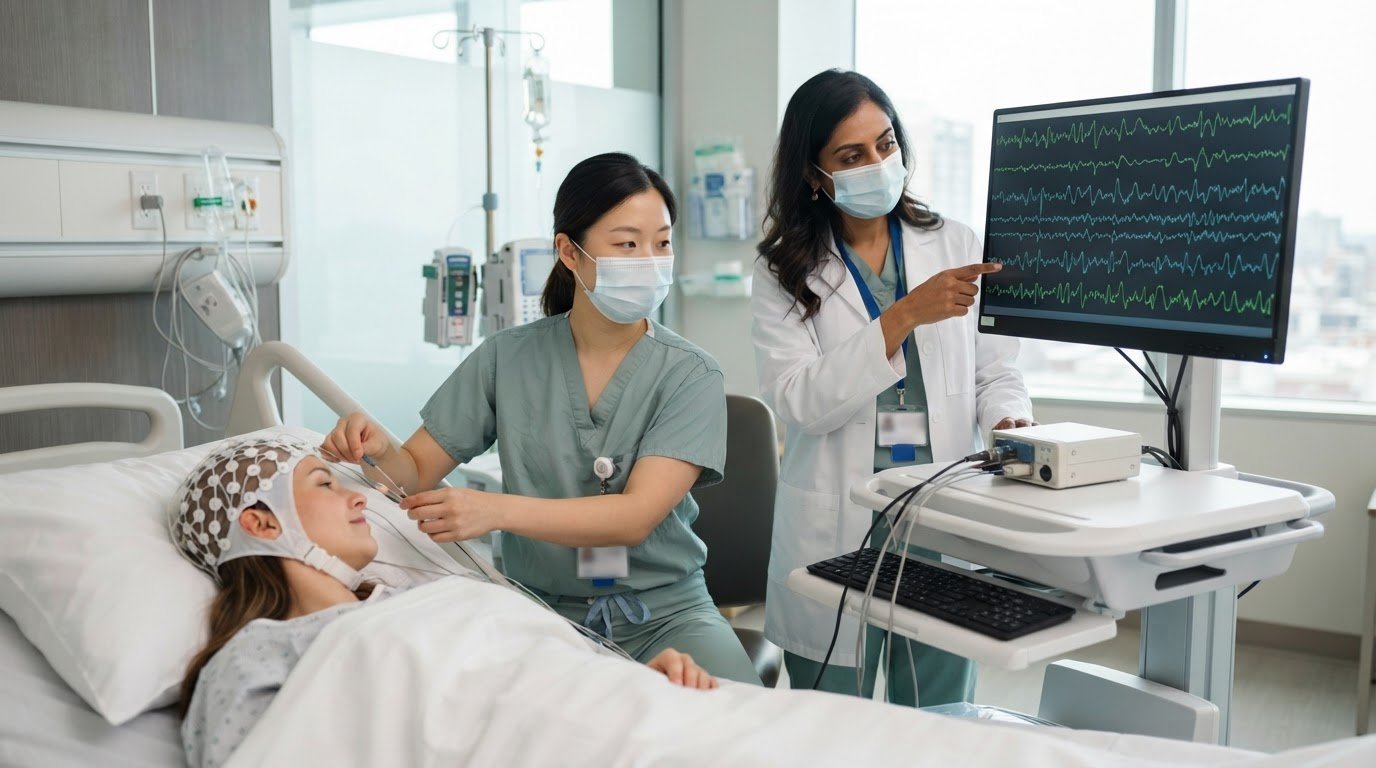
A clinical EEG system records the brain’s electrical activity through electrodes and produces data for review as part of a clinical study. This recording function is the core of electroencephalography (EEG). The system acquires information; it does not interpret the recording, establish a diagnosis, or determine treatment.
That distinction helps teams define what they are evaluating. Neurodiagnostic staff need equipment that supports their recording process, while clinical leaders and healthcare equipment purchasers must consider how it fits the facility’s protocols, staffing, and operational requirements. Agreeing on the system’s role gives everyone involved a clearer basis for comparing options.
How EEG systems fit into neurodiagnostic practice
EEG equipment supports the recording component of a clinical study. The clinical team prepares the study, connects the recording equipment, acquires data, and reviews the resulting recording according to established protocols and professional responsibilities. The equipment supplies recorded information; appropriately qualified clinicians interpret it in context. Keep these roles distinct when assessing system functions so data acquisition is not confused with clinical decision-making.
Clinical EEG equipment versus broader neurodiagnostic systems
Neurodiagnostics includes different types of equipment and investigations. EEG systems specifically record brain electrical activity, so assess them against the requirements of EEG studies. A broader neurodiagnostic portfolio may include equipment for other forms of testing, but those systems serve different recording purposes. For this guide, the focus is EEG equipment and how its data-acquisition role fits the facility’s clinical workflow.
How a Clinical EEG Workflow Connects Setup, Recording, and Review
A clinical EEG study moves through preparation, equipment connection, data acquisition, and review. The specific setup and recording steps depend on the facility’s protocols, the planned study, and the system documentation. Mapping these stages helps teams assess where equipment fits, who is responsible at each point, and what handoffs need to be planned.
What clinical teams consider before recording
Before recording begins, the care team coordinates the study and prepares the patient according to the facility’s established process. Staff also organize the equipment and confirm that the planned recording can proceed in the clinical setting. These are workflow considerations, not device-specific instructions. Follow institutional protocols and the applicable device instructions for study setup and equipment use.
For procurement planning, write down who coordinates the study, prepares the patient, connects the recording equipment, and manages the session. Then identify where staff education and system documentation are needed. This simple role-by-role review can reveal gaps before equipment is selected, such as unclear responsibility for setup or for managing the recording session.
From recorded data to clinical review
During acquisition, the EEG system records data as part of the study. After recording, appropriately qualified clinical professionals review the information in accordance with their roles and facility protocols. The system supports data collection; it does not independently interpret the recording, diagnose a condition, or make treatment decisions.
Assess the full sequence, not just the equipment connection at the bedside. Consider how the study moves from preparation to acquisition and review, where staff hand off responsibility, and what documentation the process requires. For context on Cadwell Arc EEG and Canadian-based support, explore Novus Medical’s neurodiagnostic solutions.

How to Evaluate Clinical EEG Systems for a Canadian Facility
Start with documented clinical and operational needs, then compare systems against them. For clinical EEG systems under consideration, separate requirements that must be met from features that would be helpful. Apply the same criteria to each option so that preferred workflow features are not mistaken for essential technical specifications.
Match system requirements to clinical use
Before reviewing configurations, record the intended use, expected users, study workflows, and facility requirements. For each requirement, note how it will be assessed and which documentation will verify it. Compare specifications against current manufacturer documentation and your clinical environment; a configuration that suits one facility may not suit another.
| Evaluation area | Mandatory facility requirement | Preferred workflow consideration |
|---|---|---|
| Clinical use and workflow | Does the documented system function align with intended studies and established protocols? | Do preparation, recording, and review steps fit team roles and handoffs? |
| Technical requirements | Does the documented configuration meet facility requirements? | Are there workflow features that would support the team’s routine processes? |
| Training | Can designated users receive the education needed for their responsibilities? | Can training support consistent use across relevant staff roles? |
| Support and service | Are support arrangements understood as part of procurement and implementation? | Does the support approach suit the facility’s ongoing operational needs? |
Include training and service in procurement planning
Procurement planning should include implementation, user education, and ongoing technical support, not just equipment selection. Identify who will coordinate implementation, which staff need training, and how support fits into the equipment’s lifecycle. Include these requirements in the same evaluation as system specifications so the team can compare the full operational plan. For broader context on changes in the field, read this guide to neurodiagnostic equipment trends. The Canadian medical equipment service contract guide offers additional service-planning context.
Document your requirements before comparing options such as Cadwell Arc EEG. Explore neurodiagnostic equipment and support from Novus Medical as part of your facility’s evaluation.
Explore Cadwell Arc EEG and Canadian Support from Novus Medical
Once your facility has defined its clinical requirements, workflow priorities, and technical criteria, include Cadwell Arc EEG in your evaluation. Novus Medical has been Cadwell Industries Inc.’s exclusive Canadian representative since January 1, 2023. Novus Medical also provides Canadian-based technical support by phone, internet, and remote connection, giving healthcare teams support channels to consider alongside equipment requirements.
What to establish before system implementation
Bring your evaluation findings together before implementation so clinical, technical, and operational needs are clear. Document the intended use and study workflow, identify facility requirements, and compare relevant system specifications with current manufacturer documentation. Assess each configuration against your own criteria rather than assuming one will suit every clinical environment.
Plan for the people and processes involved as well. Identify the staff who will use the system, determine their orientation needs, and include technical support in the facility’s ongoing plans. Aligning these elements before implementation connects the procurement decision with the work the system is expected to support.
Continue exploring Canadian neurodiagnostic solutions
Use your documented requirements to assess Cadwell Arc EEG against your facility’s needs. Consider the system as part of a broader purchasing decision that includes training and support arrangements, not as a stand-alone equipment choice. Novus Medical provides Canadian-based technical support by phone, internet, and remote connection.
Explore Novus Medical’s clinical neurodiagnostic solutions to continue evaluating Cadwell Arc EEG and support for your facility.
Move Forward with a Clear EEG System Plan
Selecting an EEG system starts with the facility’s clinical requirements and the workflow it needs to support. Define who will use the equipment, how studies move from preparation through recording and review, and which technical requirements are mandatory. Then compare those requirements with current manufacturer documentation and plan for staff orientation and ongoing support. This process gives teams a consistent way to assess options without assuming one configuration suits every setting.
Cadwell Arc EEG is part of Novus Medical’s neurodiagnostic product portfolio. Novus Medical is Cadwell Industries Inc.’s exclusive Canadian representative and provides Canadian-based technical support by phone, internet, and remote connection. Include those support channels in your implementation and ongoing-use planning alongside the system requirements.
Contact Novus Medical to explore Cadwell Arc EEG and Canadian-based support for your facility.
Frequently Asked Questions
What is a clinical EEG system?
A clinical EEG system records the brain’s electrical activity during an EEG study. It supports data acquisition, not interpretation or diagnosis: appropriately qualified clinicians review recorded information in the patient’s clinical context. Treatment decisions remain clinical responsibilities. Configuration and procedures vary with study needs, facility protocols, and the system’s official documentation, which teams should use when establishing local processes.
What equipment is typically involved in an EEG study?
An EEG study typically uses a recording system and the components needed to connect electrodes or sensors and capture data. The precise setup varies according to the planned study, facility workflow, and selected equipment; systems should not be assumed to share identical components. For practical planning, review current manufacturer documentation and follow institutional procedures for preparation, connections, recording, and handling the resulting data.
How should a hospital evaluate clinical EEG systems?
Document intended use, users, study workflow, and facility requirements first. Then compare verified specifications alongside implementation needs, staff education, and technical support. For clinical EEG systems Canada facilities are considering, separate mandatory criteria from preferred workflow features and apply the same framework to each option. Base decisions on current manufacturer documentation rather than unsubstantiated claims.
Can one EEG system meet every facility’s needs?
One EEG system may not meet every facility’s needs. Clinical workflows, users, study requirements, and operational processes differ, so selection criteria should reflect the specific setting. Define requirements before comparing systems, then assess documented specifications, training needs, workflow fit, and support arrangements against them. This helps teams evaluate suitability without assuming a particular system or configuration is appropriate for every facility.
What support should a Canadian facility plan for after acquiring an EEG system?
Plan for staff education, technical assistance, warranty processes, and ongoing service needs as part of implementation and equipment lifecycle planning. Align arrangements with the equipment and facility requirements, and avoid assuming specific response times or service terms. Novus Medical provides Canadian-based technical support by phone, internet, and remote connection, channels healthcare teams can include in their support planning.
Disclaimer
Disclaimer: Articles on this website are produced with the assistance of automated content tools (AutoSEO) and are intended solely for general informational purposes. This content does not constitute professional advice. While we strive to maintain accurate and up-to-date information, readers should verify key details independently before taking action based on any content found on this site.

Leave a Reply
Your email is safe with us.