

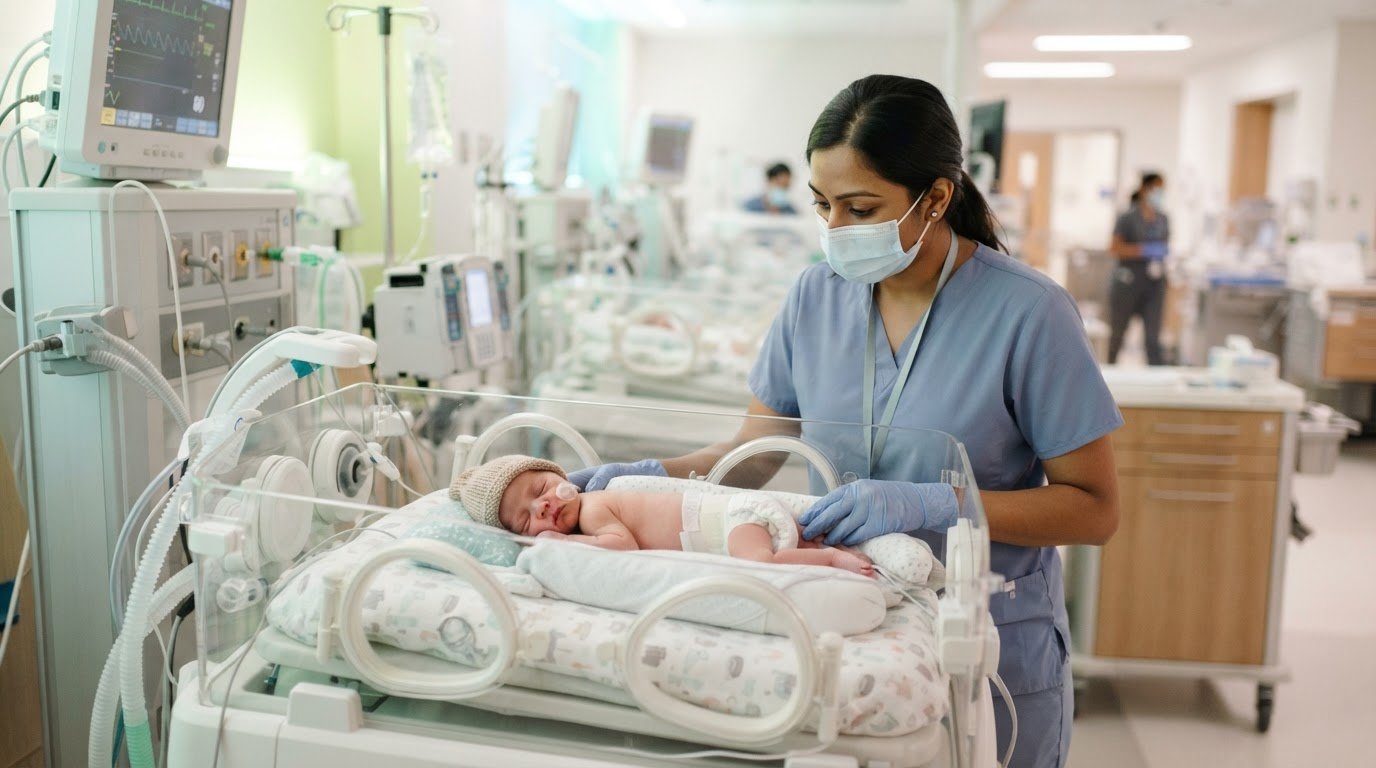
The positioning aid is selected according to the infant’s weight and the support needed. Dandle-Lion positioning aids for preemies include the Dandy Prone Pad, listed for <1000 – 4400 g; Dandle ROO2, for <1000g – 2500 g; Dandle WRAP Stretch, for <1000g – 4500 g; Dandle ROO Lite, for <1000g – 3600 g; and the Crown Cradle, for 500g – 3600 g. These ranges help identify options to consider for different infant sizes and positioning needs.
In neonatal care, positioning supports an infant’s posture and comfort, and the aid should suit the care task. This article explains how Dandle-Lion positioning aids for preemies are used, including prone support, flexible boundaries, swaddling and gel pillows. It also discusses weight ranges and the difference between hospital positioning and safe sleep at home, helping clinicians and caregivers make informed decisions for the appropriate care setting.
Key Takeaways
- Match a positioning aid to the infant’s weight range and the clinical positioning need, rather than treating the products as interchangeable.
- Learn how prone supports, flexible boundaries, swaddling devices and gel pillows serve different positioning purposes.
- Late preterm babies are born at 34+0 to 36+6 weeks of gestation, and the Government of Canada notes that their physiological maturity varies widely.
- Distinguish positioning aids used during hospital care from sleep surfaces: according to the Government of Canada, a safe infant sleep surface must be free of sleep or head positioners.
Dandle-Lion positioning aids for preemies
Dandle-Lion positioning aids support different positioning needs during neonatal care. Selection starts with the infant’s weight and the clinical purpose, such as prone support, a flexible boundary or swaddling. The Dandy Prone Pad, Dandle ROO2, Dandle WRAP Stretch, Dandle ROO Lite and Crown Cradle have different listed weight ranges. Late preterm babies are born at 34+0 to 36+6 weeks of gestation and vary widely in physiological maturity, according to the Government of Canada. Gestational age alone therefore doesn’t describe every infant’s positioning needs.
The Dandle ROO2 Inservice video demonstrates the Dandle ROO2 positioning aid:
For prone positioning, the Dandy Prone Pad is a dedicated prone positioner. A prone support device can help align ventilator tubing and the airway while supporting a flexed, tucked posture. This may be relevant for infants, including ex-premature infants who have not reached term gestation. Its listed weight range is <1000 – 4400 g. The clinical team can consider that range alongside the infant’s posture, airway and tubing arrangement, and the purpose of positioning. The device’s role is specific: prone support, rather than a general-purpose boundary.
Flexible boundaries serve a different positioning purpose. The Cozy Cub is a weighted boundary, while the Dandle PAL is a smaller weighted boundary. A flexible weighted boundary can provide postural support and help limit an infant’s movement across the bed surface. This may be useful when the head of the bed is elevated, as an infant may slide down an inclined mattress. Pairing a boundary with a developmentally appropriate posture can help reduce movement. The boundary’s flexibility and size set it apart from a prone pad.
The Dandle WRAP Stretch is a dynamic swaddling positioning device, listed for <1000g – 4500 g. A stretchy wrap can provide warmth and proprioceptive feedback when full visibility isn’t necessary. The Dandle ROO Lite is listed for <1000g – 3600 g; one layer of its lightweight cotton allows up to 74% of phototherapy light to pass through. That detail can inform consideration of the ROO Lite during phototherapy. The Dandle ROO2 is listed for <1000g – 2500 g, while the Crown Cradle is listed for 500g – 3600 g. These ranges help distinguish options by infant size.
Dandle•LION gel pillows offer another type of positioning aid. They come in eight sizes and two thicknesses, giving clinicians dimensions to consider when planning support. Match each product’s stated role to the positioning task: prone support, a weighted boundary, dynamic swaddling or a gel pillow. Then compare the infant’s weight with the product’s listed range. For example, the Dandy Prone Pad and Dandle WRAP Stretch serve different purposes, even though their weight ranges overlap.
Use positioning aids according to the care plan and the setting. Assess the infant’s posture, bed angle, airway and tubing alignment, and whether the goal is support or reduced movement. Reassess the arrangement if the infant’s position or care needs change. This helps the care team select an aid for a specific purpose instead of treating all products as interchangeable. A product’s weight range is a selection reference, not a substitute for assessing the positioning need.
Hospital positioning and infant sleep are different use cases. According to the Government of Canada, an infant’s safe sleep surface must be free of sleep or head positioners. Keep this distinction clear when explaining an aid to families: use for a clinical task in hospital does not make it a sleep product. Tie the aid’s purpose to the care setting and follow the appropriate clinical plan for positioning during hospitalization.
When planning positioning support with a gel pillow, consider its dimensions. The eight available sizes and two thicknesses give clinicians options to weigh alongside the infant’s size and the clinical purpose. Choose according to the task: a prone pad provides prone support, a wrap supports swaddling, and a boundary offers flexible support. Listed weight ranges can help distinguish products, but the infant’s posture and intended use matter too.
A weighted boundary paired with a developmentally appropriate posture can help reduce an infant’s movement on an inclined mattress. Its role therefore differs from that of a pillow or prone pad. Considering the posture and aid together keeps selection focused on the infant’s immediate support needs, rather than treating the products as interchangeable.

Novus Medical: LungFit® PH
Novus Medical offers LungFit® PH for healthcare teams evaluating an inhaled nitric oxide system, a need separate from infant positioning. The system uses patented Plasma Pulse Technology® to generate inhaled nitric oxide from ambient air. It is not a positioning aid; it is relevant to facilities considering respiratory therapy equipment alongside neonatal care resources.
For clinicians and medical device purchasers, assess whether LungFit® PH aligns with your facility’s respiratory therapy requirements and clinical workflow. Keeping this evaluation separate from positioning-aid selection helps teams address each care need with appropriate equipment. Contact Novus Medical to discuss LungFit® PH, or visit novusmedical.ca.
Plan the next step for your care team
Turn the positioning discussion into a practical review of your unit’s needs. Consider how the care team selects, applies and reassesses developmental supports, and keep that workflow separate from decisions about respiratory equipment. This gives each product discussion a clear clinical purpose.
For broader equipment planning, Novus Medical offers LungFit® PH, the EO-150 Ventilator and the MagVenture Accelerator Training Program. These offerings address separate respiratory and clinician-training needs; they are not substitutes for Dandle-Lion positioning aids for preemies. Bring your facility’s priorities into the conversation to focus on the relevant product area.
Contact Novus Medical to discuss your healthcare equipment needs. A clear, needs-based conversation can help your team identify a productive next step.
Disclaimer
Disclaimer: Articles on this website are produced with the assistance of automated content tools (AutoSEO) and are intended solely for general informational purposes. This content does not constitute professional advice. While we strive to maintain accurate and up-to-date information, readers should verify key details independently before taking action based on any content found on this site.



Leave a Reply
Your email is safe with us.