
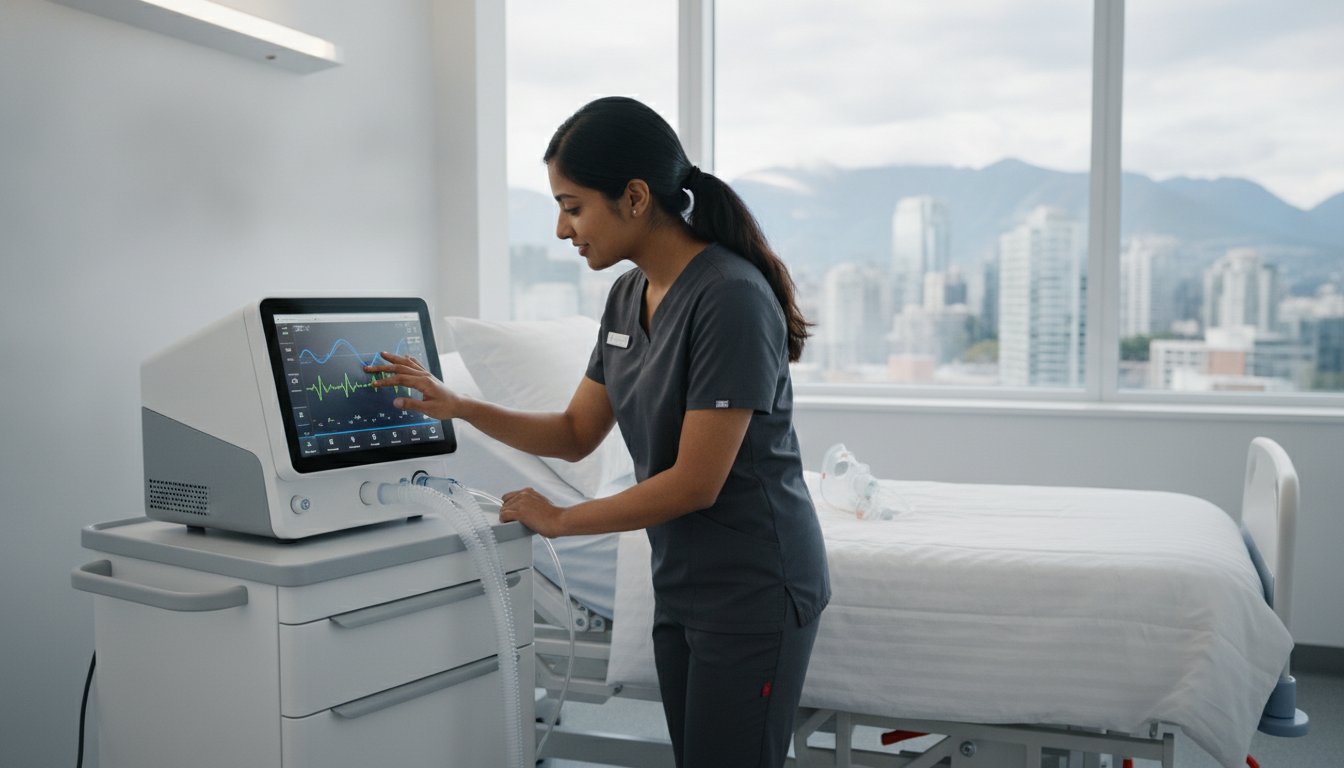
Did you know that North America accounted for over 56 percent of the global non-invasive ventilation market revenue in 2025? This statistic highlights the critical role that advanced respiratory technology plays in our healthcare system, particularly as we manage the high prevalence of chronic respiratory conditions across the country. As a clinician, you likely recognize the immense pressure of balancing patient comfort with the technical demands of non-invasive ventilation equipment Canada relies on for acute care. It’s a constant challenge to maintain rigorous infection control while ensuring your supply chain for masks and consumables remains consistent and reliable.
This article provides a roadmap to master the selection, safety protocols, and implementation of these vital devices to enhance patient safety and hospital efficiency. We will explore how to standardize your maintenance routines and select versatile platforms, such as the EO-150, that bridge the gap between different care environments. By refining your approach to respiratory support, you can help reduce hospital readmissions and ensure your team operates with the quiet confidence that comes from clinical excellence and technical precision.
Key Takeaways
- Understand the nuanced differences between CPAP, Bi-level, and advanced mechanical ventilation to ensure precise therapy for acute respiratory conditions.
- Evaluate the safety features of non-invasive ventilation equipment Canada relies on, focusing on integrated alarms and battery backups for high-acuity settings.
- Master standardized implementation and disinfection protocols to enhance patient safety and maintain the operational integrity of your clinical devices.
- Explore how versatile platforms like the Monnal T60 and EO-150 facilitate seamless transitions across care levels to improve overall hospital efficiency.
Understanding the NIV Landscape in Canada
In the Canadian clinical environment, Understanding Non-Invasive Ventilation (NIV) is fundamental to modern respiratory therapy. It involves delivering positive pressure to the lungs through an external interface, such as a mask or nasal prongs, rather than an invasive endotracheal tube. This method is the primary intervention for Chronic Obstructive Pulmonary Disease (COPD) exacerbations, Obstructive Sleep Apnea (OSA), and neuromuscular disorders. While CPAP provides a constant pressure to keep airways open, Bi-level systems utilize two pressure settings to assist with ventilation. Advanced non-invasive ventilation equipment Canada hospitals utilize today often incorporates sophisticated algorithms that mirror the performance of traditional mechanical ventilators.
NIV vs. Invasive Mechanical Ventilation
The primary technical difference lies in airway access and pressure delivery mechanisms. Invasive ventilation provides a closed circuit that guarantees minute ventilation, whereas NIV is subject to leaks around the mask seal. Clinicians must monitor patient response closely. If a patient exhibits worsening acidosis or a declining level of consciousness, the team must be prepared to transition to invasive support. Modern devices provide the technical depth required to manage these shifts, offering triggers that adapt to the patient’s spontaneous efforts to reduce the work of breathing.
Regulatory Standards for Canadian Hospitals
Health Canada classifies these devices to ensure they meet rigorous safety standards, including IEC 60601-1. It’s vital to realize the distinction between homecare units and acute care platforms. A safety advisory issued on July 9, 2024, reminded healthcare providers that many non-invasive devices aren’t intended for life-supporting ventilation. Hospital-grade non-invasive ventilation equipment Canada facilities procure must include integrated alarms and robust battery backups. These features ensure that if a power failure or circuit disconnection occurs, the clinical team is alerted immediately, maintaining a safety level that consumer-grade units cannot provide.
How to Evaluate NIV Equipment for Clinical Environments
Selecting non-invasive ventilation equipment Canada clinicians can trust requires a shift in focus from basic pressure delivery to comprehensive safety features. While comfort is important, acute care environments demand integrated alarms and robust battery backups that ensure continuity of care during critical moments. When evaluating a device, consider its intra-hospital transport capabilities. A ventilator that maintains high-level performance while being moved from the Emergency Department to diagnostic imaging prevents the physiological stress associated with switching devices during a patient’s most vulnerable state.
Key Technical Specifications to Prioritize
Clinicians should look for advanced trigger sensitivity and sophisticated leak compensation to maintain patient-ventilator synchrony. These mechanisms prevent autotriggering and ensure that the work of breathing is effectively reduced, even when a perfect NIV mask seal isn’t achievable. Precision in oxygen blending is equally vital, as accurate FiO2 delivery and real-time monitoring are essential for managing hypoxemic patients. To ensure your facility maintains these high standards, it’s beneficial to partner with a provider that offers comprehensive clinical training and authorized technical support.
Versatility Across Care Settings
The total cost of ownership often hinges on a device’s versatility. Hybrid platforms like the EO-150 Ventilator provide a strategic advantage by transitioning seamlessly between different care levels. This flexibility allows hospitals to standardize their fleet, reducing the training burden on staff and the complexity of managing diverse consumable inventories. By choosing equipment that excels in both the ER and the ICU, administrators can optimize their resource allocation while ensuring that patient safety remains the central priority throughout the entire respiratory care pathway.
Step-by-Step: Implementation and Safety Protocols
Successful deployment of non-invasive ventilation equipment Canada facilities rely on starts with a standardized admission protocol. Every new patient setup should follow a checklist that includes circuit integrity checks, initial parameter settings, and alarm limit verification. Clinical staff must implement a monitoring schedule that goes beyond simple observations. It should include regular assessments of patient-ventilator synchrony and skin integrity at the mask interface. Early identification prevents crises. Recognizing the subtle signs of patient intolerance is vital to maintaining the efficacy of the respiratory support provided.
Maintenance and Infection Control
Rigorous cleaning and disinfection schedules are non-negotiable for infection prevention. Daily cleaning of NIV masks and weekly disinfection of reusable circuits help mitigate the risk of ventilator-associated events. High-efficiency particulate air (HEPA) filters play a dual role. They protect the patient from contaminants and shield the internal blower from aerosolized pathogens. Organizing regular technical inspections ensures that internal batteries and sensors remain within manufacturer specifications. This proactive approach extends the device’s clinical lifespan and maintains operational reliability.
Clinician Training and Competency
Advanced respiratory technology is only as effective as the team operating it. Hands-on workshops are essential to build the quiet confidence required to troubleshoot complex alarms and adjust pressure settings under pressure. Staff must be competent in recognizing the signs of asynchronous breathing that indicate a need for setting adjustments. To ensure your team is fully prepared, you can access our clinical training programs designed specifically for respiratory therapists and critical care nurses across Canada.

Advancing Respiratory Care with Integrated Solutions
Modern respiratory therapy demands integrated solutions that bridge the gap between acute intervention and long-term recovery. The Monnal T60 ventilator Canada excels in this regard, providing the technical depth required for complex critical care ventilation within a portable, turbine-driven platform. Similarly, the EO-150 Ventilator offers a sophisticated “hybrid” approach, allowing for seamless transitions between care levels without compromising on safety or performance. By selecting high-calibre non-invasive ventilation equipment Canada clinicians ensure that patients receive consistent support as they move through different hospital departments. This continuity is bolstered by authorized service contracts, which provide national technical support and warranty fulfillment to minimize hospital downtime.
The Novus Medical Advantage
Novus Medical serves as more than a distributor; we’re a dedicated partner in clinical excellence. We provide exclusive Canadian access to global innovations such as the LungFit PH and the EO-series, ensuring our clients have the most advanced tools at their disposal. Our commitment extends beyond the initial sale to include comprehensive clinical training programs and hands-on workshops. This approach builds the technical proficiency necessary for respiratory therapists to manage complex cases with quiet confidence and precision. We realize that the reliability of your hardware is as critical as the skill of your staff.
Next Steps for Procurement
Upgrading your facility’s respiratory capabilities is a significant step that requires expert guidance. We invite clinical administrators to request a comprehensive equipment demonstration or a clinical trial to evaluate how these technologies perform in real-world scenarios. Consulting with our specialists allows for the creation of tailored equipment packages designed to meet the specific needs of your clinical setting. Whether you’re looking to standardize your fleet or introduce advanced secretion management with the EO-70, our team is ready to support your transition toward better patient outcomes and improved hospital efficiency.
Elevating Respiratory Outcomes Through Clinical Precision
Implementing a robust respiratory program requires more than just acquiring hardware; it demands a commitment to safety, standardized protocols, and ongoing education. By prioritizing high-performance non-invasive ventilation equipment Canada hospitals can ensure that patient-ventilator synchrony and safety features like integrated alarms are never compromised. Selecting a partner that values precision and hands-on education is just as important as the hardware itself. We’ve explored how versatile platforms like the Monnal T60 ventilator Canada and EO-150 facilitate seamless transitions across care levels, while rigorous infection control maintains device integrity. As the exclusive Canadian distributor for these specialized technologies, Novus Medical provides national technical support and clinically-led implementation programs to ensure your team’s success. We invite you to request a clinical consultation for advanced NIV equipment to discover how our experts can tailor a solution for your specific clinical needs. Together, we can enhance patient care and hospital efficiency with quiet confidence.
Frequently Asked Questions
What is the difference between CPAP and NIV equipment in a hospital setting?
CPAP provides a constant level of positive pressure to maintain airway patency, whereas NIV equipment utilizes variable pressure settings to assist with the actual work of breathing. In a Canadian clinical setting, hospital-grade NIV devices offer sophisticated modes that go beyond simple CPAP. These include pressure support and volume-assured ventilation, which are necessary for managing acute respiratory failure and complex underlying conditions.
Can non-invasive ventilation equipment be used for life support in Canada?
Most non-invasive ventilation equipment Canada facilities use is not designed for life-supporting ventilation. A Health Canada safety advisory issued on July 9, 2024, explicitly warned that these devices should only be used for patients who can maintain spontaneous breathing. For patients requiring life support, clinicians must utilize advanced mechanical ventilators that possess the necessary internal backups and fail-safe mechanisms to ensure continuous support.
How often should NIV masks and circuits be replaced in a clinical environment?
Replacement schedules for NIV masks and circuits depend on manufacturer guidelines and the facility’s infection control protocols. Typically, masks are cleaned daily and replaced if the seal integrity is compromised or if there’s visible wear. Reusable circuits require rigorous disinfection between patients, while single-use circuits must be discarded after each use or every seven days, depending on the clinical environment’s specific standards.
What are the essential safety alarms for a hospital-grade NIV ventilator?
Essential safety alarms for hospital-grade ventilators include high and low-pressure alerts, disconnection alarms, and power failure notifications. Advanced units like the Monnal T60 also feature apnea alarms and minute ventilation monitors. These integrated alerts are critical for patient safety, as they provide immediate notification to the clinical team if there’s a breach in the circuit or a significant change in the patient’s respiratory effort.
Does Health Canada have specific regulations for NIV device maintenance?
Health Canada requires that all medical devices, including non-invasive ventilators, are maintained according to the manufacturer’s validated instructions. Regulations reference safety standards such as IEC 60601-1 and ISO 80601-2-72. Facilities must organize regular preventive maintenance and technical inspections by authorized service providers to remain compliant. This ensures that the equipment’s sensors, internal batteries, and software continue to function within the strict safety parameters required.
Disclaimer
Disclaimer: Articles on this website are produced with the assistance of automated content tools (AutoSEO) and are intended solely for general informational purposes. This content does not constitute professional advice. While we strive to maintain accurate and up-to-date information, readers should verify key details independently before taking action based on any content found on this site.

Leave a Reply
Your email is safe with us.