With the Canadian neuromodulation market projected to reach C$296.8 million by 2030, the shift toward non-invasive therapies like rTMS is no longer a future possibility but a current clinical reality. You likely recognize the potential of these technologies to help your treatment-resistant patients, yet the technical complexity of new hardware and the nuances of Canadian credentialing can feel overwhelming. It’s common to feel as though the pace of neuro-innovation is moving faster than the time available to master it.
This guide demonstrates how specialized neuromodulation training clinicians can access today will bridge the gap between advanced neuro-technology and the improved patient outcomes you strive for in your practice. We’ll outline a clear path to clinical competency, help you realize the benefits of diversified practice revenue, and introduce the MagVenture Accelerator Training Program as a cornerstone for your professional development. By focusing on high-fidelity practice and evidence-based protocols, you can transition from feeling behind the curve to leading the way in modern Canadian psychiatric and neurological care.
Key Takeaways
- Understand the escalating clinical demand for neurostimulation in Canada and how to close the “1% gap” for patients who are currently underserved.
- Identify the core technical competencies required for primary modalities like repetitive Transcranial Magnetic Stimulation (rTMS) and Transcranial Direct Current Stimulation (tDCS).
- Realize the necessity of high-fidelity simulations in neuromodulation training clinicians use to master precise coil positioning and ensure accurate dosing.
- Follow a structured pathway for practice expansion that involves selecting a Health Canada-approved technology partner and navigating local regulatory requirements.
- Evaluate the MagVenture Accelerator Program as the premier Canadian resource for moving beyond theory into advanced, hands-on clinical implementation.
The Growing Clinical Demand for Neuromodulation in Canada
Neuromodulation (medicine) involves the targeted alteration of nerve activity through the delivery of electrical or magnetic stimulation to specific neurological sites. In Canada, this field is expanding rapidly. The market was valued at C$203.8 million in 2025 and is projected to reach C$296.8 million by 2030. Despite this technological surge, a stark “1% gap” persists. This industry statistic highlights that while millions of Canadians are eligible for these life-changing interventions, less than 1% actually access them. The barrier isn’t the efficacy of the hardware; it’s the lack of specialized neuromodulation training clinicians require to integrate these tools into daily practice.
Canadian healthcare is at a pivot point. We’re seeing a decisive shift in psychiatry and neurology toward interventional models. Clinicians are looking beyond traditional pharmacology to address the root causes of neurological dysfunction. This evolution is driven by a need for better patient outcomes and a more precise approach to complex disorders.
The Shift from Pharmacology to Neurocircuitry
Brain-based disorders often require brain-based interventions. Traditional medication-only protocols frequently struggle with systemic side effects or therapeutic plateaus. In modern neurology, we recognize that many conditions are the result of specific circuit-based dysfunctions. Neuromodulation offers a localized alternative. It targets the affected neurocircuitry directly without the metabolic burden of systemic drugs. This precision allows you to provide therapy that is both highly effective and better tolerated by patients. It’s a more logical approach to treating the organ at the centre of the disorder. Moving from chemical management to electrical and magnetic modulation represents a significant advancement in clinical standards.
Patient Outcomes and Practice Modernization
Realizing the potential of repetitive Transcranial Magnetic Stimulation (rTMS) has changed the outlook for treatment-resistant depression (TRD) across the country. When standard antidepressants fail, rTMS provides a Health Canada-approved pathway toward remission. This isn’t limited to psychiatry. Neuromodulation plays a critical role in chronic pain management and physical rehabilitation. By adopting these modalities, you position your practice as a centre of excellence for advanced diagnostics and care. It demonstrates a commitment to the latest evidence-based protocols. Investing in the neuromodulation training clinicians need ensures your facility can meet the growing demand for these sophisticated services. Modernizing your practice in this way doesn’t just improve patient lives; it secures your role as a leader in the Canadian medical community.
Essential Modalities and Technical Competencies for Clinicians
Integrating neuromodulation into a Canadian clinical setting requires a move from broad theoretical knowledge to specific technical mastery. While several modalities exist, repetitive Transcranial Magnetic Stimulation (rTMS) stands as the most robust entry point for outpatient clinics due to its non-invasive nature and established efficacy. Transcranial Direct Current Stimulation (tDCS) also offers a portable, lower-intensity alternative for specific cognitive and mood-related applications. However, the success of these treatments depends entirely on the clinician’s ability to map patient-specific protocols using advanced diagnostic equipment. Securing the specific neuromodulation training clinicians need to master these techniques is the first step toward clinical excellence.
RTMS: The Gold Standard of Non-Invasive Neuromodulation
rTMS works by delivering rhythmic magnetic pulses that penetrate the skull to induce neuroplasticity in targeted cortical regions, such as the dorsolateral prefrontal cortex. In Canada, clinical guidelines increasingly recognize rTMS as a vital intervention for treatment-resistant depression and certain obsessive-compulsive disorders. Achieving these results requires more than just owning the hardware; it demands a high level of technical competency. Clinicians must master the determination of the resting motor threshold (MT) to calibrate dosing for each individual. Precise coil placement is equally critical. Even a few millimetres of deviation can significantly reduce the therapeutic effect or lead to unintended cortical stimulation. High-fidelity neuromodulation training clinicians undergo ensures these variables are controlled to produce consistent, evidence-based outcomes.
Diagnostic Integration: EMG and Nerve Conduction
The most successful neuromodulation practices don’t operate in a silo. They leverage the synergy between neuro-diagnostic tools and therapeutic delivery to ensure patient safety and protocol accuracy. For instance, mastering nerve conduction fundamentals allows clinicians to enhance patient screening and better understand the physiological baseline of their patients. Using Electromyography (EMG) data can help refine motor threshold testing by providing an objective measure of muscle response to cortical stimulation. Clinicians looking to formalize these skills should review a structured EMG training for clinicians Canada evaluation checklist to ensure their programme meets national certification standards and EPA requirements. This diagnostic integration allows for the personalization of treatment plans, moving away from a one-size-fits-all approach. By combining diagnostic precision with therapeutic intervention, you ensure a higher standard of care that is both measurable and reproducible across your patient population.
Overcoming the Learning Curve: Why Hands-On Training is Mandatory
Theoretical knowledge provides the foundation, but it cannot replicate the physical nuances of a clinical environment. For many, the transition from reading about neurostimulation to applying it involves a significant learning curve. Relying solely on webinars or digital manuals introduces risks, such as poor coil positioning or suboptimal dosing, which directly compromise patient outcomes. High-fidelity neuromodulation training clinicians receive in person is the only way to ensure that these technical variables are mastered before treating real patients. Without hands-on verification, even small deviations in coil angle can lead to therapeutic failure or unnecessary patient discomfort.
The Pitfalls of Digital-Only Clinical Education
Tactile feedback is an essential component of mastering TMS. You cannot learn the “feel” of a coil against the scalp or the subtle adjustments needed for different head shapes through a screen. Digital-only education lacks the supervised, real-world practice required to ensure patient safety. If a technical issue arises during a session, a clinician who has only trained online may lack the troubleshooting skills to resolve it quickly and safely. Physical workshops allow you to encounter these scenarios in a controlled setting, building the muscle memory necessary for a seamless clinical workflow. This practical experience is what allows you to realize the full potential of the technology.
Building Clinical Confidence Through Mentorship
Clinical confidence isn’t built in isolation. It’s forged through peer-to-peer mentorship and expert-led instruction. The MagVenture Accelerator Training Program provides this specific environment, allowing Canadian clinicians to learn from veterans in the field. This mentorship extends beyond technical operation. It covers the essential soft skills of neuromodulation, such as managing patient expectations and navigating potential side effects like localized scalp discomfort or headaches. Learning how to communicate the treatment process to a patient is just as vital as the stimulation itself.
Engaging in these workshops also helps you move from being a mere equipment operator to a true neuromodulation expert. You’ll learn to interpret patient responses in real-time and adjust protocols based on clinical observation rather than just following a preset template. This level of expertise is what differentiates a standard clinic from a centre of excellence. By joining a community of Canadian neuro-innovators, you gain access to a network of support that continues long after the initial training session ends. This collective knowledge is invaluable as you work to integrate these advanced therapies into your daily practice, ensuring you have the confidence to tackle even the most complex treatment-resistant cases.

Establishing a Neuromodulation Practice: Regulatory and Training Pathways
Transitioning from a traditional practice to one that offers advanced neurostimulation requires a structured logistical roadmap. It’s not merely about procurement; it involves aligning clinical goals with Canadian regulatory requirements. The neuromodulation training clinicians select must provide the credentials necessary to operate within this framework. To establish a successful centre, follow these five essential steps:
- Step 1: Identify your clinical focus. Determine whether your practice will prioritize Psychiatry (e.g., treatment-resistant depression), Neurology (e.g., stroke rehabilitation), or Pain Management.
- Step 2: Select a Health Canada-approved technology partner. Ensure your equipment meets the stringent safety standards required for Class II through IV medical devices in Canada.
- Step 3: Complete a recognized certification program. Enroll in the MagVenture Accelerator Training Program to gain high-fidelity experience and clinical certification.
- Step 4: Develop internal protocols. Create standardized workflows for patient screening, informed consent, and longitudinal outcome tracking.
- Step 5: Secure ongoing technical support. Partner with a provider that offers local Canadian maintenance and warranty services to prevent clinical downtime.
Navigating Health Canada Standards for rTMS
Regulatory compliance is a moving target. In early 2026, Health Canada issued revised guidance for medical devices, emphasizing stricter definitions for software changes and post-market surveillance. Working with an exclusive Canadian distributor is the most reliable way to ensure your device remains compliant with these evolving standards. Authorized service contracts are mandatory for maintaining device certification and ensuring that your practice aligns with the latest Canadian clinical guidelines. This local oversight protects your investment and your patients’ safety.
ROI and Practice Integration Strategies
Specialized training does more than improve care; it maximizes your return on investment. When staff are confident in motor threshold determination and coil positioning, device utilization increases and treatment sessions become more efficient. You can integrate these services into existing workflows by scheduling rTMS sessions alongside traditional consultations, ensuring care continuity. To build a robust referral network, communicate your new capabilities to other physicians across Canada, positioning your practice as a specialized hub for interventional neuro-technology.
Ready to begin your transition? Contact Novus Medical to discuss how our MagVenture solutions and training programs can modernize your clinical workflow.
Elevating Care Standards with the MagVenture Accelerator Program
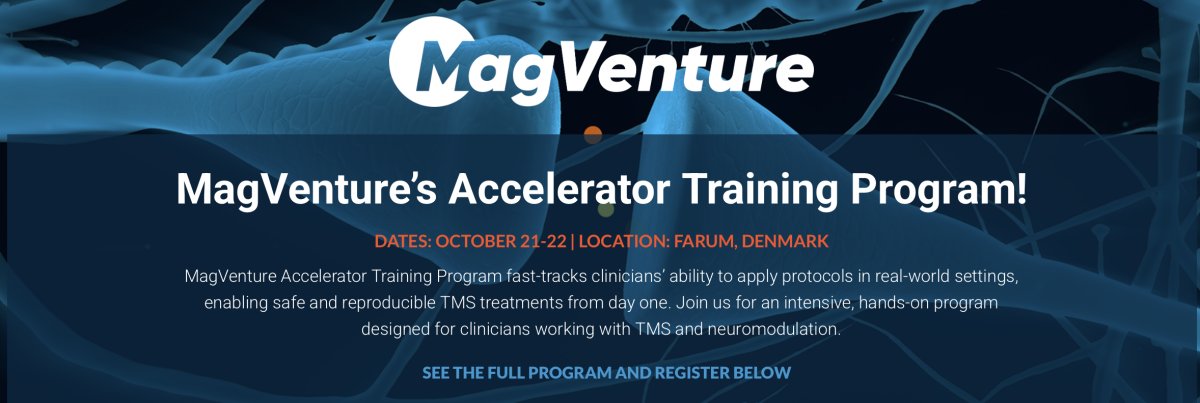
The MagVenture Accelerator Program serves as the definitive training path for Canadian providers seeking to master interventional psychiatry and neurology. It’s not a generic course; it’s a mission-driven curriculum designed to bridge the gap between global medical innovation and local patient care. This specialized neuromodulation training clinicians access provides a comprehensive transition from mechanistic theory to advanced protocol implementation. By focusing on the exact MagVenture hardware that will be utilized in your facility, the program ensures that your technical skills are directly transferable to your clinical environment. This alignment reduces the risk of operational errors and enhances the overall safety of your neurostimulation services.
Inside the MagVenture Accelerator Curriculum
The curriculum is meticulously structured to cover the latest FDA and Health Canada cleared protocols, including standard rTMS and accelerated options. You’ll engage in intensive, hands-on sessions that prioritize coil orientation and patient comfort, as these factors are critical for therapeutic efficacy. Instructors guide you through the nuances of motor threshold determination, ensuring you can calibrate dosing with absolute precision. Upon completion, the certification you receive signifies a high standard of clinical proficiency. It tells your peers and patients that your practice adheres to the most rigorous standards in the field, moving beyond simple equipment operation toward true clinical expertise.
Partnering for Long-Term Success with Novus Medical
Selecting the right technology is only half the battle. Long-term success in neuromodulation requires a steady, reliable guide to navigate technical updates and clinical shifts. Novus Medical acts as this partner, offering a seamless integration of equipment sales, specialized training, and ongoing technical support. The specific neuromodulation training clinicians receive through this partnership ensures that your team stays informed about the latest diagnostic applications and service updates. This single-partner approach eliminates the logistical headaches of dealing with multiple vendors, allowing you to focus entirely on patient care.
If a hardware issue arises, our nationwide technical service ensures that your facility experiences minimal downtime. We understand that for your patients, continuity of care is vital. By participating in the MagVenture Accelerator, you’re joining a network of Canadian clinicians who are leading the way in neuro-diagnostic excellence. This community provides a platform for shared knowledge and professional growth, ensuring your practice remains at the forefront of medical innovation. Our commitment to the Canadian healthcare community ensures that as the field of neuromodulation evolves, your practice has the stable support it needs to grow alongside it.
Advancing the Standard of Interventional Care
The shift from traditional pharmacology to targeted neurocircuitry is fundamentally reshaping the Canadian healthcare landscape. Realizing the full potential of these medical innovations requires a move toward high-fidelity, hands-on mastery. As established, the technical precision of rTMS delivery is the primary determinant of patient success and practice growth. Precise coil orientation and calibrated dosing are the foundations of evidence-based care.
Novus Medical supports this transition as the exclusive Canadian distributor for MagVenture. We provide a complete ecosystem of care, including expert-led sessions and comprehensive nationwide technical support. This specialized neuromodulation training clinicians utilize through our program ensures your practice meets the highest standards of clinical proficiency and regulatory compliance. By investing in these competencies, you provide a vital lifeline to treatment-resistant patients while diversifying your practice revenue.
It’s time to lead the way in Canadian neuro-innovation. Register for the next MagVenture Accelerator Training session with Novus Medical to secure your place in the next generation of clinical excellence. We look forward to partnering with you to elevate the standard of care in your community.
Frequently Asked Questions
Do I need a specific medical license to perform neuromodulation in Canada?
Practitioners must be licensed healthcare professionals in good standing with their respective provincial colleges, such as the CPSO in Ontario. While Health Canada regulates the devices themselves, the act of prescribing and delivering treatment falls under provincial medical or nursing acts. Psychiatrists and neurologists typically lead these programs, ensuring all clinical staff adhere to established safety protocols and provincial guidelines.
How long does the MagVenture Accelerator training program typically take?
The MagVenture Accelerator Training Program is structured as an intensive two-day session with optional workshops for advanced protocols. This timeline is designed to provide high-fidelity training without requiring an extended absence from your clinical practice. It balances mechanistic theory with physical coil orientation to ensure clinicians reach proficiency within a condensed, professionally managed timeframe that respects their clinical schedule.
Is neuromodulation training covered by continuing medical education (CME) credits?
Many specialized courses in Canada, such as those offered by the University of British Columbia, are CPD-accredited for physicians. While individual workshop accreditation can vary, the MagVenture Accelerator provides a certificate of clinical proficiency upon completion. You should check with your provincial college to determine if these specific contact hours can be applied toward your annual continuing education requirements.
What is the difference between online neuromodulation courses and hands-on workshops?
Hands-on workshops prioritize tactile feedback and physical coil manipulation, which are impossible to replicate in a digital environment. Online courses provide a theoretical foundation, but physical sessions allow for supervised motor threshold determination and real-time troubleshooting. This high-fidelity neuromodulation training clinicians receive ensures that technical deviations are corrected by experts before they ever affect patient outcomes in a real clinic.
Can nurse practitioners or clinical staff be trained to deliver rTMS treatments?
Yes, nurse practitioners and clinical technicians can be trained to deliver rTMS treatments under the supervision of a qualified physician. Many Canadian practices utilize an interdisciplinary model where the physician handles the initial mapping and prescription, while trained staff manage the daily delivery of stimulation protocols. This model improves practice efficiency and allows for higher patient throughput without compromising care standards.
What kind of ongoing technical support does Novus Medical provide after training?
Novus Medical provides comprehensive nationwide technical support, including on-site repairs and authorized service contracts. We ensure your practice maintains Health Canada compliance through regular maintenance and software updates. Our partner-oriented approach means you have a direct line to local Canadian technicians who understand the specific operational needs of your facility, ensuring zero downtime for your treatment-resistant patients.
How does neuromodulation training impact the ROI of my medical equipment?
Proper training significantly improves the return on investment by maximizing device utilization and reducing session errors. When your team is proficient, you can offer more precise treatments that lead to higher remission rates and increased physician referrals. Effective neuromodulation training clinicians undergo also streamlines the clinical workflow, allowing for more efficient patient scheduling and significantly reduced operational costs over time.
Are there specific prerequisites for the Nerve Conduction Fundamentals workshop?
There are no rigid prerequisites, but the Nerve Conduction Fundamentals Workshop is primarily designed for clinicians and technicians entering the neuro-diagnostic field. It serves as a foundational course for those looking to master the technical aspects of EMG and nerve conduction studies. This knowledge is particularly beneficial for personalizing neuromodulation treatment plans based on the objective physiological data of each patient.
Disclaimer
Disclaimer: Articles on this website are produced with the assistance of automated content tools (AutoSEO) and are intended solely for general informational purposes. This content does not constitute professional advice. While we strive to maintain accurate and up-to-date information, readers should verify key details independently before taking action based on any content found on this site.