
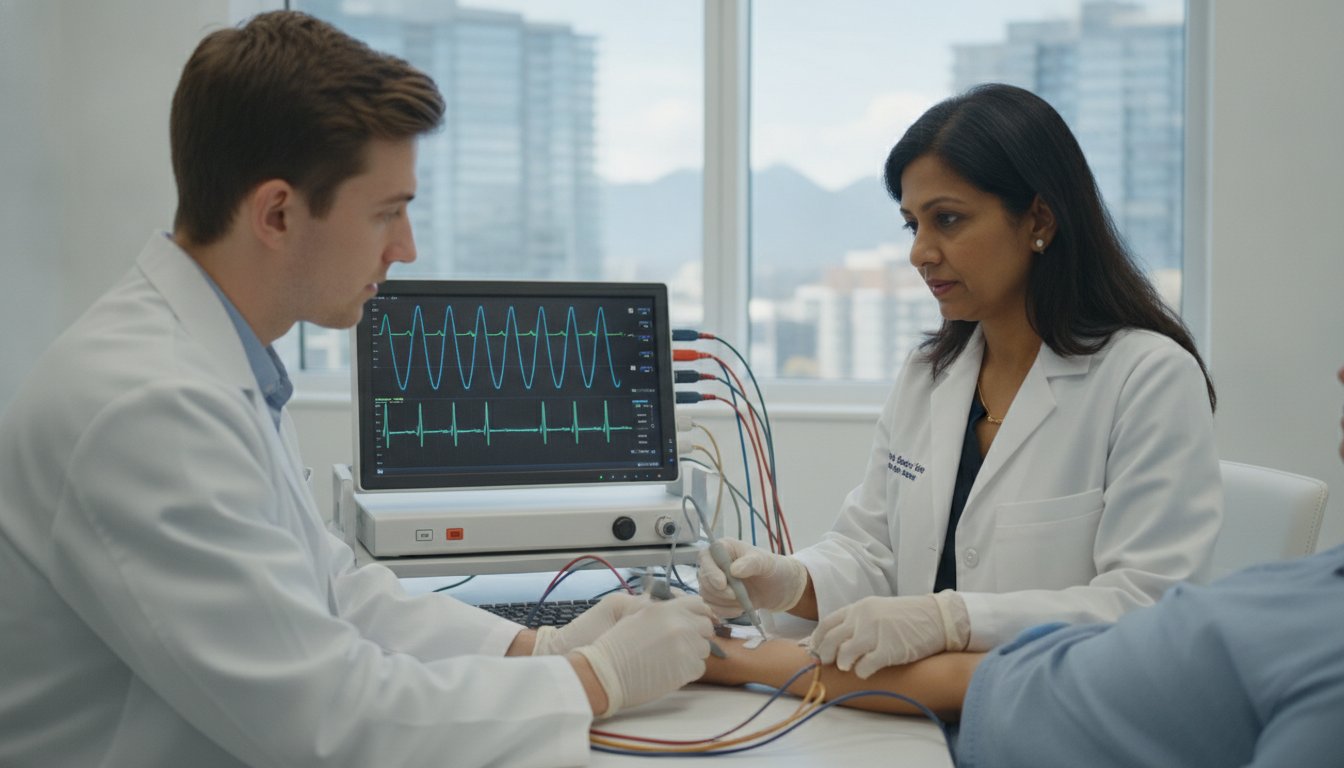
Clinical mastery in electrodiagnostics isn’t found in a textbook; it’s forged through the tactile experience of troubleshooting a stubborn signal in real-time. You likely understand the frustration of battling equipment artifacts or the pressure of accurately identifying complex entrapment neuropathies while maintaining a packed patient schedule. It’s a common challenge for practitioners across the country who strive for precision but often lack access to the intensive, practical mentorship required to truly excel in the field.
By enrolling in a specialized nerve conduction fundamentals course, you can transform these technical hurdles into clinical strengths. This professional training focuses on the essentials of the Canadian healthcare landscape, ensuring you master the nuances of eliciting F-waves and H-reflexes with confidence. We’ll examine how hands-on experience with industry-leading equipment improves diagnostic accuracy for both upper and lower extremity studies, providing you with the skills and professional certification necessary to elevate your practice and improve patient outcomes.
Key Takeaways
- Bridge the gap between theoretical neuro-diagnostic knowledge and clinical proficiency with training tailored for the Canadian healthcare landscape.
- Master the anatomy and physiology required for precise electrode placement and the reliable elicitation of late responses like F-waves and H-reflexes.
- Discover why a 2-day intensive nerve conduction fundamentals course offers a more efficient path for working clinicians to refine their technical skills than traditional academic programs.
- Gain confidence in signal quality and equipment troubleshooting by learning directly from R.NCS.T and CNCT certified experts using Cadwell Sierra Summit EMG systems.
What is a Nerve Conduction Fundamentals Course?
A Nerve conduction study serves as a cornerstone of neuromuscular diagnostics, yet the technical precision required to perform one effectively is often underestimated. A nerve conduction fundamentals course is a specialized training programme designed to address this complexity by focusing on the intersection of anatomy, physiology, and technical execution. Unlike purely academic models that prioritize theory, this course bridges the gap between knowing the science and achieving clinical proficiency at the bedside. Technique is everything.
The core curriculum targets the critical ability to distinguish between normal and pathological waveforms while mastering stimulation techniques for both upper and lower extremities. Within the Canadian context, these programs align training with the rigorous standards expected in electrodiagnostic laboratories across the country. This ensures every study meets the high-quality benchmarks required for accurate patient management.
Who Should Enrol in NCS Training?
Neuro-diagnostic technologists who want to refine their signal collection techniques find immense value in this focused environment. It’s also an essential resource for clinical professionals preparing for national registration examinations or healthcare providers who intend to integrate nerve conduction studies into their existing diagnostic workflow. The nerve conduction fundamentals course provides the structured environment necessary to transition from basic understanding to technical mastery.
The Role of Professional Development in Neurology
Maintaining excellence requires regular updates on instrumentation and digital signal processing. As technology evolves, so must the clinician’s ability to minimize artifacts and optimize signal-to-noise ratios. Mastering efficient stimulation protocols doesn’t just improve diagnostic accuracy; it significantly reduces patient discomfort by ensuring the study is completed correctly on the first attempt. This commitment to skill-building ensures your practice remains at the forefront of Canadian neurology. Reliable data informs critical clinical decisions.
Core Curriculum: Anatomy, Physiology, and Electrical Principles
Precision begins with an in-depth review of upper and lower extremity anatomy. In a nerve conduction fundamentals course, clinicians learn to localize nerves with surgical accuracy, ensuring electrode placement captures the highest quality data. This foundation is critical for mastering the physiology of nerve impulses and the reliable elicitation of late responses like F-waves and H-reflexes. Understanding the diagnostic utility of Electromyography (EMG) and Nerve Conduction Studies requires a firm grasp of these latency measurements to assess proximal nerve segments effectively.
Technical proficiency also demands a mastery of electrical principles. You must learn to reduce 60Hz artifacts and optimize signal-to-noise ratios through proper skin preparation and ground placement. Troubleshooting isn’t just a secondary skill; it’s a primary requirement. When a waveform appears distorted, you need practical strategies to identify whether the issue stems from high electrode impedance, cable failure, or patient-specific physiological factors. Reliable data depends on your ability to solve these technical puzzles at the bedside.
Advanced Techniques in NCS
Accurate identification of entrapment neuropathies, such as Carpal Tunnel Syndrome or Ulnar Neuropathy, relies on comparing segmental velocities. Modern clinical standards often incorporate foundational ultrasound skills to help identify the median and ulnar nerves, providing anatomical context that improves stimulation accuracy. This multi-modal approach reduces diagnostic ambiguity and ensures your findings are robust enough for surgical or therapeutic planning.
Mastering Instrumentation and Signal Quality
Optimizing machine settings for diverse patient demographics is vital. A pediatric study requires different filter settings than a study for an elderly patient with peripheral edema. Differentiating between physiological artifacts, like muscle twitch, and equipment-related interference ensures the integrity of your data. To refine these skills in a supportive clinical environment, consider the professional workshops offered by Novus Medical, which bridge the gap between advanced technology and clinical mastery.

Choosing the Right Training: Intensive Workshops vs. Long-Term Programs
Selecting the appropriate educational path depends largely on your current career stage and clinical goals. A 12-week academic programme is often the best choice for initial career entry, providing the broad theoretical foundation required for those new to the field. However, for working clinicians, the primary challenge is finding time for professional development. A 2-day intensive nerve conduction fundamentals course offers a streamlined alternative, focusing specifically on high-yield technical refinement and clinical troubleshooting without the lengthy time commitment of traditional schooling.
The value of a small-group, hands-on environment cannot be overstated. Direct interaction with R.NCS.T and CNCT certified experts allows for real-time correction of stimulation techniques and electrode placement. You aren’t just observing; you’re actively operating Cadwell Sierra Summit EMG systems to resolve signal quality issues. Receiving comprehensive course materials, such as hands-on electrode packs and digital resources, ensures you have reliable references for your lab once the session concludes. While some wonder if a short-term workshop is sufficient, these intensives are designed to bridge the gap between existing knowledge and technical mastery.
The Benefits of Intensive Clinical Workshops
These sessions allow for the immediate application of advanced skills. When you return to your clinical setting, you’ll possess the confidence to handle complex entrapment neuropathies with greater precision. Networking with peers and clinical experts from across Canada also fosters a supportive community that extends well beyond the workshop dates, providing a lasting resource for technical advice and professional growth.
Certification and Professional Recognition
A digital certificate of attendance is a valuable addition to any professional portfolio, demonstrating a commitment to maintaining high standards in neuro-diagnostics. While these workshops complement the path toward national registration, they specifically validate your technical proficiency in modern instrumentation. To elevate your clinical practice and secure your professional standing, consider registering for an upcoming Nerve Conduction Fundamentals Workshop today.
Advancing Your Clinical Practice with Novus Medical
Novus Medical serves as the vital link between global medical innovation and local Canadian practice. Their commitment to clinical education is exemplified through a long-standing partnership with Cadwell, ensuring that every nerve conduction fundamentals course reflects the highest standards of diagnostic precision. This collaboration allows practitioners to move beyond simple equipment operation toward true clinical mastery. Reliability in diagnostics isn’t accidental; it’s the result of rigorous, structured training.
Participants in a Novus Medical workshop can expect a methodical, hands-on experience. Each session is structured as a professional briefing, utilizing the Cadwell Sierra Summit EMG system to standardize signal quality and troubleshooting protocols. You’ll receive specialized electrode packs and digital resources designed to support your clinical workflow long after the training concludes. We prioritize evidence-based descriptions over marketing hype to ensure you leave with actionable skills.
The Novus Medical and Cadwell Partnership
Accessing cutting-edge technology is only half the battle; understanding its application within the Canadian healthcare system is what defines a top-tier clinician. Our workshops are led by R.NCS.T and CNCT certified experts, such as Mary Miller and Wendy Sebetka, who provide direct support for complex technical challenges. This expert-led approach ensures you aren’t just learning a machine; you’re mastering a discipline. It’s about building a foundation of quiet confidence in your diagnostic results.
Preparing for Your NCS Workshop
To maximize your learning, Novus Medical provides all necessary diagnostic consumables and technical manuals. While you should bring a focused mindset and specific clinical questions from your own lab, we handle the heavy lifting regarding instrumentation. Enrolment is strictly limited to maintain a small-group, high-impact environment where every participant receives direct mentorship. Staying informed about upcoming national sessions is easy through our regular professional updates and educational portals. Precision requires practice, and we provide the platform to achieve it.
Mastering the Future of Neuro-Diagnostics
Achieving technical excellence in nerve conduction studies requires more than academic theory; it demands the tactile precision only found in a focused clinical environment. By prioritizing hands-on instrumentation mastery and troubleshooting proficiency, you ensure your diagnostic data meets the highest Canadian standards. This commitment to skill-building directly translates to improved patient outcomes and more robust clinical reports.
Take the next step in your professional development by enrolling in a nerve conduction fundamentals course that emphasizes practical application over passive learning. Our workshops are co-sponsored by Cadwell and led by R.NCS.T and CNCT certified experts, providing you with the technical depth and confidence to excel. Every session includes comprehensive workshop materials to support your long-term success in the lab. We invite you to register for the next Nerve Conduction Fundamentals Workshop and join a network of practitioners dedicated to diagnostic mastery. Your journey toward technical precision starts here.
Frequently Asked Questions
What are the prerequisites for a nerve conduction fundamentals course?
Most participants possess a foundational background in healthcare, such as neuro-diagnostic technology, nursing, or physical medicine. While the curriculum is accessible, a basic understanding of neuroanatomy is beneficial for maximizing the hands-on sessions. This training is specifically designed for clinicians who currently work in or are transitioning into electrodiagnostic environments. It’s helpful to have some familiarity with the diagnostic instrumentation used in your specific clinical setting.
Will this course help me prepare for national NCS registration?
Yes, the curriculum is structured to align with the technical requirements of national registration examinations. By participating in this nerve conduction fundamentals course, you’ll gain the hands-on proficiency needed to meet the clinical standards expected by Canadian certifying bodies. The focus on precise electrode placement and waveform analysis provides a practical foundation that complements the theoretical knowledge required for successful certification and professional advancement.
What specific techniques are covered in the hands-on workshop?
The workshop covers a comprehensive range of upper and lower extremity studies. Key techniques include:
- Motor and sensory nerve conduction velocities.
- Reliable elicitation of late responses, specifically F-waves and H-reflexes.
- Segmental stimulation for identifying entrapment neuropathies.
Practitioners use the Cadwell Sierra Summit EMG system to refine their stimulation protocols, ensuring they can capture high-quality data across diverse patient populations.
How does this training address equipment troubleshooting?
Troubleshooting is a core component of the curriculum, focusing on identifying and resolving signal quality issues in real-time. Clinicians learn to differentiate between physiological artifacts and equipment-related interference. We provide practical strategies for managing high electrode impedance and optimizing filter settings. This ensures you can maintain the highest diagnostic accuracy even when faced with challenging technical environments or complex patient demographics within your clinical lab.
Is the certificate provided recognized by Canadian healthcare institutions?
The digital certificate of attendance issued by Novus Medical serves as a formal record of your professional development. While it isn’t a replacement for national registration, it’s widely recognized by Canadian healthcare institutions as evidence of intensive, expert-led training. This documentation is a valuable addition to your professional portfolio, demonstrating a commitment to maintaining technical proficiency and staying current with the latest diagnostic technology and clinical protocols.
Disclaimer
Disclaimer: Articles on this website are produced with the assistance of automated content tools (AutoSEO) and are intended solely for general informational purposes. This content does not constitute professional advice. While we strive to maintain accurate and up-to-date information, readers should verify key details independently before taking action based on any content found on this site.
Leave a Reply
Your email is safe with us.