
With public sleep study wait times across the country averaging between 6 and 18 months, the backlog for in-lab polysomnography has reached a critical bottleneck for clinicians evaluating the latest level 3 HSAT device Canada options. You likely recognize that these extensive delays don’t just stall vital treatment plans; they place an immense strain on your clinical resources and national healthcare outcomes. It’s frustrating to manage growing waitlists when patient health is on the line.
Selecting high-performance technology can bridge this diagnostic gap, allowing you to reduce waitlists while maintaining the rigorous data quality required for a definitive diagnosis. This clinical guide explores how modern portable monitoring technology is currently transforming sleep diagnostics for providers nationwide. You’ll discover how to select the right hardware, such as the Cadwell ApneaTrak, to ensure compliance with Canadian Thoracic Society standards and streamline your data analysis through robust software integration. We’ll examine the technical requirements for Level 3 devices and how to optimize your clinical workflow for maximum efficiency.
Key Takeaways
- Examine the clinical transition from in-lab polysomnography to decentralized home testing as a standardized method for managing obstructive sleep apnea.
- Identify the essential technical specifications for a professional level 3 HSAT device Canada, focusing on the mandatory four-channel minimum for clinical accuracy.
- Prioritize hardware with intuitive patient interfaces and low total cost of ownership to minimize user error and maximize your clinic’s operational efficiency.
- Discover how the Cadwell ApneaTrak provides a seamless diagnostic workflow through its integration with advanced clinical analysis software, supported by a national technical network.
Understanding the Role of Level 3 HSAT Devices in Canadian Healthcare
Clinicians across Canada are increasingly adopting decentralized diagnostics to address staggering wait times that persist across the national healthcare landscape. Deploying a reliable level 3 HSAT device Canada professionals can depend on allows for rapid, home-based screening of Obstructive Sleep Apnea (OSA) in patients with high pre-test probability. Unlike comprehensive Polysomnography (PSG), Level 3 testing focuses on specific respiratory parameters within the patient’s natural sleep environment. By shifting the diagnostic burden away from facility-based beds, healthcare providers can prioritize complex cases for lab-based studies while maintaining a high throughput for standard screenings.
Level 1 vs. Level 3: When to Transition to HSAT
Level 1 studies remain necessary for complex cases involving comorbid insomnia, heart failure, or suspected central sleep apnea. For uncomplicated adult patients, a level 3 HSAT device Canada provides a streamlined, cost-effective alternative that aligns with modern clinical pathways. While PSG requires over 12 channels and overnight supervision, Level 3 devices use a four-channel minimum to monitor airflow, respiratory effort, oxygen saturation, and heart rate. This transition is particularly vital for centres where the physical footprint of a sleep lab limits annual patient volume, often leading to higher patient satisfaction due to the comfort of home testing.
Regulatory Standards for Diagnostic Equipment in Canada
Adherence to Health Canada medical device regulations is mandatory for maintaining diagnostic integrity and patient safety. Clinicians should prioritize AASM-compliant sensor configurations, specifically those utilizing pressure transducers for accurate airflow detection. Recent regulatory updates emphasize the importance of post-market surveillance and digital submission standards via the Regulatory Enrollment Process. Partnering with an established distributor ensures your equipment remains compliant with evolving Canadian Thoracic Society guidelines while providing the technical reliability and national support required for critical patient care.
Technical Specifications and Diagnostic Channels for Level 3 Testing
To deliver a defensible diagnosis, a level 3 HSAT device Canada must adhere to strict technical parameters. According to the AASM Clinical Practice Guideline, these portable monitors are specifically indicated for patients with a high pre-test probability of moderate to severe Obstructive Sleep Apnea. The mandatory four-channel minimum includes airflow, oxygen saturation, heart rate, and respiratory effort. High-quality pressure transducers are essential for accurate airflow detection, as they capture the subtle fluctuations in nasal pressure that a standard thermistor might overlook.
Modern Level 3 technology often incorporates actigraphy to differentiate between sleep and wake states. By identifying movement-based wake periods, clinicians can avoid the common trap of underestimating the Apnea-Hypopnea Index (AHI) that occurs when total recording time is mistaken for total sleep time. Professional-grade neuro-diagnostic equipment requires a sampling rate of at least 500 Hz for EEG-based signals and 200 Hz for respiratory effort to ensure precise signal reproduction and data fidelity.
Sensor Reliability and Data Integrity
Repeat testing due to lead displacement is a significant operational burden. Robust sensor connections and locking mechanisms prevent “lost nights” and maintain patient throughput. Many leading labs have transitioned to integrated Respiratory Inductance Plethysmography (RIP) belts. These belts provide a more accurate measurement of respiratory effort and chest wall movement compared to legacy piezo sensors, ensuring that data integrity remains high throughout the entire recording period.
Battery Life and Internal Storage for Multi-Night Studies
Reliable data capture over 24 to 48 hours is necessary for multi-night studies, which help account for night-to-night variability in sleep patterns. Devices must possess sufficient internal storage and battery capacity to handle these extended sessions without data loss. Standardizing data transfer protocols ensures hospital security compliance and seamless integration into electronic health records. If you’re evaluating new equipment, reviewing advanced diagnostic sleep solutions can help you identify hardware that meets these rigorous clinical demands.

Criteria for Selecting a Professional HSAT Device for Your Practice
Selecting a professional level 3 HSAT device Canada clinicians can trust requires a framework that extends beyond the initial capital expenditure. Procurement teams must evaluate the total cost of ownership, including the price of consumables, software licensing fees, and the expected frequency of sensor replacement. In a high-volume clinical environment, the durability of components is paramount. Fragile connectors and thin cables lead to frequent downtime and increased operational costs. Equally vital is the “Canadian factor.” Local availability of technical support and replacement parts ensures that your diagnostic services remain uninterrupted by international shipping delays or cross-border logistical hurdles. Facilities managing complex patient populations, including those requiring neonatal care equipment Canada standards compliance, understand that this principle of localized support applies equally across all diagnostic departments.
Workflow Efficiency and Software Integration
Efficiency is primarily driven by sophisticated software integration. A professional device should offer robust auto-scoring capabilities that allow for manual edit flexibility, ensuring the interpreting physician maintains clinical control over every study. Compatibility with existing Electronic Medical Record (EMR) systems and hospital information systems is essential to prevent data silos. Streamlined data transfer protocols reduce the administrative burden on technicians, allowing them to focus on patient education rather than troubleshooting connectivity issues.
Clinical Training and Onboarding
Clinical excellence depends on thorough onboarding and continuous education. Even the most advanced hardware is only as effective as the team operating it. Technicians and physicians require specialized training to ensure high-quality data acquisition and accurate interpretation. Novus Medical supports this mission by offering specialized workshops and technical briefings designed to elevate clinical standards across the country. To explore a comprehensive range of professional equipment and national support services, you can view our diagnostic sleep solutions specifically tailored for Canadian healthcare providers.
The Cadwell ApneaTrak: A Premier Level 3 Solution for Canada
The Cadwell ApneaTrak represents a sophisticated evolution in portable monitoring, specifically engineered to meet the rigorous demands of the Canadian clinical environment. As a robust, AASM-compliant level 3 HSAT device Canada professionals can rely on, it bridges the gap between patient comfort and diagnostic precision. Its primary advantage lies in the seamless integration with Cadwell Sierra and Cadence software, providing a unified platform for analysis and reporting. This integrated ecosystem allows for efficient data management, reducing the time required for physicians to review and finalize sleep studies.
Advanced Features of the ApneaTrak System
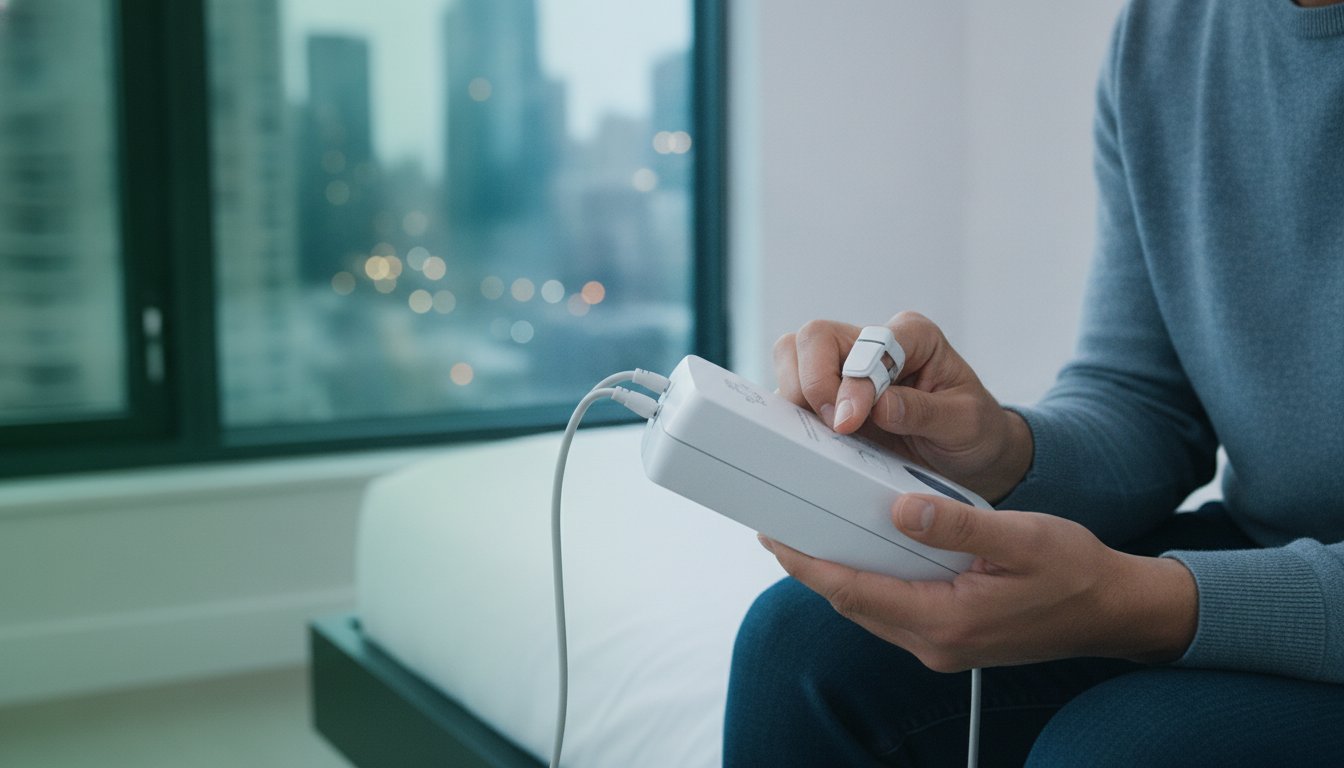
The system’s design prioritizes both clinical accuracy and patient adherence. An on-board display allows for immediate signal verification at the bedside, ensuring that sensors are correctly positioned before the patient begins their study. This feature significantly reduces the likelihood of failed recordings. The streamlined sensor configuration is less intrusive than traditional monitors, which directly improves patient compliance during multi-night assessments. Its compact, lightweight form factor is ideal for Canadian patients who may need to transport the device between the clinic and their home.
National Support and Technical Service
Successful implementation of a diagnostic program requires more than just high-quality hardware. Novus Medical serves as the exclusive Canadian distributor and service partner for Cadwell, offering a comprehensive support network that includes national technical assistance and preventive maintenance. For large-scale hospital procurement, this partnership provides a stable foundation for long-term operational reliability. By choosing a partner with a dedicated Canadian presence, facilities ensure that their diagnostic tools remain functional and compliant with national standards. This reliability ultimately improves the continuity of care for patients across the country while maximizing the return on clinical investment.
Advancing Sleep Diagnostics in Your Clinical Practice
Deciding on a level 3 HSAT device Canada requires balancing rigorous technical specifications with long-term operational stability. Throughout this guide, we’ve examined how decentralized testing reduces provincial waitlists and why AASM-compliant sensor configurations are essential for diagnostic integrity. By selecting a robust ecosystem like the Cadwell ApneaTrak, you ensure your practice maintains the highest standards of sleep medicine while delivering reliable, home-based care. High-fidelity data and intuitive patient interfaces are no longer optional; they’re the foundation of modern respiratory care.
Novus Medical serves as the exclusive Canadian distributor for Cadwell, offering comprehensive technical support and maintenance contracts to safeguard your investment. Our commitment to excellence includes providing expert clinical training for diagnostic teams, ensuring your staff is fully equipped to utilize these advanced tools effectively. We’re dedicated to supporting your mission of improving patient outcomes through innovative medical technology and dependable local service. To elevate your diagnostic capabilities, request a clinical consultation for the Cadwell ApneaTrak today. We look forward to partnering with your team to enhance sleep health services across the country.
Frequently Asked Questions
What is the difference between Level 3 and Level 4 sleep studies?
Level 3 monitors at least four channels, including airflow, oxygen saturation, heart rate, and respiratory effort. Level 4 monitors only one or two channels, typically focusing on oxygen saturation and pulse rate. Level 3 is the clinical standard for diagnosing obstructive sleep apnea in adult patients, whereas Level 4 is generally used for preliminary screening and lacks the detailed respiratory data required for most provincial funding.
Does Health Canada regulate Level 3 HSAT devices?
Yes, Health Canada regulates all diagnostic medical devices under the Medical Devices Regulations. Any level 3 HSAT device Canada clinicians utilize must possess a valid Medical Device Licence. Recent regulatory amendments, including those effective in 2026, prioritize lifecycle-based surveillance and digital submission standards. These rules ensure that diagnostic equipment meets strict safety and performance criteria before it can be legally distributed to Canadian healthcare providers and hospitals.
Can a Level 3 HSAT device diagnose Central Sleep Apnea?
Level 3 devices are primarily optimized for diagnosing Obstructive Sleep Apnea in patients with high pre-test probability. While they can identify central events through a lack of respiratory effort, they do not include the EEG channels necessary to confirm sleep stages. Patients with suspected complex Central Sleep Apnea or multiple comorbidities often require a Level 1 in-lab study to provide the comprehensive neurological data needed for a definitive clinical diagnosis.
What are the minimum sensor requirements for an AASM-compliant Level 3 study?
An AASM-compliant Level 3 study requires a minimum of four diagnostic channels to ensure clinical accuracy. These mandatory channels include:
- Nasal pressure for airflow monitoring
- Oxygen saturation (SpO2)
- Heart rate
- Respiratory effort, typically measured with RIP belts
Professional-grade monitors often incorporate additional sensors, such as actigraphy, to help clinicians differentiate between sleep and wake periods, which improves the reliability of the calculated Apnea-Hypopnea Index.
How does Novus Medical support HSAT implementation in Canadian hospitals?
Novus Medical provides comprehensive support for the level 3 HSAT device Canada market by facilitating seamless technology transitions. We offer specialized clinical training and national technical support to ensure diagnostic teams can manage high patient volumes efficiently. Our team provides customized maintenance contracts and professional workshops, helping Canadian hospitals integrate advanced hardware into existing workflows while maintaining compliance with national standards and EMR security protocols.
Disclaimer
Disclaimer: Articles on this website are produced with the assistance of automated content tools (AutoSEO) and are intended solely for general informational purposes. This content does not constitute professional advice. While we strive to maintain accurate and up-to-date information, readers should verify key details independently before taking action based on any content found on this site.
Leave a Reply
Your email is safe with us.