

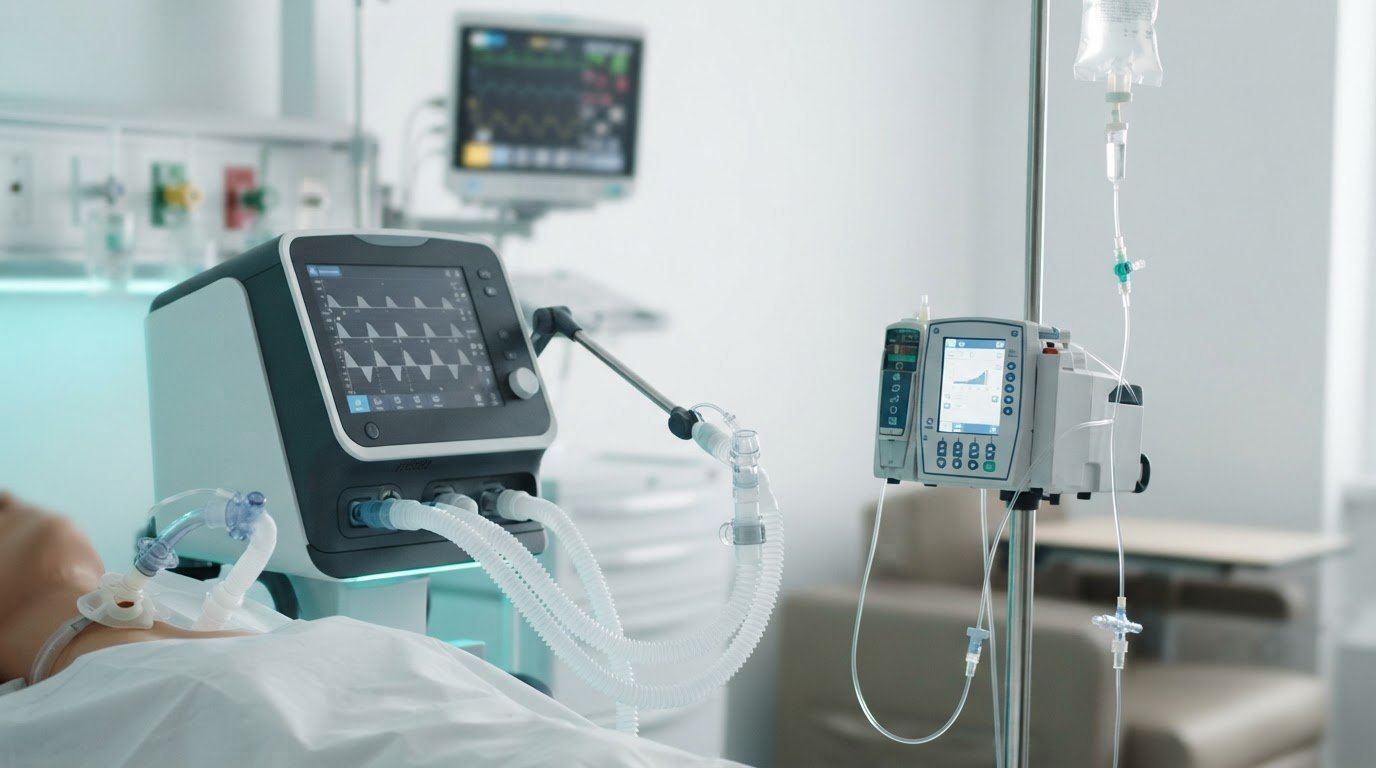
ICU equipment sourcing in Canada spans vascular access and respiratory support, but the right product depends on the clinical application and how equipment fits into care workflows. An ICU medical equipment supplier in Canada can help healthcare teams navigate categories such as needle-free IV connectors, administration sets, tracheostomy tubes and ventilator circuits.
For clinicians and purchasers, product names alone aren’t enough: intended use, compatibility and the manufacturer’s instructions for use all matter. This article outlines what to consider across these equipment categories and introduces respiratory support options relevant to Canadian critical-care settings, including ventilators and related technology. You’ll get a practical overview to help frame product selection and sourcing decisions for ICU care.
Key Takeaways
- Compare tracheostomy tubes and ventilator circuits by intended use, compatibility, and the manufacturer’s instructions for use.
- Map ICU equipment needs by category, then assess how each device fits clinical workflows and care requirements.
- Understand which factors shape equipment pricing and how new and refurbished options differ before planning procurement.
- Explore LungFit® PH when considering respiratory support technology for an ICU setting.
Tracheostomy tubes and ventilator circuits
Tracheostomy tubes and ventilator circuits have connected but distinct roles in airway care. A tracheostomy tube provides an airway interface through a surgically created opening, while a ventilator circuit connects respiratory equipment to the patient interface. For an ICU purchase, assess each item against the intended patient, prescribed care, ventilation setup and equipment used at the bedside. Treat them as parts of the overall respiratory setup, not interchangeable products.
Tube selection depends on clinical requirements and device configuration. The care team may need to consider whether a cuffed or uncuffed tube suits the intended application, along with tube dimensions and connector compatibility. These details affect how the tube fits the planned airway-management approach. Consult the selected product’s instructions for use for its indications, contraindications, warnings and precautions.
For ventilator circuits, start with the ventilator model and the circuit configuration required for the planned setup. Check connector compatibility, circuit arrangement and any additional components. A heated breathing circuit is one circuit category, but its suitability depends on the clinical setup and product instructions. Do not assume circuits from different manufacturers or configurations are interchangeable based on appearance. Record the intended ventilator and circuit configuration during procurement review.
- Match: Compare the tube or circuit’s stated use with the intended application.
- Fit: Review dimensions, connectors and compatibility with the respiratory equipment.
- Review: Follow the specific product’s instructions for use, including warnings and precautions.
In Canada, country-specific product availability is addressed through product catalogues, sales representatives or customer support. For example, a purchasing team can organize its review by recording the required tube configuration and ventilator model, then comparing candidate products against those details. This process helps clinicians and purchasers discuss a defined equipment requirement while keeping product selection tied to the intended use and the manufacturer’s directions.
Which suppliers provide ICU ventilators, monitors, infusion pumps, and hospital beds?
Hospitals source ICU ventilators and patient monitors through manufacturers, authorized distributors and specialist medical-device suppliers. Infusion pumps and hospital beds may follow separate purchasing channels. Supplier selection depends on clinical application, technical fit, procurement scope and support arrangements. A single ventilator purchase has different coordination needs from a broader ICU equipment refresh.
Before reviewing ventilators, define the patient population, intended care environment and required workflow. Consider how the device fits existing respiratory equipment and staff processes. For patient monitors, list the measurements and alarm functions required in the care area. For infusion pumps, specify the intended use and how the equipment must fit bedside routines. Clear requirements help suppliers respond to the clinical need.
Hospital beds require a different assessment, including the care environment, patient-handling needs and room setup. Identify the intended unit and staff’s operational requirements. If procurement covers several categories, define each device type separately. This makes like-for-like comparisons easier and helps show where a supplier’s product range fits the facility’s request.
- Ventilators: Document the respiratory application, care setting, and equipment compatibility requirements.
- Monitors: Specify the required measurements and alarm needs for the intended clinical area.
- Infusion pumps: Define the infusion application and bedside workflow requirements.
- Hospital beds: Describe the unit, patient-handling needs, and room configuration.
During procurement, ask suppliers to organize responses against these requirements, rather than comparing unrelated specifications. Review product instructions and technical documentation for each proposed device. For respiratory teams assessing ventilator options, Canadian respiratory equipment information can help connect product categories with clinical applications. A clear specification supports a more focused discussion with suppliers and gives purchasers a practical basis for evaluating equipment fit across an ICU.
Compare suppliers on how well their products meet the facility’s clinical and technical requirements, what equipment they support and what support arrangements they provide. For a broader ICU refresh, consider how their product range aligns across device categories. For a single-device purchase, focus on fit with the device’s intended use and workflow.

What are typical prices for ICU medical equipment in Canada?
For Canadian ICU procurement, start with a documented clinical requirement, not a generic equipment label. A ventilator request, for example, should identify the intended care environment, patient population and respiratory application. A monitor request needs its own clinical specification. Separating requirements by device helps clinical, biomedical and purchasing teams assess whether proposed equipment meets the facility’s needs.
Build each specification around the workflow. Describe where the equipment will be used, who will operate it and which existing systems it must work alongside. For an infusion pump, document the intended application and accessories required by the care team. For a hospital bed, describe the unit’s operating environment and patient-handling needs. Specific requirements help suppliers respond without implying that products in the same category are interchangeable.
- Clinical use: State the intended application and care environment for each device.
- Configuration: List required functions, accessories and compatibility needs.
- Procurement scope: Identify whether the request covers one unit, a replacement or a broader equipment plan.
- Operational needs: Include staff training, installation and ongoing service requirements where relevant.
A shared specification prevents different configurations from being compared as if they were identical. Two ventilator proposals, for example, may address different respiratory applications or include different accessories. Record those distinctions and ask suppliers to respond to the same requirements. Clinical and technical reviewers can then assess each option against its intended use and product documentation.
Keep a separate requirement sheet for each device category and record changes during the review. A change to the intended care area may affect configuration or compatibility requirements. Documenting the reason for each revision gives clinical, biomedical and purchasing teams a common reference and keeps the review focused on fit with facility workflows.
Do Canadian ICU equipment suppliers offer new and refurbished equipment?
Canadian healthcare purchasers can specify new or refurbished equipment in an ICU procurement request. Offerings vary by device category and purchasing arrangement. New equipment may suit a facility standardizing a new unit; refurbished equipment may be considered for a replacement or a defined operational need. Compare either option against the same clinical specification, rather than treating “new” or “refurbished” as a measure of suitability on its own.
For refurbished equipment, request documentation describing its condition, service history, included accessories and applicable support terms. For a patient monitor, confirm that the proposed configuration matches the care area and required measurements. For an infusion pump, specify the intended application and necessary accessories. These details help clinical and procurement teams assess whether a particular unit meets their requirements.
- Condition: Record the stated condition and any inspection or service documentation.
- Configuration: Compare model, functions, accessories and compatibility with existing equipment.
- Support: Review the applicable warranty, maintenance and service arrangements.
- Instructions: Follow the manufacturer’s instructions for use for the specific device.
New equipment also needs a fit review. A newly purchased ventilator must match the respiratory application, care setting and required configuration. A refurbished unit needs the same checks, alongside a clear record of its condition and included components. In either case, consult the device’s instructions for use for indications, contraindications, warnings and precautions when assessing its suitability for the intended application.
To organize a purchasing review, create separate comparison rows for each device and condition. Record the model, configuration, included accessories, service history where applicable, and support terms. Have clinical, biomedical and procurement teams review the same information. This helps facilities compare new and refurbished proposals consistently, identify missing details and decide based on operational fit rather than condition label alone.
Novus Medical: LungFit® PH
Novus Medical offers LungFit® PH to healthcare teams assessing respiratory technology for ICU care. It uses patented Plasma Pulse Technology® to generate inhaled nitric oxide from ambient air. Consider LungFit® PH when your clinical and procurement teams are defining respiratory technology requirements for the intended care setting.
For a focused discussion, outline the clinical application, equipment workflow and product information your team needs to assess. Novus Medical also offers the EO-150 Ventilator and Monnal™ T60 Advanced for teams evaluating ventilator options. These offerings address distinct respiratory equipment needs, so compare them according to the intended application and relevant product documentation.
Contact Novus Medical to discuss LungFit® PH for your respiratory care requirements.
Make your next equipment discussion more focused
Before approaching an ICU medical equipment supplier in Canada, bring clinical, respiratory-care and procurement priorities together in one working brief. Identify the intended application, essential equipment requirements, compatibility considerations and questions your team needs answered. A shared brief keeps the discussion focused on your facility’s needs and makes the purchasing conversation more productive.
For respiratory teams considering technology and clinician education, Novus Medical offers LungFit® PH, EO-150 Ventilator and the MagVenture Accelerator Training Program. These offerings address different needs, so start with the clinical or learning objective your team is working toward. Clear priorities help you focus the discussion on the relevant equipment or training rather than treating distinct requirements as one purchasing decision.
Contact Novus Medical to discuss your ICU equipment requirements and the relevant next steps for your team. Contact Novus Medical about ICU supplies. A well-framed conversation is a practical start toward equipment decisions that support your care environment.
Frequently Asked Questions
Which Canadian suppliers sell ICU medical equipment?
Canadian healthcare facilities can source devices through specialist distributors and manufacturer-authorized channels. Novus Medical supplies hospitals and healthcare providers nationwide, with a portfolio that includes respiratory therapy equipment and ventilators. Start by matching the supplier’s clinical focus and support arrangements to your facility’s needs, then define the equipment application before discussing a specific product.
What types of ICU equipment do Canadian suppliers offer?
Beyond core bedside systems, supplier portfolios can include secretion management devices, non-invasive ventilation interfaces, infant-care products and neurodiagnostic systems. For example, care teams may assess a secretion management device for respiratory therapy or cerebral function monitoring for a neurodiagnostic application. Training programs can also support clinicians working with specialized technology. The specific mix varies by supplier and clinical focus.
How do leading Canadian ICU medical equipment suppliers compare?
Compare suppliers on how well their products meet the facility’s clinical and technical requirements, the equipment they support and their support arrangements.
How can hospitals verify a supplier’s licensing, product quality, and warranty coverage?
For refurbished equipment, request documentation on condition, service history, included accessories and applicable support terms. Review the product’s technical documentation and instructions for use.
Disclaimer
Disclaimer: Articles on this website are produced with the assistance of automated content tools (AutoSEO) and are intended solely for general informational purposes. This content does not constitute professional advice. While we strive to maintain accurate and up-to-date information, readers should verify key details independently before taking action based on any content found on this site.



Leave a Reply
Your email is safe with us.