

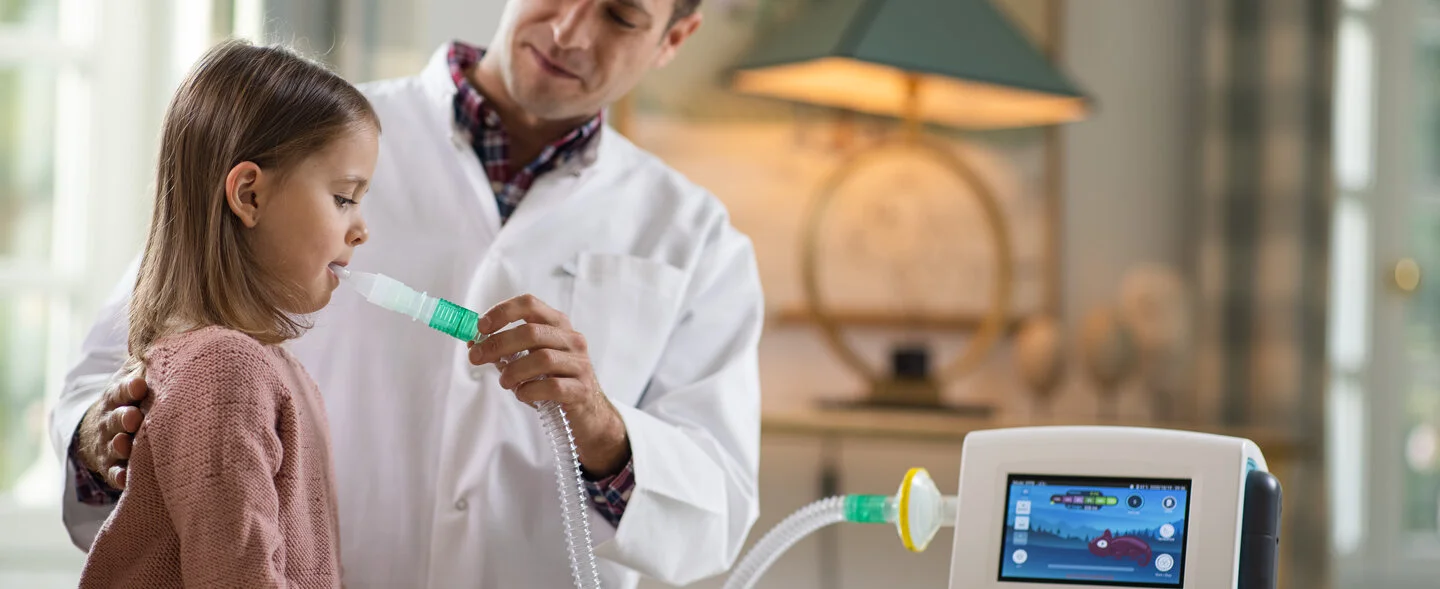
What should a hospital team assess before adding a cough assist machine for hospital use to its care pathway? The device’s pressure cycle is only one consideration. Patient needs, staff readiness, and fit with existing respiratory workflows also shape the decision.
Mechanical insufflation-exsufflation (MIE) supports cough by applying positive pressure to the lungs, then shifting to negative pressure to help move secretions. Cough-assist devices are not interchangeable with broader secretion-management equipment, which may work through different approaches. Understanding that distinction helps teams assess clinical fit and plan consistent use.
This guide explains how cough-assist technology works, which clinical and operational factors to consider, and how to build device evaluation into hospital workflows. It also distinguishes cough assistance from other secretion-management options, including the EO-70 Secretion Management Device from Novus Medical, and explains how technical support and service fit into equipment planning.
Key Takeaways
- Distinguish mechanical cough assistance from manual assisted coughing and other secretion-management approaches before comparing equipment.
- Assess clinical need, patient tolerance, intended care setting, and prescribed protocols as part of a cough-assist evaluation.
- Use a consistent process to review a cough assist machine for hospital use, including workflow fit, staff training, and device-specific information.
- Plan for technical support and service alongside implementation to support equipment continuity in Canadian hospital care.
What a Cough Assist Machine Does in Hospital Care
A cough-assist machine supports airway clearance by moving air into and then out of the lungs to help generate cough-like airflow. Manual assisted coughing relies on a caregiver applying a physical technique to support a patient’s cough. Mechanical insufflation-exsufflation (MIE) uses a device to deliver an assisted breathing cycle. A cough-assist device alternates assisted inspiration and exhalation to help a patient move airway secretions.
In hospital care, the intended role is to support secretion clearance when a patient’s cough is ineffective. Whether it is suitable, how it is used, and what monitoring is needed depend on individual assessment and the responsible clinical team’s plan. The broader Airway Clearance Therapy overview describes cough assistance as one of several airway-clearance approaches.
This video demonstrates a cough-assist device in use:
How the assisted-cough cycle works
In a typical MIE sequence, positive pressure assists inspiration, followed by a rapid shift to negative pressure during exhalation. This change in airflow is intended to simulate key elements of a cough and help move secretions towards the upper airway, where they can be cleared. This is a general description, not an operating protocol. Clinicians should follow the selected device’s instructions and the patient-specific plan.
Where cough assist fits among airway-clearance approaches
Cough assistance is one airway-clearance option, not a substitute for every secretion-management approach. Manual techniques, breathing strategies, and devices that use other mechanisms have distinct roles and are not automatically interchangeable with MIE. When planning hospital equipment, distinguish a cough-assist device from secretion-management products such as Novus Medical’s EO-70 Secretion Management Device. The EO-70 is a separate option, not a cough-assist product.
Clinical Fit, Safety, and Limits of Cough Assist
A device’s general operating principle does not determine whether it is appropriate for an individual patient. Consider a cough assist machine for hospital use within a clinical plan that accounts for airway-clearance goals, the patient’s current condition, ability to tolerate the interface, and care setting. Device selection and settings require individualized clinical assessment.
Assessing clinical suitability
For each patient, the responsible team can document the clinical rationale for assisted cough, the intended secretion-clearance goal, and how the approach fits with other elements of care. The patient’s ability to cooperate with or tolerate the interface may also affect planning. Consider the intended setting, such as an acute-care unit or transport, because staffing, monitoring arrangements, and access to equipment can differ. These factors inform assessment; they do not establish eligibility or a treatment schedule.
Addressing tolerability and safety
Assess the patient’s response throughout care. The responsible team should consider tolerance and any adverse concerns, then determine next steps in keeping with clinician direction and facility policy. A general description of MIE is not a patient-specific prescription and should not be used to set pressures, timing, or frequency. For operation, precautions, and device-specific limits, follow the selected equipment’s approved instructions and facility protocols.
Monitoring and escalation should follow the established care plan. If the patient’s response raises concern, staff should act according to facility policy and seek direction from the responsible clinician. This keeps decisions grounded in the patient’s presentation and the team’s assessment, rather than assumptions about what a device category can do.
For Canadian hospital equipment planning, Novus Medical provides respiratory-care equipment, technical support, and warranty services. Explore respiratory-care equipment and support as part of your facility’s operational planning.

How Hospital Teams Can Evaluate a Cough Assist Machine
A shared evaluation process helps hospital teams compare clinical requirements with documented device information and operational readiness. Respiratory care, clinical leadership, biomedical teams, and procurement each bring a different perspective. Record facility requirements separately from manufacturer specifications so the evaluation shows both what the team needs and what the device documentation states.
- Define the clinical need. Record the intended airway-clearance role and the patient group the team expects to serve. Patient-specific decisions remain with the responsible care team.
- Specify the care setting. Map intended locations, such as bedside care or transport, and identify the interfaces, equipment, and resources required in each setting.
- Review workflow fit. Decide where the device will be stored, how staff will access it, and how its use fits existing care processes. Include respiratory clinicians and frontline staff in the review.
- Plan training. Identify the staff who need education, where approved operating procedures will be available, and how the facility will maintain staff readiness.
- Plan equipment oversight. Assign responsibility for inventory, maintenance records, and review of manufacturer guidance so equipment processes remain clear after deployment.
Match device capability to the intended care setting
Build a requirements list before comparing options. Record intended patients, care locations, interfaces, and workflow needs, then compare each item with documented device specifications. Check the manufacturer’s information for each required feature rather than assuming it is part of the device category. This gives procurement and biomedical teams a clear basis for technical review and broader respiratory therapy purchasing decisions.
Plan staff readiness and continuity
Before implementation, coordinate user education and approved procedures with the teams responsible for care and equipment. Decide how staff will access current instructions and where operational questions should go within the facility. Assigning these responsibilities early helps move an evaluation from procurement review into consistent day-to-day practice. Consider respiratory-care equipment planning alongside your facility’s clinical and operational requirements.
Planning Hospital Implementation and Ongoing Support
Implementation planning turns an equipment decision into clear responsibilities for the care team and the facility. For a cough-assist device, define how staff will access approved instructions, follow local procedures, and route operational questions. Document these processes before deployment so teams can establish a consistent approach without treating the device itself as a hospital workflow.
| Area | Implementation consideration |
|---|---|
| Clinical workflow | Define how device use fits facility procedures and patient-care plans, and clarify which clinical roles oversee decisions. |
| Training | Identify the staff who need education and ensure approved instructions and local procedures are accessible. |
| Technical support | Set out how staff should route equipment questions and where relevant technical documentation is kept. |
| Service | Assign responsibility for equipment records, maintenance planning, and review of applicable service arrangements. |
Prepare the care team before deployment
Clarify responsibilities across respiratory care, clinical leadership, biomedical teams, and procurement. Establish who maintains local procedures, how staff access the manufacturer’s approved instructions, and where operational questions should be directed. Align these steps with institutional requirements and the selected equipment’s documentation.
Connect equipment planning with technical support
Include technical documentation, equipment oversight, and service arrangements in the facility’s implementation plan so responsibilities remain clear after deployment. Novus Medical’s EO-70 Secretion Management Device is a secretion-management offering, not a cough-assist product. Keep its role distinct in equipment planning, and assess each device against the clinical requirements it is intended to address.
For wider planning, consider how Canadian hospital equipment planning aligns with your facility’s operational needs. Novus Medical provides respiratory-care equipment, technical support, and warranty services to hospitals and healthcare providers across Canada.
Turn Evaluation Into a Practical Next Step
As your facility considers a cough assist machine for hospital use, turn the evaluation into a documented decision that can guide procurement and future review. Record the clinical rationale, intended use, manufacturer-verified specifications, and operational responsibilities together. This gives stakeholders a shared reference as equipment needs or care pathways change, without treating a device’s general capabilities as a substitute for clinical judgement.
Use the record to identify unresolved questions and assign them to the appropriate clinical, biomedical, or procurement lead. A clear path from assessment to implementation helps teams make deliberate decisions and stay aligned across departments. Keep the review grounded in facility requirements and the responsible clinical team’s direction.
Explore respiratory-care equipment from Novus Medical as your hospital plans its next steps. Explore Novus Medical’s respiratory-care equipment to support your facility’s equipment planning.
A defined process and the right stakeholders give your team a practical basis for moving forward and reviewing the decision over time.
Frequently Asked Questions
What does a cough assist machine do in a hospital?
It provides mechanical support for cough by assisting airflow in and out of the lungs, which can help move secretions towards the airway for clearance. Hospital teams should document the device’s intended role in the patient’s care plan and distinguish it from hands-on assisted coughing. The responsible clinical team determines whether and how it is used.
Which patients may be considered for cough-assist therapy?
There is no single patient profile that determines whether cough-assist therapy is appropriate. The clinical team considers the person’s overall condition and whether the approach fits the care plan. The patient’s ability to participate and communicate discomfort may also be relevant to planning. Treating clinicians make patient-specific decisions rather than relying on a general device description.
Is a cough assist machine the same as a secretion management device?
Not necessarily. Products described using these terms can have different intended functions, so the name alone does not establish equivalence. Review each device’s stated intended use and manufacturer documentation against the task the hospital needs to support. This keeps category labels from standing in for a technical and clinical comparison.
How should a hospital evaluate a cough assist machine?
Start with a written requirements record that separates clinical needs from procurement and technical criteria. For a cough assist machine for hospital use, capture intended care locations, relevant device documentation, and the facility’s review and approval pathway. The record helps teams track decisions, identify unresolved requirements, and maintain a consistent reference during procurement without relying on unsupported performance benchmarks.
Who should train hospital staff to use a cough assist machine?
The facility should identify appropriate clinical and technical leads to coordinate staff preparation in line with institutional requirements. Training materials should reflect the selected device’s approved instructions, while competency expectations remain the facility’s responsibility. Hospitals can also plan how newly assigned staff will access current materials and how operational questions will be routed through established internal channels.
Disclaimer
Disclaimer: Articles on this website are produced with the assistance of automated content tools (AutoSEO) and are intended solely for general informational purposes. This content does not constitute professional advice. While we strive to maintain accurate and up-to-date information, readers should verify key details independently before taking action based on any content found on this site.


Leave a Reply
Your email is safe with us.