
With nearly 70% of the medical technology in Canadian hospitals sourced from international manufacturers, selecting the right medical device distributor Canada has to offer is essential for operational stability. It’s a common frustration when advanced respiratory or neuro-diagnostic equipment arrives, only for staff to struggle with intricate features or face lengthy downtime due to inadequate technical support. You realize that a vendor’s role shouldn’t end at delivery; patient outcomes depend on the precision of devices like the LungFit® PH or MagVenture systems.
This article provides an expert-led checklist for evaluating partners based on clinical support and technical mastery. We’ll examine how to audit clinical training programmes, warranty structures, and national technical service networks to ensure your facility achieves seamless technology integration and superior device ROI. By prioritizing clinical excellence and technical reliability, you can transform equipment procurement from a simple transaction into a sustainable partnership that enhances the quality of care for your patients.
Key Takeaways
- Distinguish between general wholesalers and specialized partners to ensure your facility receives the clinical expertise required for complex respiratory and neuro-diagnostic applications.
- Utilize a strategic procurement checklist to verify that a medical device distributor Canada relies on maintains robust local inventory for essential consumables like NIV masks.
- Establish clear expectations for technical reliability by auditing service contracts for standardized response times and proactive maintenance protocols that minimize equipment downtime.
- Prioritize long-term device ROI by selecting distributors that offer comprehensive clinical education and professional development programmes, such as the MagVenture Accelerator.
Evaluating a Medical Device Distributor in Canada: Beyond Logistics
Selecting a medical device distributor Canada relies on involves more than just assessing warehouse capacity or shipping speeds. While high-volume wholesalers prioritize the movement of generic supplies, specialized clinical distributors focus on the technical nuances of high-acuity equipment. For respiratory therapy and neuro-diagnostics, a distributor acts as a bridge between complex global innovation and local bedside application. Understanding global medical device classifications is the first step in recognizing why specialized expertise is non-negotiable for Class III and IV technologies. These high-risk devices require a partner who understands the clinical environment, not just the box they arrive in.
To better understand the regulatory framework for importing and selling these technologies, watch this helpful video:
The Shift from Vendor to Clinical Partner
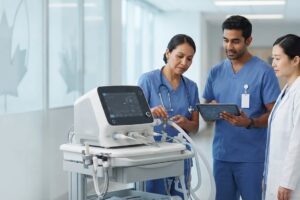
Specialized distributors alleviate the immense burden on hospital biomedical engineering departments by providing factory-trained technical support and immediate clinical troubleshooting. A specialized medical device distributor Canada trusts will prioritize ‘clinical fit’ when implementing devices like the LungFit® PH system. This ensures the technology integrates into existing neonatal or intensive care workflows without compromising patient safety. Localized support ensures that devices meet national Canadian healthcare standards, providing a level of continuity and specialized training that broad-scale vendors can’t provide.
Regulatory and Compliance Standards in Canada
A reliable partner manages the complexities of Health Canada Medical Device Licences (MDL) and establishment licences. They don’t just sell products; they oversee post-market surveillance and mandatory problem reporting. With new amendments to the Medical Devices Regulations coming into force on December 14, 2026, MDEL holders will be explicitly required to maintain documented procedures for safety-management activities. This regulatory oversight protects your hospital from liability and ensures that every piece of equipment remains compliant throughout its entire lifecycle.
The Strategic Procurement Checklist for Canadian Healthcare
Strategic procurement in the Canadian medical technology industry requires a framework that prioritizes clinical continuity over simple acquisition cost. When evaluating a medical device distributor Canada hospitals must first verify inventory reliability for essential consumables, such as NIV masks, to prevent supply chain disruptions. Beyond stock levels, you should assess the clinical depth of the distributor’s team. Representatives should be clinically trained to assist with bedside implementation of complex systems. A true partner offers exclusive, innovative solutions like the LungFit® PH for cylinder-free nitric oxide generation, ensuring your facility remains at the forefront of respiratory care. Service continuity is the final check; there must be a transparent path from the initial purchase to long-term technical maintenance and repair.
Assessing Respiratory and Critical Care Portfolios
Evaluating ventilators requires matching the device to the specific care setting. The Monnal™ T60 Advanced excels in high-acuity transport and emergency scenarios, whereas the EO-150 Ventilator is optimized for chronic care environments. For ICU settings, secretion management is vital; specialized solutions like the EO-70 ensure patient comfort and airway patency. Infrastructure compatibility isn’t just about physical fit; it involves ensuring a steady supply of compatible NIV masks and circuit standardization to prevent integration hurdles. If you’re looking to refine your facility’s technology roadmap, you can consult with our clinical specialists to discuss tailored equipment needs.
Neuro-Diagnostic and Infant Care Considerations
In neurology, precision and data integrity are paramount. Selection criteria for EMG and EEG equipment, such as the Cadwell Sierra Summit, must include ease of use for technicians and diagnostic clarity for physicians. For the NICU, specialized infant care products from Neotech or Dandle-Lion support critical developmental milestones. These tools protect fragile skin and support neurodevelopment, which are essential for improving outcomes in the most vulnerable patients. Reliability in these high-stakes environments is non-negotiable. You don’t just need a vendor; you need a partner who understands the clinical stakes of every diagnostic decision.

Technical Support and Warranty: Protecting Your Technology Investment
A sophisticated medical device distributor Canada trusts must provide more than just a sales contract; they must offer a comprehensive technical safeguard. Evaluating a service agreement involves five critical steps: verifying manufacturer authorization, auditing response time guarantees, confirming the availability of genuine parts, reviewing preventative maintenance schedules, and assessing loaner equipment accessibility. For critical care devices, clinicians should demand standardized response times that reflect the urgency of the ICU environment. Utilizing authorized repair services instead of third-party alternatives is essential for maintaining device lifespan and, more importantly, ensuring patient safety through precise calibration. Reliability isn’t just about the hardware; it’s about the technical infrastructure supporting it.
Key Elements of a Robust Service Agreement
Effective service agreements prioritize preventative maintenance to eliminate unexpected ICU downtime. These scheduled interventions catch wear and tear before they become catastrophic failures. Additionally, a transparent warranty fulfillment process ensures that Canadian hospitals aren’t left with significant gaps in care during equipment transitions. If a major repair is required, the availability of loaner equipment becomes a lifeline for maintaining clinical continuity. This proactive approach significantly reduces the total cost of ownership by extending the operational life of your capital investments while ensuring your technical assets remain at peak performance.
Bio-Medical Engineering Collaboration
A distributor’s technical team shouldn’t work in a vacuum. They should actively support and train on-site hospital biomedical technicians, fostering a collaborative environment. This includes providing access to proprietary diagnostic software and ensuring only genuine manufacturer parts are used for repairs. By empowering hospital staff with specialized knowledge, the distributor helps maintain the highest standards of technical reliability. This partnership reduces the burden on internal departments while ensuring that every device, from ventilators to neuro-diagnostic tools, operates within factory specifications. To ensure your facility’s technology is backed by a national technical support network, explore our service and maintenance programmes today.
Clinical Training: The Final Pillar of Device ROI
Hardware acquisition represents only the beginning of a technology’s lifecycle. To truly realize the return on investment (ROI), a medical device distributor Canada partners with must provide a continuous framework of clinical education. High-acuity devices like the MagVenture rTMS system require more than a user manual; they necessitate a deep understanding of neuro-modulation protocols. Hands-on workshops and professional development programmes act as a critical differentiator, bridging the gap between technical capability and clinical proficiency. This educational support directly impacts patient safety, as confident clinicians are better equipped to leverage advanced features that improve diagnostic accuracy and therapeutic outcomes.
Structuring On-Site and Remote Training
Initial bedside training for respiratory teams on new ventilators, such as the Monnal™ T60 Advanced, ensures immediate operational readiness. However, clinical excellence requires ongoing engagement. Specialized workshops, like the Nerve Conduction Fundamentals Workshop, provide neuro-diagnostic technicians with advanced skills that go beyond basic operation. A robust training structure should also include digital resources and clinical guides to offer 24/7 support for night-shift staff or emergency troubleshooting. This multi-layered approach ensures that the facility’s clinical expertise evolves alongside the technology itself, maintaining the highest standards of care.
Measuring the Success of Distributor Training
Quantifying the impact of clinical education is essential for hospital administrators and procurement teams. Success is measured through increased device utilization rates and a measurable reduction in user-related errors. When a medical device distributor Canada trusts provides elite training like the MagVenture Accelerator, the result is improved neuromodulation outcomes and more streamlined clinical workflows. High-quality training reduces the learning curve for complex equipment, allowing departments to reach peak efficiency faster. By prioritizing these educational pillars, healthcare facilities protect their capital investments while elevating the standard of patient care. Discover how Novus Medical supports clinical excellence through training.
Securing the Future of Patient Care Through Strategic Partnerships
Selecting a medical device distributor Canada relies on requires a transition from transactional procurement to a clinical partnership. Technical reliability and expert-led education are the true drivers of long-term technology ROI. By prioritizing authorized service contracts and hands-on training, your facility ensures that advanced equipment like the LungFit® PH system operates at peak performance. These strategic decisions don’t just protect your capital investment; they directly enhance the quality of care in high-acuity ICU and NICU environments.
As the exclusive medical device distributors Canada relies on for innovative technologies and the home of the MagVenture Accelerator, we remain committed to your clinical success. Partner with Novus Medical for specialized clinical solutions that provide national technical support and unparalleled expertise. Elevating your clinical standards starts with a partner who is as invested in patient outcomes as you are. We look forward to helping your team integrate the next generation of medical innovation.
Frequently Asked Questions
What should I look for in a specialized medical device distributor in Canada?
Look for clinical depth, technical support, and exclusive access to high-acuity solutions. A top-tier medical device distributor Canada trusts should offer more than logistics; they must provide bedside implementation support and national technical coverage. This ensures that complex devices like the Monnal™ T60 Advanced are integrated seamlessly into hospital workflows while maintaining long-term reliability through authorized service contracts and genuine parts.
How does a distributor help with Health Canada regulatory compliance?
Distributors manage the complexities of Medical Device Licences (MDL) and establishment licences (MDEL) while overseeing post-market surveillance. They ensure every device meets stringent safety standards and handle mandatory problem reporting. By December 14, 2026, new regulations will require MDEL holders to maintain documented procedures for safety management. A reliable partner stays ahead of these changes, protecting your facility from liability and ensuring continuous compliance.
What is the difference between an exclusive and a non-exclusive medical device distributor?
Exclusive distributors are the sole authorized partners for specific brands, such as Novus Medical being the exclusive provider for LungFit® PH. This relationship ensures direct access to manufacturer-trained technical support and specialized clinical training programmes. Non-exclusive distributors may carry multiple competing brands but often lack the deep technical mastery and dedicated manufacturer resources that an exclusive partnership provides for high-stakes clinical environments. To learn more about how exclusive arrangements benefit your facility, explore the strategic role of exclusive medical device distributors in Canada.
Do Canadian medical distributors provide technical support for all provinces?
A national medical device distributor Canada trusts provides technical support and warranty services to hospitals and providers nationwide. This includes a robust sales and support network that ensures consistent service levels regardless of location. Having a partner with a nationwide reach is essential for facilities requiring rapid response times and access to loaner equipment. This infrastructure minimizes downtime for critical care devices like ventilators.
How can clinical training programs like MagVenture Accelerator improve device ROI?
Training programmes improve ROI by maximizing device utilization and reducing user error through hands-on education. Programmes like the MagVenture Accelerator provide clinicians with the advanced diagnostic and therapeutic protocols needed to leverage complex technology fully. When staff are proficient in using advanced features, diagnostic accuracy improves and patient outcomes are enhanced. This proficiency speeds up the learning curve, allowing departments to reach peak operational efficiency much faster.
Disclaimer
Disclaimer: Articles on this website are produced with the assistance of automated content tools (AutoSEO) and are intended solely for general informational purposes. This content does not constitute professional advice. While we strive to maintain accurate and up-to-date information, readers should verify key details independently before taking action based on any content found on this site.