
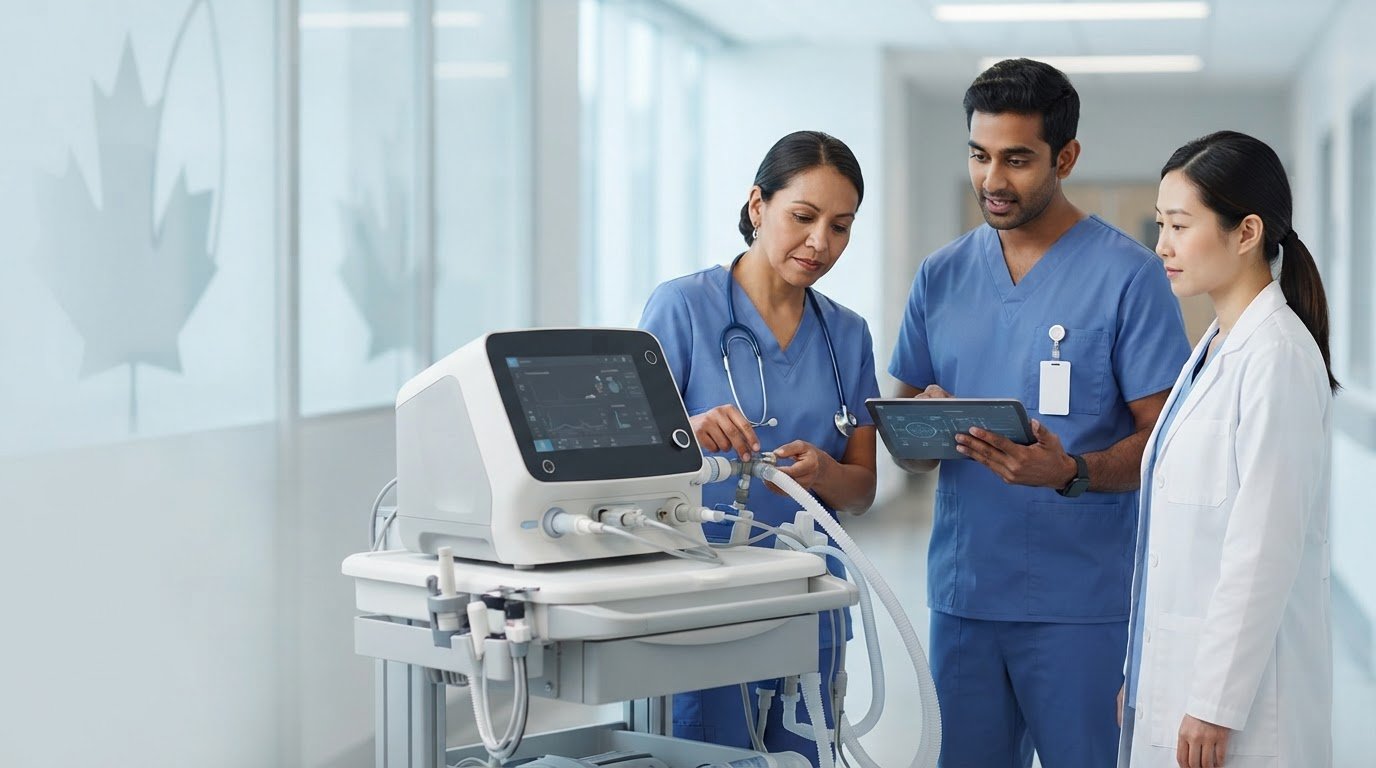
When a device question interrupts a clinical workflow, knowing where to direct it can help your team respond efficiently. For Canadian healthcare teams, clinical support for medical devices includes device-specific education, technical assistance, and ongoing service. Matching the question to the right support pathway helps staff focus on the issue without confusing equipment guidance with clinical decision-making.
Device questions can involve staff training, an unfamiliar display message, equipment operation, or service arrangements. Each calls for different information and may involve different team members. This guide explains how to distinguish those needs, prepare a useful support request, and include device-specific resources in equipment planning.
Training and technical assistance work alongside manufacturer instructions, facility policies, and clinical judgement. Novus Medical provides Canadian-based technical support by phone, internet, and remote connection, as well as clinician training and warranty services for healthcare providers across Canada.
Key Takeaways
- Clinical support for medical devices connects device-specific education, technical assistance, and ongoing service.
- Match the question to the resource: training supports device knowledge, while technical assistance and warranty or service support address equipment needs.
- Prepare a support request by identifying the device, describing the issue factually, and separating equipment questions from concerns that require clinical escalation.
- Novus Medical supplies medical devices, provides clinician training, and offers Canadian-based technical support to healthcare providers across Canada.
What Clinical Support for Medical Devices Means in Canadian Healthcare
Clinical support for medical devices brings together device-specific education, technical assistance, and ongoing service. It helps healthcare teams identify the right resource for questions about equipment, understand device-related information, and coordinate next steps when a technical or service concern arises.
Medical devices include diagnostic equipment and devices used in treatment and monitoring. A general overview of the medical device category provides useful context, but the support process depends on the specific device, its intended use, and the facility’s workflow. For example, teams working with respiratory equipment such as the LungFit® PH, EO-150 ventilator, or Monnal™ T60 Advanced need device-specific information, not generic troubleshooting. Clear support pathways help clinicians, purchasers, and operations teams address equipment questions and coordinate responsibilities.
Which teams rely on clinical support for medical devices?
Clinicians may need device-specific guidance during setup or routine operation. Clinical engineering teams may handle questions about equipment function or technical issues. Purchasers consider support and service arrangements when evaluating equipment, while department leads coordinate staff education, workflows, and escalation processes. Since one device can involve all these roles, a useful first step is to identify who is affected and whether the request concerns training, operation, or service.
How does device support differ from patient care?
Device support concerns equipment education, operation, technical assistance, and service. A question about a device control or equipment fault is different from deciding whether a treatment is appropriate for a patient. Support can provide information about the device, but qualified care teams remain responsible for clinical decisions. Device support does not replace manufacturer instructions or facility policies. For a concern involving patient assessment or care, follow the facility’s clinical escalation process and the direction of the responsible care team.
How Clinical Education, Technical Assistance, and Service Fit Together
The type of question should guide the next step. A staff member who needs to understand a device workflow may benefit from education. A question about equipment operation or a possible fault calls for technical assistance. Warranty and service support address ongoing equipment needs through their own processes.
When is education different from technical troubleshooting?
Education builds familiarity with device-specific information, controls, and workflows. It can support onboarding or reinforce staff understanding of equipment use. Technical assistance addresses questions about equipment operation or a possible technical issue. Neither replaces clinical judgement, facility policy, or manufacturer instructions.
| Support pathway | Purpose | Typical need | Appropriate next step |
|---|---|---|---|
| Clinical education | Build device-specific knowledge | A team member needs guidance on a workflow or equipment feature | Use the relevant training and device resources |
| Technical assistance | Address an equipment question or issue | A control, function, or technical concern needs attention | Record the device and issue, then follow the facility’s support process |
| Warranty support | Address eligible equipment concerns within warranty coverage | A device may require support under its warranty | Refer to the warranty information and applicable support channel |
| Service contract | Provide support according to the applicable agreement | A facility needs to understand its ongoing service arrangement | Review the agreement’s scope and process |
Where does ongoing service fit into device support?
Warranty and service contract support help facilities manage equipment concerns beyond an individual training question. The right process depends on the device, the issue, and the facility’s established workflow. When reviewing ongoing support, check what the agreement covers, how to report an issue, and how responsibilities are divided within the facility. For planning considerations, consult this Canadian medical equipment service contract guide. Novus Medical provides equipment distribution, clinician training, technical support, and warranty services across Canada. Explore Novus Medical’s device support as part of your support planning.

How to Prepare for Medical Device Support in a Clinical Setting
A useful support request identifies the equipment, describes the concern, and explains the operating context. Gathering these details helps direct clinical support for medical devices to the appropriate resource and keeps equipment questions distinct from patient-care decisions.
What details help clarify a device support request?
Before contacting a support resource, gather information that describes the issue without guessing at its cause. Follow facility procedures and the applicable device instructions. Do not change settings or attempt corrective actions outside your role or training.
- Identify the device. Record its name and model, along with any identifying details your facility procedure asks you to provide.
- Describe the question. State which function or operation concerns you, what you observed, and whether the issue is ongoing or intermittent. Keep the description factual.
- Note the operating context. Explain where and how the device is being used, such as its department or workflow, and include relevant setup details. Keep patient-identifying information out of general support examples.
- Choose the right pathway. For an operation or technical question, follow the facility’s equipment-support process. For a patient-care concern, follow clinical escalation procedures and seek direction from the responsible care team.
Remote assistance is one support channel. Use it when it suits the issue and facility workflow, and follow facility procedures throughout the process.
How should teams maintain continuity after assistance?
Record the question, the guidance received, and any follow-up actions, including who is responsible for them. This supports a clear handoff if another staff member needs to continue the process. Keep the record within the facility’s documentation practices, and refer to manufacturer instructions and facility policy for ongoing device use.
For a clear support request, provide the device model, a factual description of the issue, and the relevant operating context. Connect with Novus Medical for medical device support when your healthcare team needs technical assistance in Canada.
How Novus Medical Supports Healthcare Teams Across Canada
Novus Medical connects medical device distribution with technical support and warranty services for healthcare providers across Canada. Support planning can begin during equipment evaluation. Define the intended care setting, identify the roles that will use or support the device, and note what staff need to learn before routine use. This gives equipment decisions and support planning a shared clinical and operational context.
What support resources can healthcare teams access?
Novus Medical provides Canadian-based technical support by phone, internet, and remote connection. Healthcare teams can use these channels to raise equipment questions. The appropriate route depends on the device and the nature of the request. Clinician training is another resource. The MagVenture Accelerator Training Program, for example, supports device-specific learning for clinicians working with MagVenture systems.
Department leads can connect training plans to staff roles, onboarding, and changes in equipment or workflow. The clinical training for medical devices guide can help teams identify learning needs as part of equipment planning, rather than waiting until operational questions arise.
How can teams explore relevant equipment and training?
Start with the care setting and the operational task the equipment is intended to support. Respiratory teams can bring their clinical application and department requirements into equipment discussions alongside staff learning needs. The respiratory therapy equipment buyer’s guide offers a planning resource for facilities assessing respiratory equipment. Considering equipment, training, technical assistance, and ongoing warranty or service support together helps purchasers and clinical leads plan for the full support pathway.
To discuss your team’s equipment and support needs, connect with Novus Medical.
Build a Support Pathway Your Team Can Use
As your facility plans its next equipment review, ask what would help staff feel prepared to work with the devices in their care setting. The answer can guide equipment planning, identify topics for clinician learning, and clarify where teams may need technical assistance. Revisit these priorities as departmental needs evolve, while keeping clinical decisions with qualified care teams.
Clinical support for medical devices is an ongoing part of responsible equipment planning. A clear view of staff needs helps your team set priorities and keep support considerations visible as care environments change.
Novus Medical works with healthcare providers across Canada on medical device distribution and ongoing support. Share your team’s priorities with Novus Medical to discuss a practical support pathway for your facility.
Frequently Asked Questions
Can remote support replace an in-person medical device assessment?
No. Remote assistance can help clarify some equipment questions, but it cannot physically inspect a device or confirm conditions that require hands-on assessment. If the concern involves visible damage, an uncertain equipment condition, or a problem that cannot be assessed remotely, follow your facility’s escalation process. The appropriate support method depends on the device and the nature of the issue.
Is clinical support the same as technical support for a medical device?
Not exactly. Clinical support is a broader term that can include device-specific education and help identifying an appropriate support pathway. Technical support focuses on equipment operation or technical concerns. A question about staff learning needs differs from a report that a device display is showing an unfamiliar message. Describe the issue clearly so it can be directed appropriately.
What information should staff have ready before requesting device support?
Have the device name and model, a concise description of the concern, and the circumstances in which it occurred. If relevant, note any displayed message, when the issue began, and any steps already taken under facility procedures and device instructions. Where applicable, note whether the concern recurs after a specific routine action, without trying unapproved adjustments. Keep the description factual, and avoid including patient-identifying information in general examples or communications where it is not needed.
Can device training replace a healthcare facility’s competency process?
No. Device training can support staff understanding, but each facility determines how it assesses and documents staff competency for its setting. A training session may cover equipment features or workflows; it does not by itself establish that an individual has met the facility’s requirements for independent use. Follow local procedures for competency assessment, authorization, and any required follow-up learning.
Disclaimer
Disclaimer: Articles on this website are produced with the assistance of automated content tools (AutoSEO) and are intended solely for general informational purposes. This content does not constitute professional advice. While we strive to maintain accurate and up-to-date information, readers should verify key details independently before taking action based on any content found on this site.

Leave a Reply
Your email is safe with us.