With the CSCN EMG Examination scheduled for May 23, 2026, the pressure to transition from theoretical knowledge to clinical mastery is mounting for specialists across the country. While recent pass rates reached 89% in 2024, the gap between passing a written test and feeling truly confident behind a neuro-diagnostic console remains a significant hurdle. You likely recognize the frustration of balancing rigid hospital schedules with the need for high-fidelity, hands-on mentorship that goes beyond basic observations.
This article delivers a professional evaluation checklist for EMG training for clinicians Canada, designed to streamline your path toward national certification. We’ll outline how to vet programmes for clinical hours, ensure your training aligns with the latest Entrustable Professional Activities (EPA) requirements, and leverage specialized sessions like the Nerve Conduction Fundamentals Workshop to master advanced equipment like the Cadwell Sierra Summit EMG. By focusing on a three-pillar approach of theory, mentorship, and technical proficiency, you can move toward your examination date with absolute clinical certainty.
Key Takeaways
- Understand the pivotal role of the Canadian Society of Clinical Neurophysiologists (CSCN) in maintaining national standards for diagnostic excellence and professional credibility.
- Identify high-quality EMG training for clinicians Canada by prioritizing curricula that balance advanced didactic theory with extensive, hospital-based clinical observerships.
- Apply a rigorous evaluation checklist to ensure your chosen training pathway provides recognized credentials and facilitates access to a diverse range of neuromuscular pathologies.
- Learn why developing technical proficiency on industry-standard equipment, such as the Cadwell Sierra Summit EMG, ensures a seamless transition into independent clinical practice.
Understanding the Path to EMG Certification in Canada
Achieving proficiency in neuro-diagnostics requires a structured approach that aligns with national standards. In the Canadian healthcare system, the Canadian Society of Clinical Neurophysiologists (CSCN) acts as the primary regulatory body, establishing the rigorous benchmarks necessary for clinical practice. Aspiring specialists must realize that the road to the CSCN EMG Examination is paved with both didactic depth and practical hours. The availability of high-quality EMG training for clinicians Canada is essential as diagnostic technologies become increasingly sophisticated. It’s vital to distinguish between introductory workshops, which focus on specific techniques, and comprehensive fellowship programs that cover the full spectrum of neuromuscular pathology. While a workshop serves as an excellent entry point, it’s the combination of theory and clinical volume that prepares one for the national stage.
Modern What is Electromyography (EMG) training is now organized around the Entrustable Professional Activities (EPA) framework. This model ensures that residents and fellows don’t just accumulate hours but demonstrate specific, observable competencies. Successfully passing the national exam, which is scheduled for May 23, 2026, in Calgary, serves as the ultimate validation of a clinician’s skill set. It provides the professional credibility required to lead a hospital-based lab or private diagnostic clinic. This certification signifies that a practitioner can operate independently, ensuring patient safety and diagnostic accuracy.
The Clinical Significance of EMG and NCS Proficiency
Precise electrodiagnostic testing remains the cornerstone of neuromuscular differential diagnosis; it’s the only way to distinguish between a root lesion and a peripheral entrapment with certainty. As neurologists and physiatrists take on more active roles in the lab, the demand for specialized training continues to grow. These practitioners rely on electrodiagnostics to guide surgical interventions and therapeutic plans. Success in this field requires a deep understanding of both nerve conduction studies and needle electromyography. CSCN certification is the gold standard for Canadian neuro-diagnostic practice.
Essential Components of a High-Quality EMG Training Program
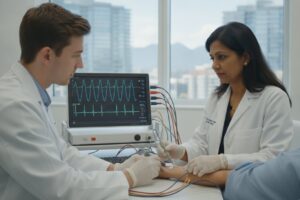
A superior programme for EMG training for clinicians Canada must integrate four foundational pillars to ensure professional competence. First, didactic theory provides the necessary grounding in neurophysiology and the complex physics of electrodiagnostics. This academic base is insufficient without a robust clinical observership. Clinicians need exposure to a diverse volume of pathologies in a hospital setting to recognize the nuances between various neuropathies and myopathies.
Direct, hands-on mentorship is the most critical element for mastering needle EMG and sophisticated nerve conduction studies (NCS). Supervision ensures that technical proficiency is developed safely and accurately. Progress should be tracked through structured assessment protocols that measure a clinician’s evolution from guided practice to independent diagnostic decision-making.
Hybrid vs. Traditional Training Models
Many Canadian clinicians prefer hybrid models that utilize asynchronous online learning for the didactic portion. This flexibility allows specialists to maintain their practice while studying. However, the two-week clinical immersion period remains non-negotiable. It’s during this face-to-face time that virtual office hours and tutor accessibility prove their worth, bridging the gap between digital theory and physical application.
Anatomy and Pathophysiology Integration
Effective training links clinical conditions directly to electrodiagnostic findings, ensuring that practitioners don’t just record data but interpret it in context. Participating in a Nerve Conduction Fundamentals Workshop provides a critical stepping stone, building a strong diagnostic baseline before moving to advanced needle techniques. This integration ensures that every waveform captured on a system like the Cadwell Sierra Summit EMG correlates to a specific pathophysiological state. By grounding technical skills in anatomical reality, clinicians develop the confidence required for high-stakes neuro-diagnostic environments.

The Clinician’s EMG Training Program Checklist
Selecting the right educational pathway is a decision that defines your professional trajectory in neuro-diagnostics. When evaluating EMG training for clinicians Canada, you must look beyond the syllabus to the practical utility of the credentials offered. Ensure the program provides a Certificate of Completion recognized by major Canadian health authorities and hospital boards. Without this formal recognition, securing clinical privileges can become an uphill battle. You should also verify that the program facilitates placements in recognized Canadian hospital sites. Exposure to high patient volumes and a diverse array of neuromuscular pathologies is essential for clinical readiness.
Faculty expertise is equally critical. Prioritize instruction from active CSCN diplomates who understand the specific nuances of the Canadian examination process. Technical training must occur on modern, industry-standard equipment. Learning on the Cadwell Sierra Summit EMG ensures that the skills you acquire are immediately applicable in the most advanced labs in the country. For those seeking to solidify your technical foundation, exploring the Nerve Conduction Fundamentals Workshop is a vital step toward professional excellence.
Evaluating Clinical Mentorship Quality
Quality mentorship is defined by active participation. Passive observation is never enough. Check for a minimum number of supervised studies required by the curriculum. A robust program covers both basic and advanced nerve conduction protocols, providing the depth needed for complex cases. Confirm the program offers connections to help you pursue national certification once your training concludes.
Technical and Hardware Requirements
Mastering EMG training for clinicians Canada requires technical fluency alongside clinical knowledge. Your training should focus on reducing electrical interference and maintaining high signal quality in diverse clinical environments. Verify that the program includes specific instruction on the software interfaces used in most Canadian hospital labs to ensure a seamless transition into practice.
Maximizing ROI: Equipment-Specific Mastery and Support
The return on investment for any educational program is measured by how effectively it prepares you for the realities of a busy hospital lab. Transitioning from a simulated environment to live patient care requires a high degree of technical fluency with the tools of the trade. Prioritizing EMG training for clinicians Canada that utilizes industry-standard hardware ensures that your diagnostic precision isn’t hampered by a steep learning curve upon graduation. Novus Medical facilitates the integration of advanced diagnostic technology into Canadian clinics by providing both the equipment and the technical expertise required for operational excellence.
The Cadwell Sierra Summit Advantage
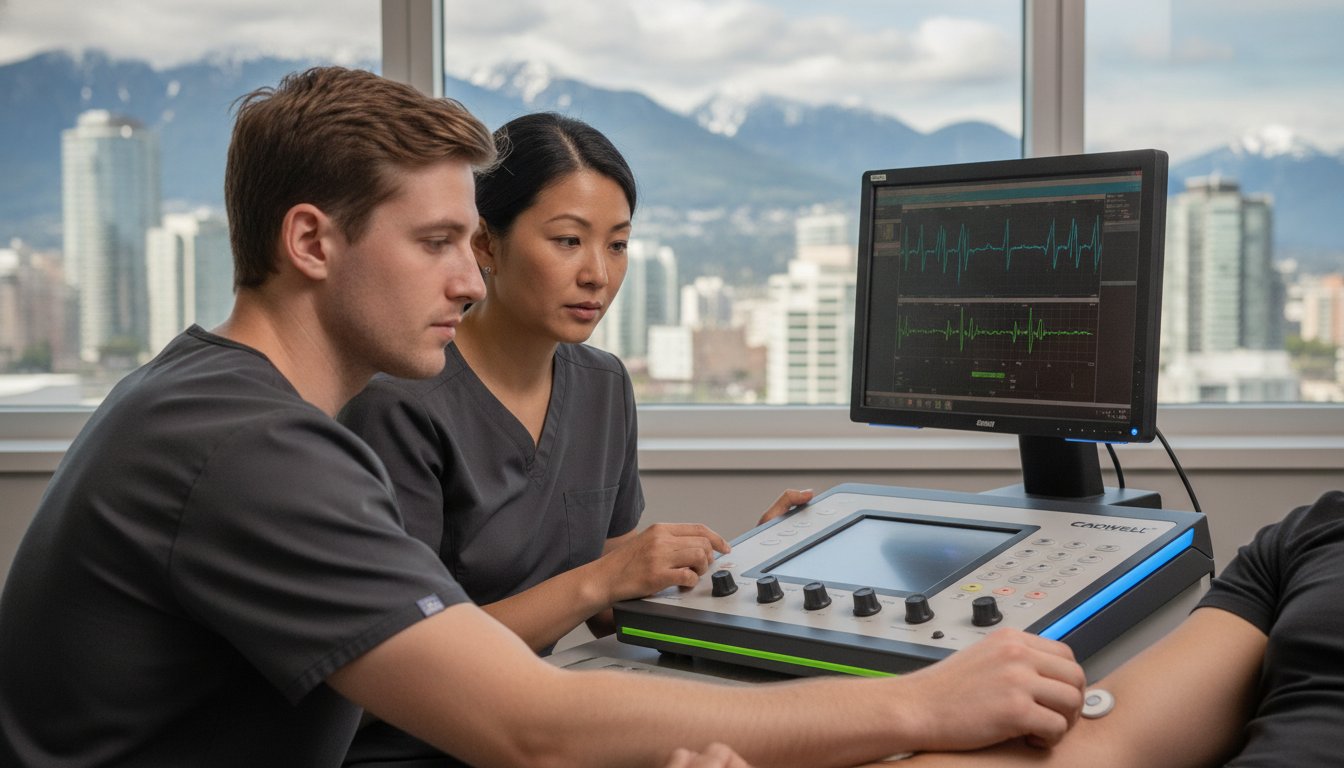
The Cadwell Sierra Summit offers an intuitive workflow that allows new clinicians to focus on the patient rather than struggling with complex software interfaces. This user-centric design reduces the cognitive load during difficult needle examinations. However, the hardware is only one part of the equation. Reliable technical support and comprehensive maintenance contracts are essential for hospital labs where downtime directly impacts patient care. Having a partner who understands the clinical nuances of neuro-diagnostics ensures that your signal quality remains pristine and your data remains accurate over the long term.
Continuing Education and Professional Development
Professional growth doesn’t end with CSCN certification. As the field evolves, practitioners must look toward neuromodulation training clinicians can access today and complex diagnostic protocols to remain at the forefront of patient care. Attending national congresses and participating in specialized hands-on workshops allows you to refine your technique and stay current with evolving standards. These sessions offer a unique opportunity to troubleshoot real-world challenges with peers and experts. To begin this journey or sharpen your existing skills, Explore the Nerve Conduction Fundamentals Workshop to see how expert-led training can transform your clinical practice.
Advancing Your Neuro-diagnostic Career
Navigating the path to CSCN certification requires more than just meeting a checklist of clinical hours. It’s about ensuring your educational foundation is built on rigorous standards and industry-standard technology. As you evaluate your options for EMG training for clinicians Canada, remember that technical proficiency is most effectively developed on the equipment you’ll use in a professional lab. Novus Medical serves as a dedicated partner in this journey, acting as the exclusive Canadian distributor for the Cadwell Sierra Summit EMG. Our national clinical support team and specialized neuro-diagnostic workshops provide the hands-on mentorship necessary to turn complex theory into clinical confidence.
By choosing a pathway that emphasizes both hardware mastery and expert-led instruction, you’re positioning yourself for long-term success in the Canadian healthcare landscape. We invite you to take the next step in your professional development and Register for our Nerve Conduction Fundamentals Workshop to refine your diagnostic skills. Your commitment to excellence ensures the highest standard of care for your patients.
Frequently Asked Questions
How many clinical hours are required for EMG certification in Canada?
The Canadian Society of Clinical Neurophysiologists (CSCN) focuses on competency through the Entrustable Professional Activities (EPA) framework rather than a generic hourly quota. Candidates generally need to document a specific volume of studies, often exceeding 200 nerve conduction studies and needle examinations, within a recognized residency or fellowship. You should verify your specific program’s logbook requirements to ensure they meet the national standards for the 2026 examination cycle.
What is the difference between a technologist-focused and a clinician-focused EMG course?
Technologist programs, such as those registered with BRETC, emphasize the technical execution of nerve conduction studies and data collection. In contrast, clinician-focused EMG training for clinicians Canada prioritizes diagnostic interpretation, pathophysiology, and the performance of needle electromyography. While technologists are vital for lab workflow, clinicians bear the ultimate responsibility for the final neuromuscular diagnosis and the integration of electrodiagnostic findings into the patient’s broader clinical picture.
Can I take an EMG training program entirely online?
You can complete the didactic and theoretical portions of your training through asynchronous online platforms, but clinical proficiency cannot be achieved entirely in a virtual environment. Essential skills, such as needle insertion techniques and electrode placement, require a mandatory in-person immersion period. High-quality programs utilize a hybrid model that combines digital lectures with hospital-based observerships to ensure you develop the tactile sensitivity necessary for accurate neuro-diagnostic testing.
Is the CSCN EMG exam mandatory for practising in Canada?
The CSCN EMG examination isn’t strictly a legal requirement to perform studies, but it’s the recognized standard for professional credibility across the country. Most Canadian hospitals and academic centres require this certification to grant clinical privileges in an electrodiagnostic lab. Without this credential, you may find it difficult to secure insurance recognition or lead a diagnostic department, as it remains the primary benchmark for specialized competence in this field.
How often should I update my EMG and NCS technical training?
You should seek technical updates every two to three years to keep pace with evolving software interfaces and diagnostic protocols. While your foundational neurophysiology remains constant, advancements in signal processing and equipment, like the Cadwell Sierra Summit EMG, require ongoing familiarity. Participating in specialized workshops ensures you’re utilizing the latest digital filters and noise reduction techniques to maintain the highest level of diagnostic accuracy in your daily clinical practice.
Disclaimer
Disclaimer: Articles on this website are produced with the assistance of automated content tools (AutoSEO) and are intended solely for general informational purposes. This content does not constitute professional advice. While we strive to maintain accurate and up-to-date information, readers should verify key details independently before taking action based on any content found on this site.